

You spent hours and hundreds of dollars building a beautiful Shopify store. You invested in ads, optimized your product pages, and finally converted a visitor into a customer, spending $85 to make it happen. They bought once, left satisfied, and then… disappeared. Sound familiar?
Key Takeaways
- The Retention Gap: 80% of future profits come from just 20% of existing customers, yet 70% of customers never return after their first purchase.
- Mobile Advantage: Native mobile apps drive retention rates five times higher than mobile websites.
- Channel Decay: Traditional channels like email (sub-20% open rates) and social media (algorithm-dependent) are losing their effectiveness for retention.
- Relationship Building: Successful brands use apps as “relationship platforms” featuring exclusive content, community walls, and direct push notifications.
- Profit Impact: A 5% increase in repeat customers can boost total profits by 25% to 95%.
Here’s the truth most Shopify merchants don’t want to face: 80% of your future profits will come from just 20% of your existing customers. Yet right now, seven out of ten customers who buy from you will never return. Customer acquisition costs are at all-time highs, while building effective ecommerce customer retention strategies demands time, effort, and overhead that most small teams don’t have. The gap killing profitability isn’t in your conversion funnel, it’s in what happens after the sale.
Most brands treat mobile apps as “just another sales channel” rather than what they actually are: relationship platforms. The difference matters. Improving your repeat customer rate by just 5% can boost profits by 25-95%, yet merchants keep pouring resources into acquisition while watching customers slip away after a single purchase.
Top ecommerce and direct-to-consumer brands understand something crucial: lasting success isn’t built on transactions—it’s built on relationships. And native mobile apps are their secret weapon for driving Shopify customer retention.
Why Shopify customer retention remains the biggest challenge for ecommerce
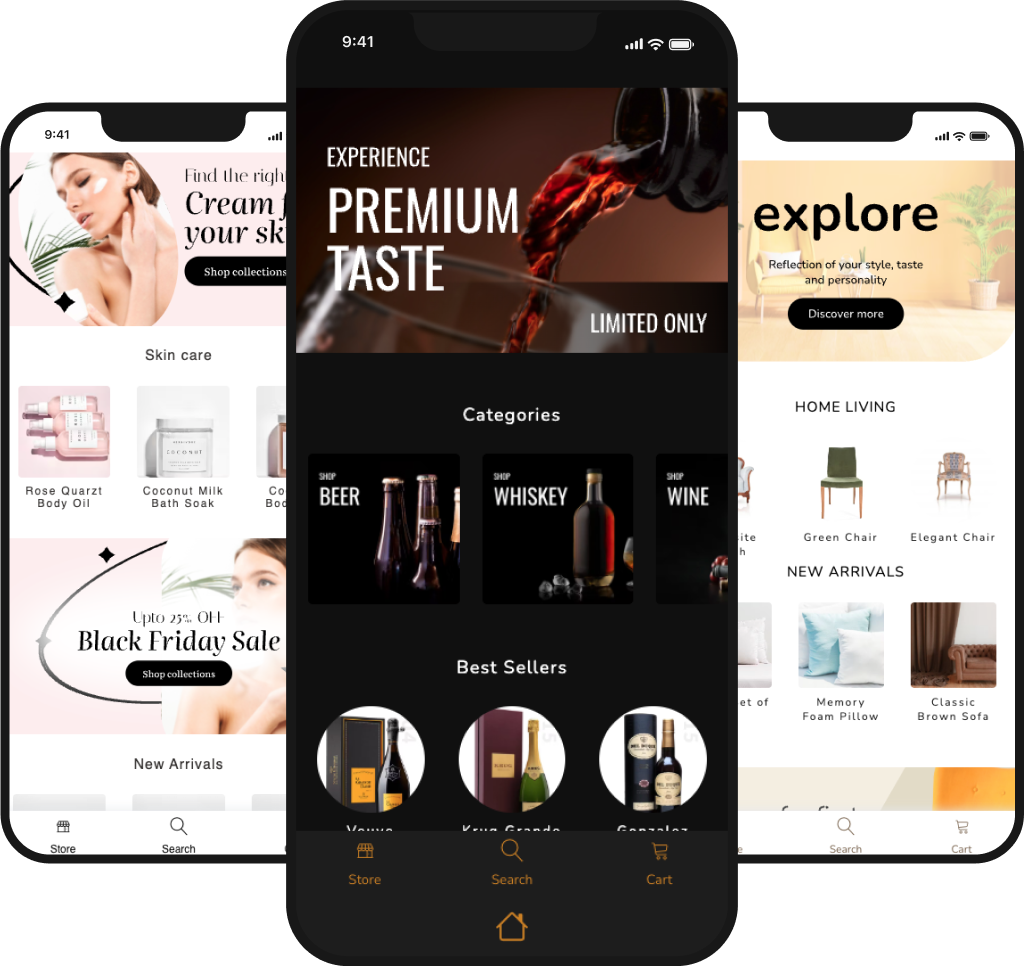
| Industry | Average Retention Rate |
|---|---|
| General Shopify Average | 27% – 31% |
| Fashion & Apparel | 19% – 26% |
| Food & Beverage | 23% – 45% |
After a first purchase, there’s only a 27% chance a customer returns. But, you know the saying “third time’s a charm”? After a third purchase, the likelihood of return jumps to 54%. The challenge lies in getting customers to that third purchase when most never come back after the first.
Meanwhile, mobile apps consistently drive retention rates five times higher than mobile websites. The gap between what works and what most merchants are doing has never been wider.
- Email is losing its power
Industry-wide open rates for email marketing have dropped below 20%, and they’re still falling. You’re crafting carefully segmented campaigns, writing compelling subject lines, and designing beautiful templates, but most of your messages end up buried in overcrowded inboxes. There’s no guarantee your customers even see them, let alone act on them. The channel that once drove reliable Shopify customer retention now feels like shouting into a void.
- Social media algorithms feel elusive
But wait! You’ve built a strong following on Instagram or Facebook! While that follower number may seem impressive, the all powerful algorithm feels like a moving target. Notice how you now have to invest more money into social ads to just reach your own customers? While social posts used to drive healthy traffic to your store, these platforms have shifted so that you’re essentially paying rent to access your own audience.
Building your entire retention strategy on rented land means you never truly own the relationship. One algorithm update can leave you needing to re-structure your whole social strategy, and that’s time better spent on your actual business.
- Mobile web doesn’t create habits
Mobile website visitors arrive, browse, maybe purchase, and then they’re gone. There’s no persistent presence on their device reminding them you exist. To get back to you, they either need to remember your URL, hunt through their inbox for an email from you, or have texted a link to your website to themselves. The friction adds up, and when they’re ready to buy again, they’re more likely to search the product category and land on a competitor’s site instead. Mobile web doesn’t create the habitual engagement that drives customer retention.
How top Shopify brands drive mobile app customer retention
While the landscape for customer retention may look grim, it’s not all doom and gloom. Top-performing Shopify brands fundamentally approach mobile app customer retention differently. They don’t just optimize for the sale—they prioritize the relationship. They understand that owning the platform means owning the customer experience long-term, and that changes everything about how they build and what they prioritize.
They build brand destinations, not just storefronts
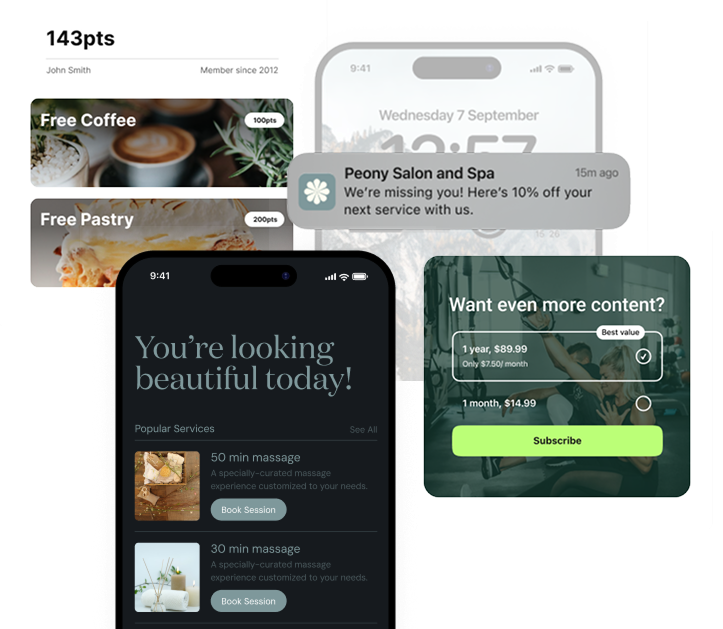
Leading fashion brands launch mobile apps with exclusive member communities where customers share styling tips, post outfit photos, and discuss upcoming collections. Wellness brands use custom apps to deliver educational content about ingredients, health benefits, and lifestyle tips alongside their products, plus appointment booking systems for consultations. Subscription box companies build anticipation between deliveries with sneak peeks, member polls on upcoming products, and exclusive benefits that make subscribers feel like insiders.
The key insight driving all of this: give customers reasons to open your app even when they’re not buying. When your app only becomes useful at the moment of purchase, you’ve built a store. When it delivers value consistently, you’ve built a destination that customers want to come back to again and again.
They own the communication channel
Push notifications are the new email for mobile app customer retention, and the 88% open rates prove it. Mobile notifications delivered through native apps consistently achieve engagement rates significantly higher than email, often by double or triple. There’s no competing with inbox clutter, no subject line lottery determining whether you get opened. It’s a direct line to your customer’s pocket.
But here’s where strategy matters for ecommerce customer retention. While basic shopping apps allow push notification for announcements about sales, Buildfire apps give Shopify customers the ability to use app-based communication strategically for:
- Back-in-stock alerts for items
- VIP early access
- Personalized recommendations
- Milestone celebrations
- Community updates
They treat apps as business infrastructure
The brands winning with customer retention treat mobile apps as core business infrastructure, not as a nice-to-have marketing channel. This means integrating with their existing tech stack like email platforms or analytics tools, so customer data flows seamlessly and informs every interaction. It means
Frequently Asked Questions
How do native apps improve Shopify customer retention?
Native apps improve Shopify customer retention by providing a direct communication channel through push notifications, which have higher engagement rates than emails. Platforms like Buildfire make it easy to integrate these features into your app.
What features should a Shopify app include to boost retention?
A Shopify app should include features like push notifications, exclusive content, and community engagement tools. Buildfire, for instance, offers customizable options to include these features seamlessly.
Why are mobile apps more effective than mobile websites for retention?
Mobile apps are more effective than mobile websites for retention because they create a persistent presence on the user’s device, encouraging habitual engagement. Tools like Buildfire allow businesses to create apps that keep users coming back.
Can small businesses afford to develop a Shopify app?
Yes, small businesses can afford to develop a Shopify app. Platforms like Buildfire offer cost-effective solutions that allow businesses to create and manage their apps without extensive resources.
What role do push notifications play in customer retention?
Push notifications play a crucial role in customer retention by providing timely updates and personalized messages directly to the user’s device, significantly increasing engagement rates.
See how Buildfire helps Shopify merchants like you turn one-time buyers into lifetime customers. With Shopify-optimized layouts, 80+ proven engagement features, and white-glove app store publishing, we make it easy to build the mobile experience your customers deserve. Find Buildfire in the Shopify marketplace today.
Frequently Asked Questions
What are the benefits of using a native mobile app for Shopify stores?
Native mobile apps offer a personalized shopping experience, exclusive content, and community features that enhance customer engagement and retention.
How can app-only perks increase customer loyalty?
App-only perks such as exclusive deals, early access to products, and special pricing create a sense of exclusivity and reward loyalty, encouraging customers to return.
What role does exclusive content play in customer retention?
Exclusive content like behind-the-scenes videos and educational resources helps build an emotional connection with customers, keeping them engaged between purchases.
How do community features transform customers into advocates?
Community features like group chats and shared photo galleries foster a sense of belonging and encourage customers to share their experiences, turning them into brand advocates.
Why is service integration important for customer satisfaction?
Service integration reduces friction in the customer journey by providing a one-stop shop for shopping, order tracking, and support, enhancing overall satisfaction.