

The short answer: Free apps make money through eight models: in-app purchases, subscriptions, freemium tiers, advertising, affiliate revenue, data and insights, lead generation, and driving revenue in an existing business. Most small businesses use the last one.
Free apps make money through eight distinct revenue models. Seven of those models involve charging users directly — for features, content, or access. The eighth is the one a restaurant, a gym, or a church actually uses: the app doesn’t generate revenue on its own, it drives revenue in the core business.
Seven of the eight ways free apps make money involve charging the user. The eighth — the one most articles never cover — is the model that matches how most real businesses actually think about an app. If you’re not building a consumer app marketplace, that’s almost certainly the model you want.

What does “free app” mean, exactly?
A free app is a mobile application available to download at no cost from the App Store or Google Play. “Free” describes the install price only — it says nothing about what happens after the download. The vast majority of top-grossing apps in both stores are free to install. Revenue comes after the first tap, not before it.
The distinction matters because it shapes every strategic decision: your app’s value proposition, your conversion funnel, and what you actually measure. Getting this wrong — treating “free” as the business model instead of the entry point — is how apps launch to zero revenue.
How much money do apps make per download?
There is no single answer, and any article that gives you one is guessing. Revenue per download depends entirely on which model you use and how well you execute it.
For context: Sensor Tower’s 2024 data shows the global app economy generated over $171 billion in consumer spending that year, spread across millions of apps. The distribution is extreme — the top 1% of apps take the majority of revenue. An ad-supported app might earn $0.01–$0.05 per active user per month from display ads. A subscription app with a $9.99/month plan and a 3% conversion rate earns roughly $0.30 per download over the first month — before churn. A business app that books one extra catering order a week earns far more than either, just not in a way that shows up in app store revenue reports.
The right question isn’t “how much per download?” — it’s “what action does this download eventually drive, and what is that action worth?”
The 8 ways free apps make money
1. In-app purchases (IAPs)
In-app purchases let users buy specific items, content, or capabilities inside the app after downloading it for free. The purchase is a one-time transaction — a new level in a game, a digital asset, a single piece of content.
This model works when value can be unbundled into discrete units that some users want more than others. It works poorly when the core experience feels gated or broken without the purchase, because that destroys the trust that “free” builds in the first place.
Apple and Google both take a revenue share on in-app purchases processed through their billing systems. Verify the current rates against Apple’s and Google’s developer documentation before building a financial model — these figures change and the stakes are high enough that a stale number is an expensive mistake.
2. Subscriptions
Subscriptions charge users a recurring fee — weekly, monthly, or annually — for continued access. Spotify, Duolingo Plus, and most productivity apps use this model. It’s the fastest-growing monetization category in mobile: Sensor Tower reported that subscription apps represented the majority of top-grossing non-game apps globally by 2023.
The mechanics favor annual plans (lower churn, higher lifetime value) and free trials (they convert better than paywalls when the product is genuinely useful). The failure mode is a free tier so thin that users never experience enough value to convert — which is a product problem, not a pricing problem.
3. Freemium tiers
Freemium gives users a fully functional free version and sells an upgrade to a richer experience. It’s distinct from subscriptions in that the free version is a permanent offering, not a trial. Dropbox and Slack built their user bases this way.
The conversion rate benchmark for freemium consumer apps is roughly 2–5%, according to Andreessen Horowitz’s 2021 consumer review. That means 95–98 of every 100 users never pay you a cent. The model only works when the free tier generates enough volume to make the paying 2–5% financially meaningful — and when the free tier itself has positive unit economics (i.e., you can afford to serve it).
4. Advertising
Ad-supported apps generate revenue by showing banner ads, interstitial ads, rewarded video, or native placements to users. The app is free; users pay with attention instead of money.
Revenue is calculated on CPM (cost per thousand impressions) or CPC (cost per click) rates, which vary significantly by category, geography, and audience quality. News and content apps, utility apps with high session frequency, and apps with large audiences in high-income markets perform best here. A local restaurant app with a few hundred users in one city will not generate meaningful ad revenue — the math simply doesn’t work at that scale.
Ad monetization also introduces a tension: every ad is a moment where the user’s attention goes somewhere other than your product. For business apps where the goal is engagement and loyalty, that trade-off is usually a bad one.
5. Affiliate and referral revenue
Affiliate models pay the app a commission when users take a specific action — buying a product, signing up for a service, booking an experience — through a tracked link in the app. Amazon Associates and hotel booking apps use variations of this. The app earns without charging the user directly.
This model makes sense when an app aggregates an audience that has purchase intent for third-party products. A fitness app that recommends supplement brands, or a travel app that books hotels, can generate meaningful revenue this way. It works less well when the affiliate relationship competes with the core business’s own offerings.
6. Data and insights
Some apps generate revenue by anonymizing and aggregating user behavior data and selling access to it — typically to researchers, advertisers, or market intelligence firms. Weather apps and certain consumer apps have used this model.
This model carries significant regulatory risk. GDPR in Europe and various US state privacy laws (California’s CPPA in particular) impose strict consent and disclosure requirements on personal data sales. Any business considering this model needs legal review specific to their jurisdiction before building on it. It is also a model that users increasingly punish when they discover it — the reputational risk is real.
7. Lead generation
Lead generation apps offer free value to attract users, then sell qualified leads to service providers. Legal directory apps, real estate search apps, and home services platforms often work this way — the user gets free information, and the professional pays for the introduction.
The app in this model is the top of someone else’s sales funnel. It’s a legitimate model, but it requires scale to be meaningful: lead buyers pay for volume and quality, and small audiences produce neither.
8. The app drives revenue in the core business
This is the model most articles skip, and the one that actually fits most of the businesses asking this question.
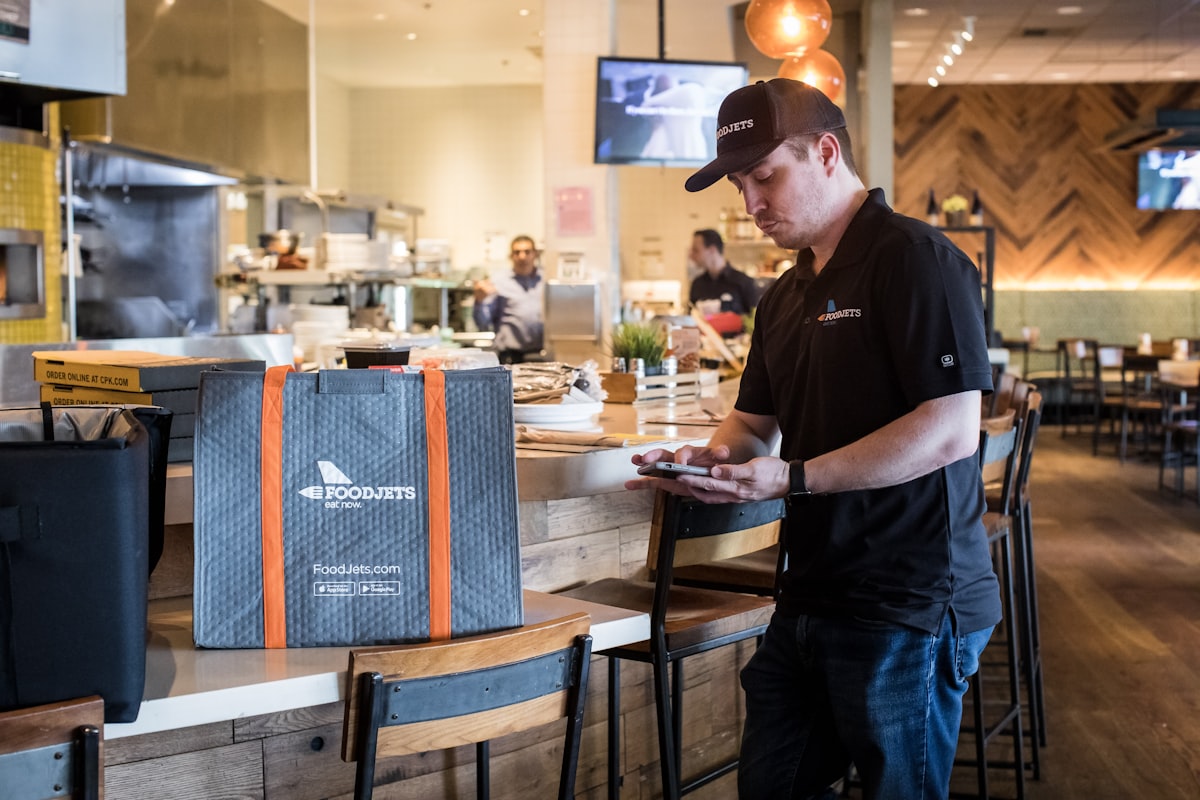
A restaurant app doesn’t make money from the app store — it makes money from orders. A gym app doesn’t sell subscriptions to the app — it sells gym memberships. A church app doesn’t run ads — it deepens attendance and giving. The app is a channel, not a product. Revenue flows through the business, and the app’s job is to increase the volume and frequency of that flow.
This reframe changes everything: what you measure (order frequency, class bookings, repeat visits — not downloads), what features matter most (push notifications for timely offers, loyalty programs that reward behavior, mobile ordering that removes friction), and how you evaluate whether the app is working.
Businesses in this model often see returns that dwarf what an ad-supported or freemium app would generate at the same user volume. A restaurant adding $2,000/month in incremental orders through mobile has built something worth far more than a free app earning $50/month in banner ad revenue from the same 500 users. The mobile loyalty platform built into an app like this isn’t a monetization layer — it’s a retention engine for the core business.
How do free apps make money without ads?
Five of the eight models above involve no advertising at all: in-app purchases, subscriptions, freemium upgrades, affiliate commissions, and driving core business revenue. The “no ads” constraint doesn’t limit your options nearly as much as it might seem — it mostly rules out one model that doesn’t fit most small businesses anyway.
For an SMB owner, the practical answer is almost always model 8: use the app to increase order frequency, booking volume, or customer lifetime value. That’s revenue without ads, without charging users for features, and without the scale requirements that make other models work.
How to choose the right revenue model for your app
The model follows the business — not the other way around. Work through these four questions in order:
- Is the app the business, or does the app serve a business? If you’re building a standalone consumer app as the product itself, models 1–7 apply. If you own a gym, restaurant, retail store, or professional practice, model 8 is almost certainly the right starting point.
- What scale can you realistically achieve? Ad revenue, affiliate commissions, and lead generation all require volume to produce meaningful income. If your realistic user base is under 10,000 active users, models that depend on CPM rates or lead volume are likely a distraction.
- What does the user get for free, and why is that good enough to keep them? Every model depends on retention. Users who don’t open the app don’t convert, don’t click ads, and don’t book orders. A mobile app retention platform and a thoughtful engagement strategy matter in every model.
- What’s your time horizon? Subscription and freemium models take 12–18 months to produce predictable revenue because they depend on accumulated cohorts. Ad revenue starts immediately but grows slowly. Model 8 can show results in weeks if the app solves a real friction point in the customer journey.
Common mistakes in app monetization — and why they happen
Treating the download as the goal
Downloads are a vanity metric. Revenue comes from retained, engaged users who take a specific action. Apps optimized for downloads (low-cost installs, broad targeting) often acquire users who open once and never return. The mistake happens because downloads are easy to count and easy to report — engagement is harder.
Picking a model before validating the behavior
A subscription model requires users to find enough ongoing value to justify a recurring charge. An IAP model requires users to want specific discrete upgrades. Both require understanding actual user behavior before you price anything. Most apps pick a model at launch based on what’s familiar, not what the data supports. Build the free experience first, watch what users do, then monetize the behavior you actually see.
Underpricing because “free” feels safer
Counterintuitively, underpricing a subscription or freemium upgrade often reduces conversion. Low prices signal low value. A fitness app charging $2.99/month for its premium tier communicates that premium isn’t worth much — and users believe it. Price for the value delivered, not the cost to produce it.
Ignoring the platform revenue share on IAPs and subscriptions
App store commissions apply to in-app purchases and subscriptions processed through native billing. These rates materially affect unit economics. Build your financial model with the current platform cut accounted for — and verify that cut against current developer documentation, not a blog post.
Adding ads to a business app
This is the most common mistake SMB owners make when they see “how free apps make money” content aimed at consumer app developers. Running third-party ads in a restaurant or gym app sends your customers to other businesses in exchange for pennies per thousand impressions. Your app’s job is to keep customers in your ecosystem, not redirect them out of it. Mobile app engagement tools — push notifications, in-app messaging, loyalty points — deliver far more business value per user than banner ads.
Where Buildfire fits
Buildfire is a mobile app platform for businesses that already have customers and want to serve them better through an app. That maps almost exactly to model 8: the app drives revenue in the core business rather than generating revenue on its own.
The platform includes push notifications for timely offers and reminders, a loyalty program for repeat visit incentives, analytics to track which features actually drive bookings or orders, and an in-app messaging layer for direct communication with your customers. For businesses like restaurants specifically, the restaurant app builder packages the most relevant pieces together. And for gyms, studios, or any membership-based business, the membership app builder handles access, billing, and retention in one place.
Buildfire isn’t the right fit if you’re building a standalone consumer app or a marketplace — it’s built for businesses that want a native iOS and Android presence without hiring a development team, and whose measure of success is customer behavior, not app store revenue.
Frequently asked questions
Can a free app make money without charging users anything?
Yes, through advertising and data licensing — but both require significant scale to generate meaningful income. For most small businesses, the more practical path is using the app to increase revenue in the core business (more orders, more bookings, higher retention) rather than monetizing the app itself.
How do apps make money if they are free to download?
Free apps generate revenue after the install, not before it. The most common methods are in-app purchases, subscriptions, advertising, and freemium upgrades. For business apps — restaurants, gyms, retail stores — the app typically drives revenue in the existing business rather than generating it directly.
What is the most common revenue model for small business apps?
Most small business apps use model 8: the app serves the core business rather than monetizing users directly. A restaurant app drives orders; a gym app drives memberships; a church app increases attendance and giving. Revenue shows up in the business's P&L, not in app store payouts.
How long does it take for a free app to make money?
It depends on the model. Ad revenue starts immediately but grows slowly with user volume. Subscription and freemium models typically take 12–18 months to produce predictable revenue as cohorts accumulate. Business apps (model 8) can show measurable revenue impact within weeks if the app removes a real friction point in the customer journey.
Do app stores take a cut of in-app purchase revenue?
Yes. Both Apple's App Store and Google Play charge a commission on in-app purchases and subscriptions processed through their billing systems. The exact rates vary by product type, subscription duration, and developer program tier. Always verify current rates in the official developer documentation before building a financial model.
Is the freemium model realistic for a small business app?
Rarely. Freemium works when you have enough volume that even a 2–5% conversion rate produces meaningful revenue. For a local business app with a few hundred or a few thousand users, the math usually doesn't work. A better approach is using the app to increase order frequency or customer lifetime value rather than gating app features.
Can a free app make money through affiliate marketing?
Yes, if the app aggregates an audience with purchase intent for third-party products and if you reach sufficient scale. Affiliate commissions require volume to produce meaningful income. For most SMB apps where the audience is the business's own customer base, affiliate placements can also create conflicts with the core business's offerings.