

Understanding the Hidden Costs of Software Post-Launch
After months of hard work, your software is finally up and running.
But as you’re going through your finances, you notice that your monthly expenses haven’t gone down—if anything, they’re going up. What’s going on?
There are hidden costs of software that you need to anticipate after you launch your project.
Honestly, this is something that I always have to remind my clients whenever they’re developing new software. They assume that once the project has been developed, the expenses are going down to zero and they’re done paying.
Key Takeaways
- Post-Launch Expenses: Software costs don’t end at launch; they often increase.
- Staff Maintenance: Keeping a development team is crucial for ongoing updates and scaling.
- Hosting Costs: Anticipate rising hosting expenses as your software scales.
- Compliance and Maintenance: Regular updates are needed to meet evolving compliance standards.
- Training Costs: Employee turnover can lead to significant training expenses.
That’s not the case at all, and it couldn’t be further from the truth.
Here’s an analogy to explain the situation. Let’s say you upgrade from renting an apartment to buying a house. Would you assume that after the down payment, your mortgage will be your only expense as a homeowner? No.
Look at your expenses. Your water bill, gas bill, electric bill, and everything else will go up because your house is bigger than your apartment. You might have other expenses creep up on you that you’ve never had before, like a gardener or a landscaper to maintain your property.
Software development is the same.
Whenever you scale up from a small project to a bigger project, there are certain expenses that you’ll incur on an ongoing basis. Everyone is so busy determining the development rates, they forget about the post-launch hidden development costs.
In this guide, I’ll explain the top five hidden costs of software you must anticipate after you launch.
Hidden Cost #1: Maintaining Your Staff
Who developed your software? The app development team will continue to maintain your software even after you launch.
Your software is going to evolve with the market as new opportunities present themselves. The vision will also evolve based on customer demand.
You always need to remember one thing—stagnant technology is dead technology.
Look at companies like Facebook, Google, Twitter, and all of the other global giants out there. They’ve done a pretty good job at developing software, wouldn’t you agree? Everything you can possibly think of has been developed. So why do they have an army of engineers working behind them? Software development is never finished.
Between maintenance, new features, customer demand, and just scaling the platform, you’ll always need your staff to maintain this.
On average, look at how often mobile apps are updated and enhanced.
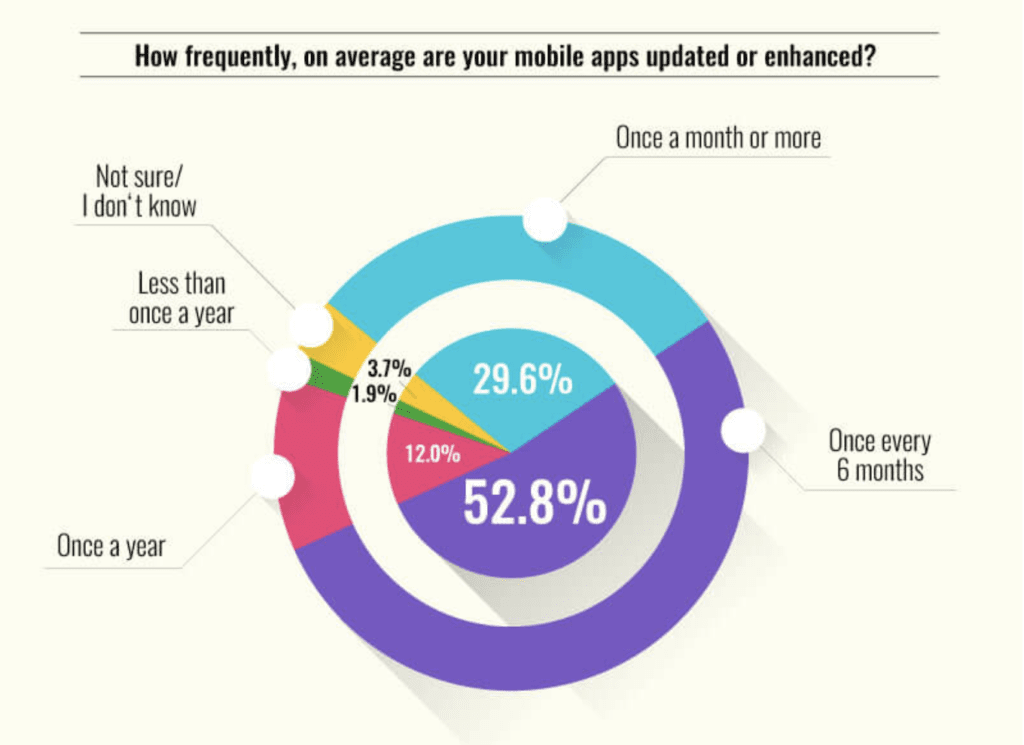
Roughly 30% of apps are updated at least once per month. An additional 53% of apps are updated every six months.
So you can’t plan to let your development staff go after the launch date. The team members who developed the app will continue to stay on board.
The truth of the matter is this; if you get rid of people, your software will slowly die.
Remember, to maintain a competitive edge in this crowded market, you must constantly evolve. The software you started with needs to change and adapt over time.
You might have some wiggle room with the capacity of staff that you need to keep. For example, maybe hired five engineers during development. But now you just need two or three. Your team will still be comprised of engineers, a QA professional, DevOps, a designer, project manager, etc.
These post-launch development costs must be taken into consideration and planned for ahead of time.
Hidden Cost #2: Hosting Expenses
You must anticipate hosting costs in your initial budget.
These costs are incurred from hosting the servers for your software. You’ll have email servers, push notification servers, analytics servers, integration servers, and other servers depending on the type of app you’re developing.
Most likely, you’re dealing with a company that delivers you a product or SaaS that you’ll pay a monthly fee for. Or you’re hosting the software somewhere in the cloud with a company like Amazon Web Services. There will be a monthly fee for this type of hosting as well.
Not only will you incur these expenses post-launch, but the costs will rise as your company scales.
It’s very important that you prepare for this from a budget standpoint. There will be ongoing hosting costs to maintain those hosts. If your servers are hosted in the cloud, you’ll still need a staff member on your team to deal with those servers. This brings us back to our first point about needing to continue paying your staff.
Hidden Cost #3: Maintenance
Before your launch, I’m sure you’ve gone through the technology to make sure that everything was working properly. All the bugs were found, fixed, and you’re done—right?
That’s not necessarily true, especially in the mobile app space.
While you might have fixed the bugs for certain devices or specific operating systems, devices evolve over time. When this happens, your technology or application could regress.
Take a look at the average cost to maintain an app in the first year after launch.
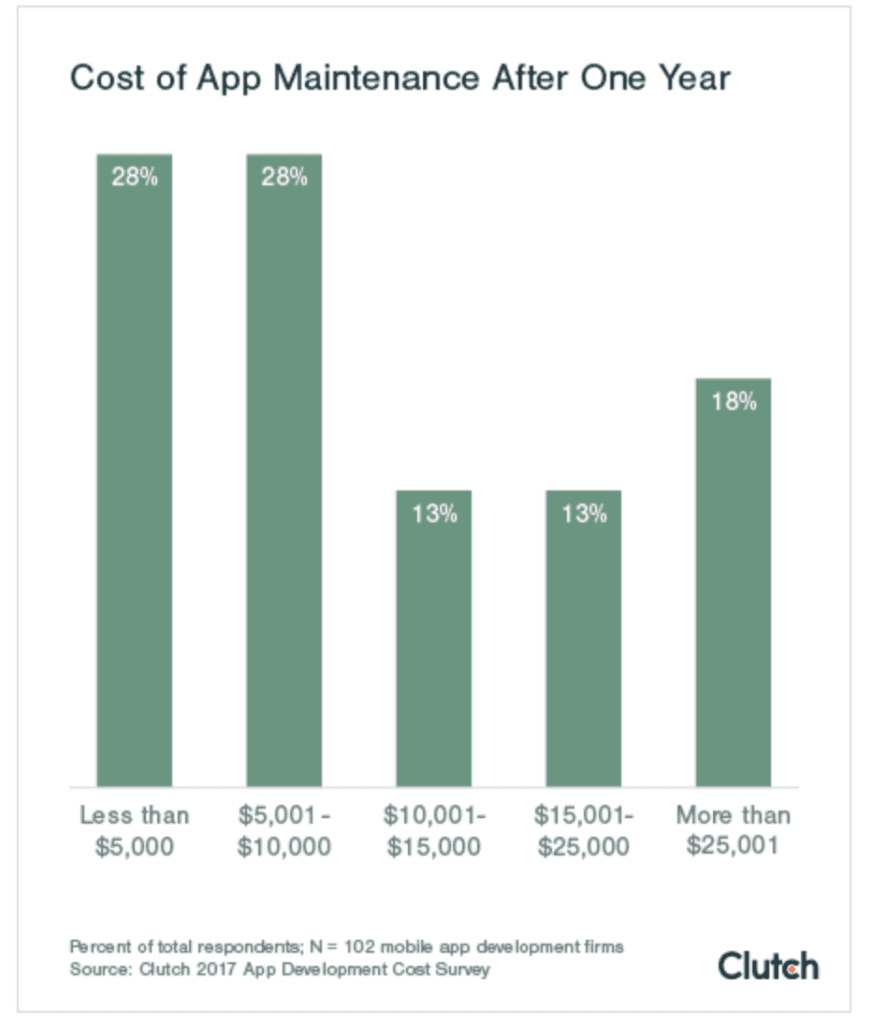
Some of you probably know why software development is expensive. But why is it so costly to maintain? What are companies spending $10k-$25k+ per year on?
As new demands come from Apple or Google, your compliance levels might downgrade.
New legislation comes into effect for the quality of your app, the security of your app, or the privacy of your app. All of these things could change.
I’m referring to things like:
- GDPR compliance in Europe
- CCPA compliance in California
- ADA compliance across the US
- International compliances
- PCI compliance
- HIPAA compliance
The list goes on and on. Your technology needs to evolve as all of these things change.
Refactoring
Refactoring is another side of maintenance that’s worth highlighting on its own.
The idea behind refactoring is that you write code that’s just good enough to pass basic testing, compliance, limitations, or something else. Then you go back and clean it up at a later time. Here’s a simple visual explanation of how refactoring works.
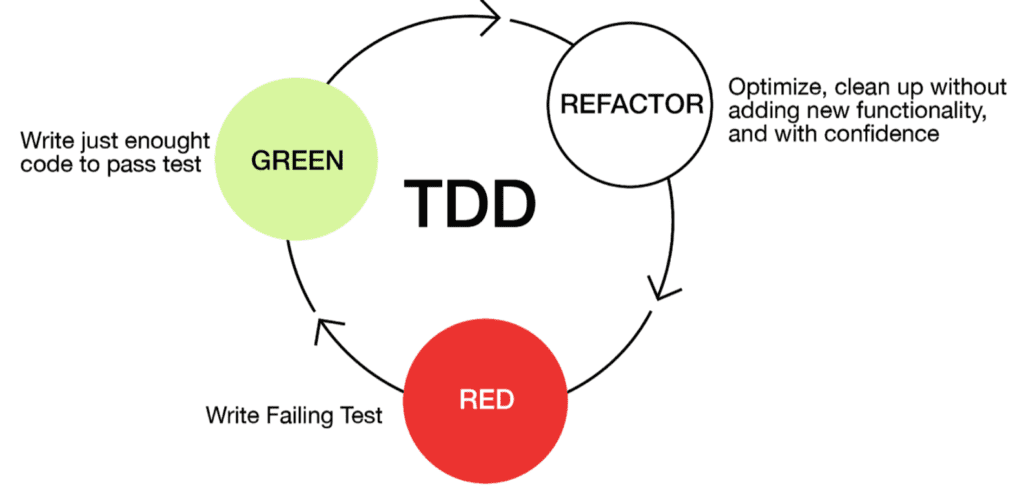
Some of your code that was put in during development might have been “good enough” at the time. But as you scale, it must be rewritten to manage the new traffic load as your business grows.
To be honest, these are good problems to have. It means that your app is growing. But you still need to anticipate the costs ahead of time to be fully prepared.
Here’s another analogy. Let’s say you have a commercial printing press company. Your main printer is currently printing 5,000 flyers per day. It starts to malfunction, so you fix it with a “band-aid” solution. You know that your fix will get the machine back in action to continue producing 5,000 flyers per day. But if you ramp up to 10,000 flyers, the band-aid won’t be sufficient.
Well, that’s a great problem to have. When you get to that number, your daily business just doubled. But it comes with added maintenance costs that you need to plan for.
Hidden Cost #4: Training
Training is the most underestimated expense in terms of hidden software costs.
The biggest mistake that people make is assuming that their staff who is maintaining the app is going to stay with them forever. But that’s not going to happen.
In reality, some of your staff will make career decisions and leave you. You’ll be unhappy with other team members, and you’re going to fire them. This is just standard procedure when it comes to running a business.
There will always be turnover in personnel.
What happens when you lose someone with crucial domain knowledge? Don’t assume that whoever you hire will be able to replace that person immediately.
Just because someone is a good developer or a good engineer, it doesn’t mean that they understand your software. They are a good engineer for the software t
Frequently Asked Questions
What are the ongoing costs after launching software?
Post-launch, you should anticipate costs related to staff maintenance, hosting, compliance updates, and training. Platforms like Buildfire make it easier to manage these expenses by offering scalable solutions.
How can I manage hosting expenses effectively?
Hosting expenses can be managed by choosing scalable cloud solutions. Buildfire, for instance, offers flexible hosting options that grow with your business needs.
Why is software maintenance necessary after launch?
Software maintenance is crucial to keep up with technological advancements and compliance requirements. Tools like Buildfire allow businesses to efficiently handle these updates.
What is the impact of staff turnover on software costs?
Staff turnover can lead to increased training costs as new hires need to be brought up to speed with the software’s intricacies.
How do compliance changes affect software costs?
Compliance changes can necessitate updates to your software, which can incur additional costs. It’s important to stay informed about regulatory changes to anticipate these expenses.
hat they’ve developed—not necessarily what you’ve developed.
So it takes time for them to understand your business model, technical depth, infrastructure, and other components of your software.
The average cost to recruit, hire, and train a new employee is $4,000.
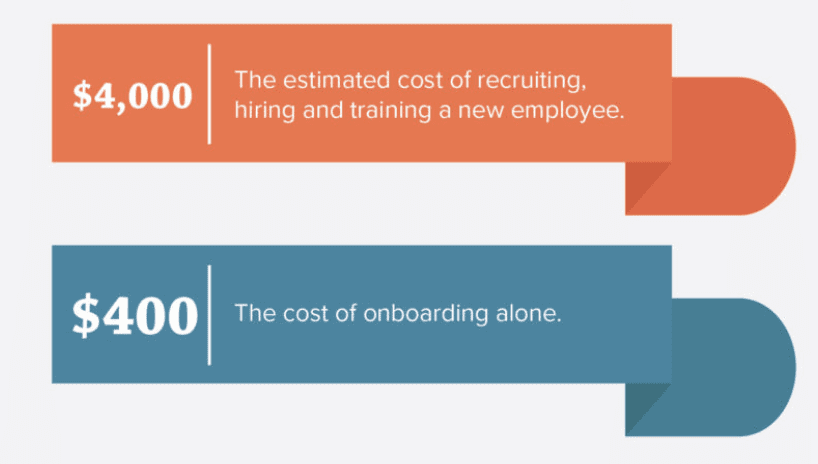
In the tech industry, you can expect these costs to be even higher.
I know some of you might think that engineers are a dime a dozen, and you can find them anywhere. But even if someone is a blackbelt and an expert, they will not be an effective part of your team as soon as they come in. This takes time.
So how can you avoid these expensive training costs? The idea here is to avoid single points of failure with
Servers vs. Maintenance
We’ve also talked about the hosting costs and maintenance costs, separately. However, these two hidden expenses are actually interconnected.
| Option | Cost | Benefit |
|---|---|---|
| Fully-managed host | $1,000 | Cheaper in the long run, reduces staff maintenance workload |
| Cloud hosting solution maintained by staff | Varies (higher due to staff costs) | Requires constant staff involvement |
For example, let’s say it costs you $1,000 for a fully-managed host. That’s nothing compared to the cost of having a staff member maintain a cloud hosting solution on their own.
So go ahead and pay for it without thinking twice. It’s cheaper and becomes a headache for someone else to deal with—not you. You won’t need a staff member that constantly has to deal with server maintenance. So try to find website hosting services that will cover these things.
While the initial price tag for this service might seem expensive, you should always weigh it against the cost of having an individual from your staff working on it. The hosting cost will always be cheaper in the long run than maintaining it on your own.
Frequently Asked Questions
What is the average cost to train a new employee?
The average cost to recruit, hire, and train a new employee is $4,000.
Why are training costs higher in the tech industry?
Training costs are higher in the tech industry due to the specialized skills and knowledge required.
What are the benefits of a fully-managed host?
A fully-managed host is cheaper in the long run and reduces staff maintenance workload.
How does cloud hosting maintained by staff compare in cost?
Cloud hosting maintained by staff can be more expensive due to the constant staff involvement required.
Is it worth paying for a fully-managed host?
Yes, it is worth paying for a fully-managed host as it is cheaper and reduces the need for staff to handle server maintenance.