

You finally accomplished it – you created an awesome mobile app for your business.
Now, your customers can interact with you like never before, and the data you’re pulling from the app is helping you think of all kinds of new ways to market your brand.
But there’s something else you can do to make your app even better for your business: monetize.
That’s right – your app can be so much more than a tool. It can also be a serious source of additional income for your business.
Key Takeaways
- Monetization Potential: Your app can be a significant source of income beyond its primary function.
- Email Strategy: Using email lists can enhance customer engagement and drive sales.
- In-App Advertising: Free apps with ads can capitalize on high user engagement.
- Ad Formats: Choose ad types that enhance user experience to increase engagement.
- Partnerships: Collaborating with brands can expand your app’s reach and profitability.
Intrigued, aren’t you?
Good. By the time you’re done reading this post, you’ll have learned 10 ways to monetize your app and turn it into a profit-generating machine.
You’ll make even more money if you can promote the app for free.
How to Monetize an App
You need to find an app monetization strategy that works for you. There are different options that work better for free apps and others that work were well for paid apps.
Whether you’re launching a paid app or you’re looking for a free app monetization strategy, you’ll find some excellent options below to consider for mobile app monetization:
1. Email Lists
You might not think of this as a likely first step, but using an email strategy tie-in with your app is a fantastic way to get more engagement from your customers, which in turn leads to more money.
Why?
Because people rarely change their email addresses. That makes an email marketing campaign an easy way to make sure users actually see your content and engage with it. Regular emails also keep your brand at the forefront of a customer’s mind, making them more likely to buy from your business.
According to Wiselytics, the total life of a Facebook post is only a few hours, while a tweet’s lifespan is just over an hour. Email, on the other hand, has a lifespan of 12 days.
And the best way to gather those email addresses is to add an email subscription form to your app.
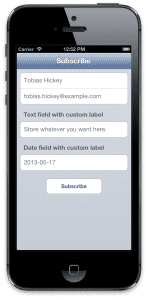
An in-app subscription form will give your app a real boost by prompting users to enter their emails, especially if you tempt them with the prospect of some great benefits for email subscribers.
And your email strategy can be pretty varied. If you have promotions or deals, send an access code in the email that they can enter inside the app. If you write a regular newsletter or have a blog component on your website, promote those through the email while reminding users they can read all the content you produce on their mobile device.
So, whether it’s to remind your users to come back to your app after being away for a while or to try and draw in new users, email lists are marketing gold. Just something to think about.
2. In App Advertising
If you aren’t including ads in your app, you might be missing out on a phenomenal opportunity for monetization.
Digital advertising through mobile apps has improved the communication between advertisers and consumers dramatically. This is largely due to the crazy amount of time people spend on their phones. We’re talking at least 90 minutes a day – the equivalent of 23 days a year.
And a lot of the time, people simply don’t want to pay for the apps they spend all that time on. The temptation to download an app that costs $.99 drops away as soon as they see a cheaper (or free) alternative.
That’s why 91 percent of all app downloads were unpaid in 2013.
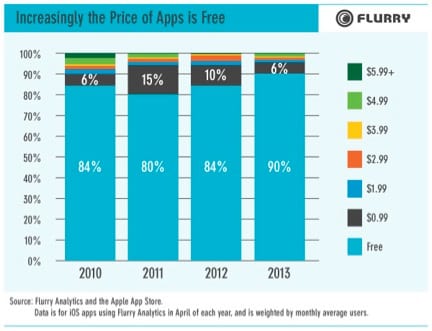
So, how can you get around this and still monetize?
Simple. Make your app free, and utilize in-app advertising.
Advertisers realize the value of mobile apps over those embedded in browsers or sent via SMS messages. Here’s what that breakdown will look like in 2018:
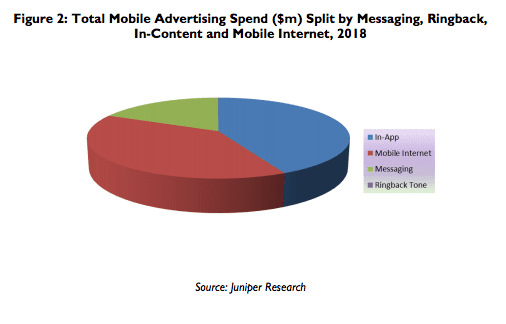
And when advertisers create ads to be used in apps, these are the five types of native ads typically used:
- Interstitial/full screen ads – These ads are usually placed at natural pause points, like when moving between menus. Because these aren’t actually interrupting the experience of using your app, they’re more likely to generate clicks without causing frustration.
- Notification ads – These pop up in the mobile device’s status bar and make users more aware of the ad’s presence. Be warned, these aren’t the most well-loved ads out there, and could damage your app’s reputation.
- Capture form – Relying on user opt-ins, these offer incentives (like points or tokens) for users who enter their email addresses. You’ll most often find capture forms in mobile games.
- Advanced overlay – These use transition points like interstitial ads but are interactive instead of being simple clickable images. They’re sort of a mixture of capture form and full screen ads.
- Banner ads – App banner ads are usually found at the top or bottom of the screen and can be somewhat ineffective because they are more distracting than other forms. They can also irritate your users, so think twice before agreeing to incorporate one into your business’s app.
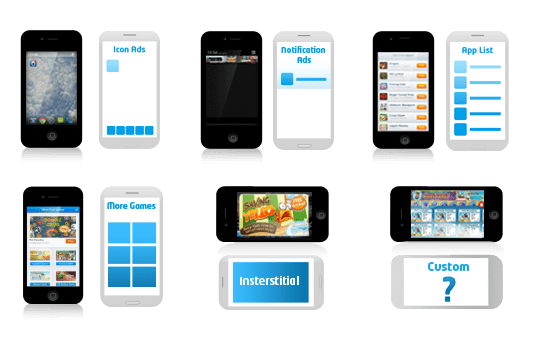
Which ad format is right for you? What you want to focus on the most through the implementation of these ads is engagement. It’s an idea a lot of brands are struggling to define. Put simply: the better the experience, the higher the engagement. Your ads need to entice the user, not frustrate them.
So, when you plan to incorporate an advertisement into your app, ask yourself these questions:
- How can users have a more meaningful experience when dealing with these ads?
- What sort of ads would the target audience prefer?
- How can these ads tie back to my brand?
- Will these ads be too clunky or ugly, potentially ruining part of the experience for users?
Depending on your brand, the advertisers you associate yourself with could pay you a considerable chunk of change to host their ads. According to Gartner Research, mobile advertising is poised to reach $18 billion annually.
So choose wisely – your decision could make all the difference in the profitability of your app.
3. Sponsors and Partnerships
If you can secure a partnership with another brand, you can significantly step up your monetization game.
What you’ll need to do is find a partner with a similar customer base who can add something to the experience of your users.
A partner or a network of partners can seriously benefit your customers and your businesses alike, especially if you create an integrated experience – like when Localytics and Optimizely partnered to deliver mobile analytics as a combined service.
Imagine users on another app who see your brand logo, and maybe even an interactive element typically found in your app appearing as part of the app they’re currently using. That could potentially convince them to go download your app.
And if your partner includes advertisements featuring your apps, there’s a solid chance their users might click that ad to go straight to your app. This is called a click-through rate (CTR), and in some instances, it can be as high as 12.5 percent.
So, once you’ve opened yourself up to the idea of hosting and sharing advertisements, definitely consider forming partnerships to strengthen your brand o
utreach.4. Creating Strong Code
If you develop your own code from the ground up and it proves to be successful, other brands may approach you and offer to re-skin your app (either for their purposes or yours). By licensing your code to other developers, you can make money without disrupting your users’ experiences.
For example, the popular game Temple Run was re-skinned for Temple Run Oz as a film tie-in.
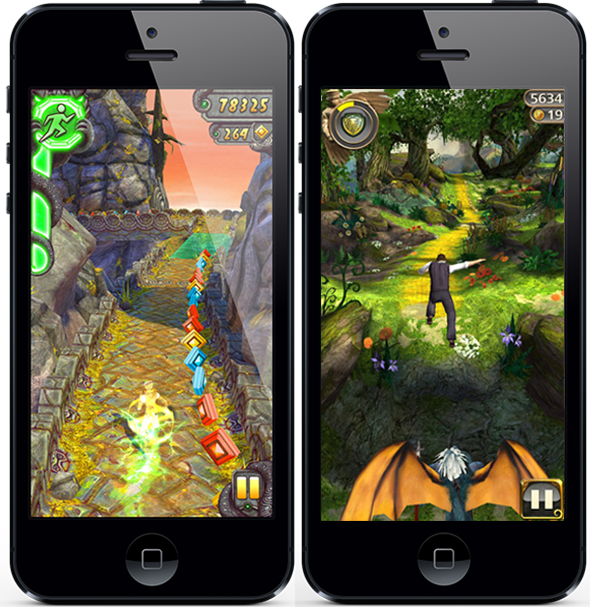
Another thing to consider with code-sharing is your app’s endgame. After your business has gotten as much value possible out of your app and is preparing to move onto the next step, you can actually se
9. Multiple Payment Options for Subscription Services
If you do regularly update your content, consider creating a subscription service for those customers who keep coming back. That way, all your users have to do is sign up to be billed monthly or quarterly, and they’ll receive all of that new content without having to remember to buy it. But when you make use of the subscription service option, seek to differentiate between tiers of access to your content. The Economist used this strategy by allowing their users to opt for a web-only subscription, a print-only subscription, or both.| Subscription Type | Access |
|---|---|
| Web-Only | Access to online content |
| Print-Only | Access to print content |
| Combined | Access to both web and print content |
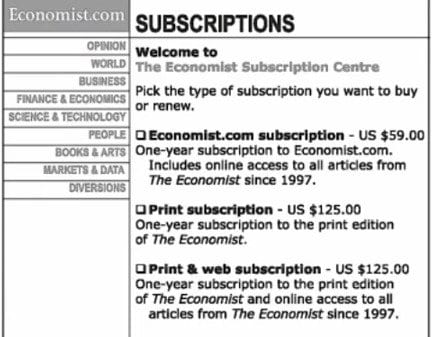 Many users saw the utility in spending that extra amount for the added value of access to both print and web subscriptions. So, when you’re monetizing your app, consider offering separate options and including one subscription package combining all the services together as a premium package. Your app could become much more profitable as a result.HTML CHUNK 3 of 3:
ng on pursuing more of those same efforts, your app will prove more beneficial to your customers (and your business!) than ever.
And remember – whatever data you collect has value outside of your own business. Behavioral data is a gold mine to marketers. If your app is popular, there’s a solid chance that a major analytics company may want to purchase that data from you.
Many users saw the utility in spending that extra amount for the added value of access to both print and web subscriptions. So, when you’re monetizing your app, consider offering separate options and including one subscription package combining all the services together as a premium package. Your app could become much more profitable as a result.HTML CHUNK 3 of 3:
ng on pursuing more of those same efforts, your app will prove more beneficial to your customers (and your business!) than ever.
And remember – whatever data you collect has value outside of your own business. Behavioral data is a gold mine to marketers. If your app is popular, there’s a solid chance that a major analytics company may want to purchase that data from you.
In Conclusion
By this point, you’re well aware of how awesome a mobile app can be for your bottom line. It can allow you to expand your brand and make connections with customers you might never have reached before. And as you’ve seen in this post, it can also be a considerable source of revenue.| Aspect | My App | Your App |
|---|---|---|
| Monetization Model | Best for me | May not be the best for you |
Frequently Asked Questions
What are the best ways to monetize an app?
This guide covers 10, including email lists, in-app advertising, sponsors and partnerships, and subscription services with multiple payment options.
Can a free app make money?
Yes. Free apps with ads can capitalise on high user engagement, which is often far greater than a paid app’s smaller paying audience.
How do email lists help monetize an app?
Email lists improve customer engagement and drive sales, giving you a channel to reach users outside the app itself — one you own rather than rent.
Should my app offer a subscription?
If you update your content regularly, a subscription is worth considering. Users sign up once and are billed monthly or quarterly, receiving new content without having to remember to buy it each time.
How should I structure subscription tiers?
Differentiate between tiers of access rather than offering a single price. The Economist is the example used here — readers could choose a web-only subscription, a print-only subscription, or both.