

It’s a new year—and for small business owners, that means new goals to achieve: More leads, more sales, more return customers, whatever your metrics for success happen to be. If you’re like many small business owners, however, you don’t have the budget (or the time) to devote to marketing to help you achieve your goals.
Fortunately, there are lots of marketing ideas and tactics you can implement that get great results and don’t break the bank. Ready to jumpstart your small business marketing? Check out these budget-friendly marketing tips every small business owner should try.
Implement a Content Marketing Plan
If you have a website, you can get started on one of the most valuable trends in digital marketing. Content marketing is a way for you to connect with your customers and potential customers in a personal, non-salesy way that helps you establish relationships and grow your brand awareness.
Key Takeaways
- Budget-Friendly Marketing: Implement cost-effective strategies to achieve your business goals.
- Content Marketing Benefits: Establish relationships and grow brand awareness through engaging content.
- Email Marketing Effectiveness: Utilize email as a core marketing channel for high ROI.
- Mobile App Advantage: Enhance customer engagement with a user-friendly mobile app.
- Loyalty Programs: Retain customers and encourage repeat business with simple rewards.
Think you’re not a writer or can’t possibly have anything interesting to say? There are lots of ways to make content marketing work for you. Check out these examples anyone can adapt and use:
?Make a how-to video tutorial. A restaurant owner, for example, can demonstrate how to properly open, aerate, and decant a bottle of wine. A fashion e-commerce business might show several ways to tie a scarf. Think about what you know that your customers might want to learn—and then show them how to do it.
?Create or curate a best-of list. Numbered lists are extremely popular content and they’re easy to put together. Again, approach this with your customer’s needs and interests in mind. A gym might publish 8 Best Fitness Apps for iPhone, for example, while a farmer’s market might curate 6 Best Recipes for All Your Zucchini. Be creative!
?Write a product review. Even if “creative” writing isn’t your thing, you can easily craft a product review. Use bulleted lists of pros and cons or a quick spreadsheet comparing two or three different products.
?Show the hidden side of your business. Interview one of your employees and explain his role in the business. Walk customers through the manufacturing process for one of your products. Do you sponsor a local charity or sports team? Share pictures of the events you participate in.
?Ask for guest posts. You probably have lots of untapped potential in your employees and co-workers; give them an opportunity to share their expertise and information, whether it’s an opinion piece, a recipe, some technical insight—anything that might interest your customers.
Depending on your business and customer base, aim to publish fresh content at least once or twice a week. Content marketing can help you boost your brand awareness, develop your reputation as a trusted expert in your field, bring customers in the door, and keep your website fresh and interesting.
Embrace Email Marketing
If you aren’t building your subscriber list and regularly emailing your customers, you’re missing out on a very cost-effective marketing tool. Here’s why:
| Statistic | Insight |
|---|---|
| 72% of consumers | Prefer to be contacted by email. |
| 91% of consumers | Like to receive promotional emails from companies they do business with. |
| 73% of brands | Say email is one of their core marketing channels. |
| 25% | Consider it the best channel in terms of ROI. |
Encourage customers to sign up for your email list, both in the store and on your website, and give them an incentive to do so—a discount on a future purchase or a free sample, for example.
Email marketing software is surprisingly affordable; some vendors even offer free plans for small businesses that have all the features you need to get started. How often you want to email your subscribers is a function of both your business niche and the amount of effort you can devote to creating useful content. If the idea of putting together an email newsletter leaves you cold, find a freelancer who will do it for a reasonable rate.
One note of caution: Don’t be tempted to rent or purchase an email list. This is almost always a bad idea for small businesses. Use your website and other channels to organically grow your mailing list, and use your emails to build relationships with your customers by offering them useful tools, content, and offers.
Build a Mobile App
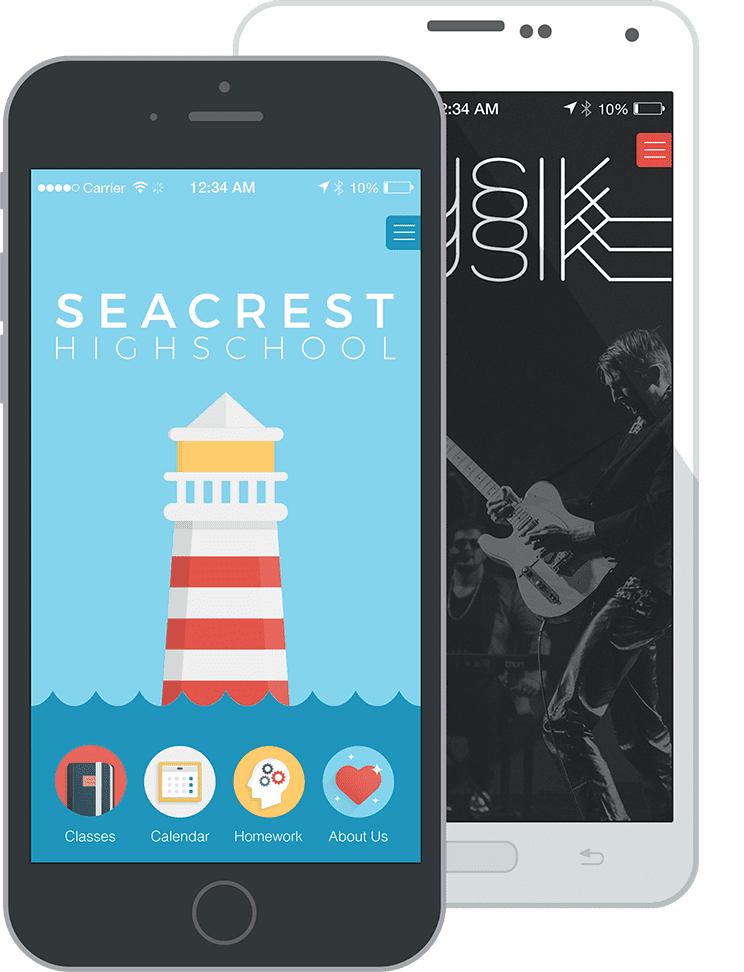
Today’s consumer is a mobile consumer; more content is consumed on mobile devices than on desktops, and mobile search topped desktop search for the first time in 2015. People use their smartphones at every phase of the purchasing process, from researching products to comparing vendors and prices. In fact, mobile commerce accounted for 30 percent of all e-commerce and is expected to grow three times faster than e-commerce in 2016.
Even if you’re already reaching your mobile customers with your mobile website, a mobile app makes sense for many small businesses. Studies show that 85 percent of smartphone users would rather navigate through an app than through a mobile website, and the vast majority of mobile content is consumed through a mobile app.
Services like Buildfire make it easy and economical to build and host a mobile app that gives you on-demand access to push content and information to your customers. Why is this important?
- 74% of consumers use their smartphone to help them shop.
- Mobile offers are redeemed 10 times more frequently than print coupons.
- Over 50% of consumers say they’d be more likely to shop at a nearby store if they received an offer on their phone.
- 42% of all mobile sales originated through a mobile app.
Your mobile app will give you a leg up on other useful small business mobile marketing tactics, such as loyalty rewards and social media marketing.
Offer Loyalty Rewards
Every business owner knows that it costs more to acquire a new customer than it does to keep an existing one. Not only that, returning customers tend to spend about 67 percent more than first-time shoppers. It only makes sense to do everything you can to encourage sticky customers with a loyalty program, which is why about 65 percent of marketers use them.
For most small businesses, it’s best to keep things simple; a points system or tiered rewards program works well and is easy to manage with a mobile app or loyalty card. For frequent, smaller value purchases, a point system based on dollars spent or quantity of items bought is easy to implement. For larger, less frequent purchases (think hospitality or insurance, for example), a tiered program keeps customers engaged.
No matter how you structure your loyalty program, make it easy for your customers to understand how it works, and to track their progress toward their next reward. If your reward program formula is something like, “Earn one point for every $15 spent, 10 points is good for a coupon for 10% off a single item purchased on the 2nd Friday of every month,” you’re not rewarding your customers, you’re antagonizing them.
Start a Customer Referral Program
Encourage your loyal customers to spread the word about your product or service with a referral incentive program. Depending on your business, your referral reward can be a free product, a cash bonus, a service discount, or any combination. You can also combine it with your loyalty program by depositing a set number of points in a customer’s account for every referral they make.
The trick is finding a balance between offering a valuable enough incen
Marketing your business on a small business budget doesn’t mean skimping on the high-impact tactics larger businesses use; it just means taking a smart and targeted approach to the activities that deliver results. Social media, content marketing, mobile—all are easily scaled to small business needs and capabilities.
Have any great marketing ideas that work on a budget? Share them in the comments below!