

Creating a mobile app can be one of the most powerful ways to grow your business or turn your next big idea into the next Instagram or Snapchat. But if you think building an app automatically means earning money, think again. Just like any business, a successful app starts with a solid strategy, and that starts with monetization.
Before you write a single line of code or click “publish” on your app, you need to know how it is going to generate revenue. Without a plan, even the best app ideas can end up costing more than they earn.
The good news is that you are in the right place. In this guide, we will break down the top app monetization strategies for 2026, from in-app purchases and advertising to subscriptions, freemium upsells, and affiliate programs. You will learn how the most successful apps turn downloads into dollars and how you can do the same.
By the time you finish reading, you will understand how to design an app with revenue in mind from day one, optimize for mobile user behavior, and set your app up for long-term success, whether you are targeting iOS, Android, or both.
Key Takeaways
- Choose a monetization model (subscriptions, ads, or in-app purchases) that aligns with your target audience.
- Conduct deep market research to identify and solve specific user pain points.
- Focus on user retention and high-quality UX to ensure long-term profitability.
- Implement a robust marketing and App Store Optimization (ASO) strategy to drive organic growth.
App Monetization Strategy – What Are The Best App Monetization Methods?
90% of time spent on mobile devices is in apps.
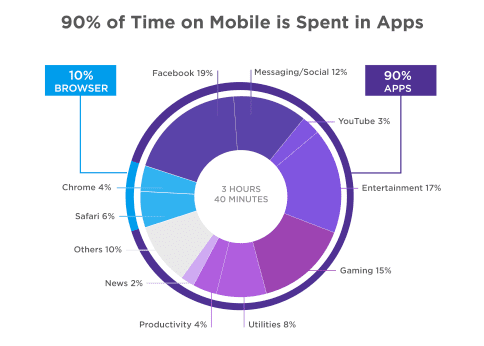
Consumers clearly love to use apps, so the opportunity is there.
The key is finding out how to choose the perfect app that will peak user interest and ultimately get downloads.
But you need to realize that downloads alone don’t always directly translate to dollars.
Building an app is expensive, and you’ll come across hidden development costs along the way.
So before you dump all of your money into your new app idea, you’ve got to make sure it will generate a profit.
Here’s what you need to know.
App Monetization Models: In-App Purchases vs. a Mobile Site
For those of you who already have an existing business, lets assume that your company has a website.
Hopefully, that site has been optimized for mobile devices.
Websites that aren’t mobile friendly will turn visitors away, so if that’s not something you’ve done, it needs to be a priority.
Now, let’s discuss the customer experience and how it relates to their purchasing habits. This will play a big role in your app monetization strategies.
Do you think users prefer buying on a mobile site or directly through a mobile application?
Apps win. Here’s why.
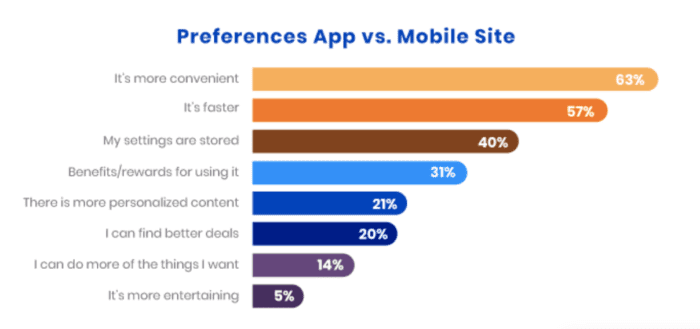
Convenience was the number one answer from respondents.
The other top responses also mirror convenience and enhance user satisfaction.
Your customers want everything fast.
As mentioned earlier, if your website isn’t optimized for mobile devices, speed can be an issue.
But that’s not a problem when people navigate through your app.
Think of your app like any other business. The easiest way to make money is by keeping the customers happy and keep them coming back. That’s why you should turn your website into an app.
In addition to speed and convenience, the checkout process on a mobile purchase is also much simpler.
In-app purchases in free mobile apps get charged directly to the customer’s credit card associated with the app stores (Google Play Store or Apple App Store account). This is easy for app users since they don’t have to enter any credit card information to complete in-app purchases.
Look how easy it is to buy something within an app if your customers have Apple Pay linked to their devices.
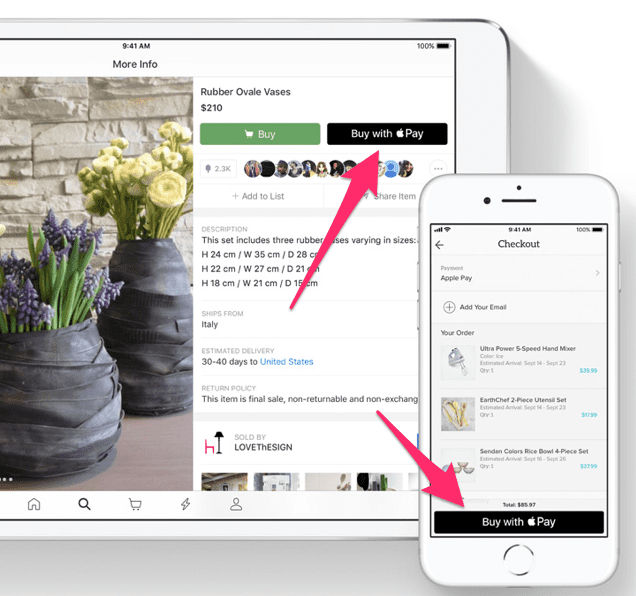
One click and done. It’s that easy for the customer. That’s how free apps make money.
How does this compare to a mobile site?
We’ve already established that speed is a factor, but for argument’s sake, let’s say your mobile site already runs fast too.
What else could slow the customer down?
They won’t have their cards or accounts linked to your mobile site, so they’ll have to input all of their information.
The customer has to log in to their PayPal account or enter their credit card information.
Overall, it’s just a longer process and more of a headache for the user.
Plus, typing out all of that information on a small screen leaves room for errors that can slow things down even more.
Don’t get me wrong. I’m not saying your mobile site shouldn’t have a checkout page or have ways to generate money through credit card purchases.
All I’m trying to do is emphasize that in-app purchases are better.
The platform that you launch your app on matters too.
iOS vs. Android In-App Purchases
Take a look at the difference between the iOS and Android purchases.
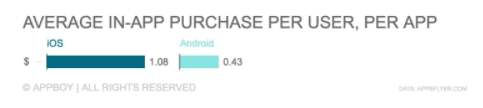
The average purchase per user on iOS platforms are more than double Android’s.
That doesn’t mean that you should choose one over another.
While iOS may have a higher number for the average purchase, Android dominates in terms of total users.
Looking back at fourth-quarter smartphone sales last year, there were 432 million devices sold.
Of the 432 million phones, 77 million had iOS software while 352 million ran on Android’s platform.
The two platforms combined for 99% of the market share, but Android alone accounts for 81.7%.
With that said, 16% of Android developers earn over $5,000 per month with their mobile apps, and 25% of iOS developers make over $5,000 through app earnings.
So keep these figures in mind as you’re comparing the differences between iOS and Android app development.
App Monetization Strategy For Physical Products
We briefly touched on this earlier, but I wanted to continue to elaborate on this topic.
To successfully sell consumable products through an app, you’ve got to put yourself in the minds of a mobile shopper.
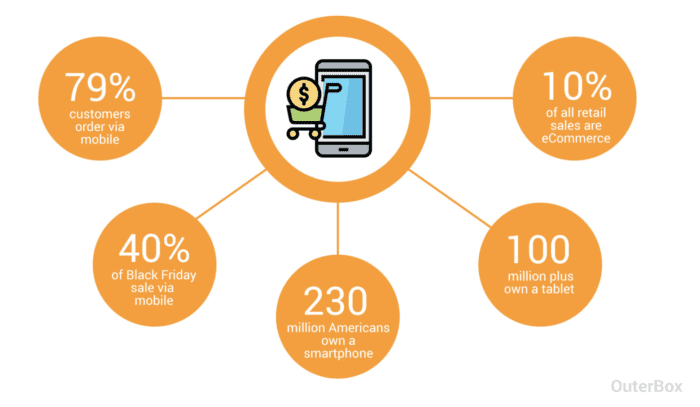
79% of smartphone users have bought something online in the past six months. This number continues to grow each year.
You don’t need to become the next Amazon. I’m going to show you an example of a less-known company that knows how to use their mobile app to drive sales and make money.
You can follow their lead and apply their strategies to your app if you’re selling a physical product as well.
I’m referring to the company, Touch of Modern.
70% of the company’s total sales are generated from mobile devices. Roughly two-thirds of those sales come directly from their app. So how do they do it?
Roughly 150,000 to 200,000 users download this app each month. 57% of their shoppers are repeat customers.
When you have the ability to focus on customer acquisition and customer retention at the same time, it’s a formula for success.
It’s their checkout flow that makes Touch of Modern so successful.
When you download the app, you’ll create a profile that securely saves your information.
That way whenever customers open the app, they can get straight to shopping.
They use a simple navigation screen. Customers can easily search for and scroll through items that they’re interested in.
Once they find something that peaks their interest, they can click on the product to find out more information.
Now the user will see a detailed description of the product in addition to a larger photo.
If they like what they see and read, they can add it to their shopping cart with just one click.
Once it’s in their cart, the customer can checkout in just one simple click.
That’s it.
Their app allows users to complete the shopping and purchase process in just three steps.
There’s way less friction here compared to a mobile ecommerce site.
Plus, Touch of Modern can communicate with their customers better from the mobile app.
They send app users notifications with daily deals and discounted items to encourage more purchases.
Ultimately, this strategy works.
If you’re currently selling products on your website and mobile site, you can generate more revenue by successfully building a mobile app.
Monetization Methods For Free Apps vs. Paid Apps (Free App Monetization Strategy)
Something else you’ll want to consider is whether or not you’re going to charge users to download your app.
On average, you would obviously generate a higher revenue per download.
It may seem like a nice way to get some up front profits, but you might turn people away if they have to pay.
90% of the apps on the Apple App Store are free. Free apps make money.
But that doesn’t mean you have to go that route.
Paid apps are a great way to get more loyal customers. If they are willing to make the initial purchase just for installation, they may be more likely to use it and make additional purchases.
However, if you’re an established brand that already has retail channels and existing customers (like Touch of Modern), it’s probably in your best interest to offer your app for free.
People download those apps so they can save money and receive discounts, not spend more money just to have the option of shopping.
Keep in mind; your app will also have competition.
So customers realize that they can find something similar and potentially better for free, rather than paying to download yours.
If you’re offering an app for free, you can find other revenue channels. Check out this data from Statista:
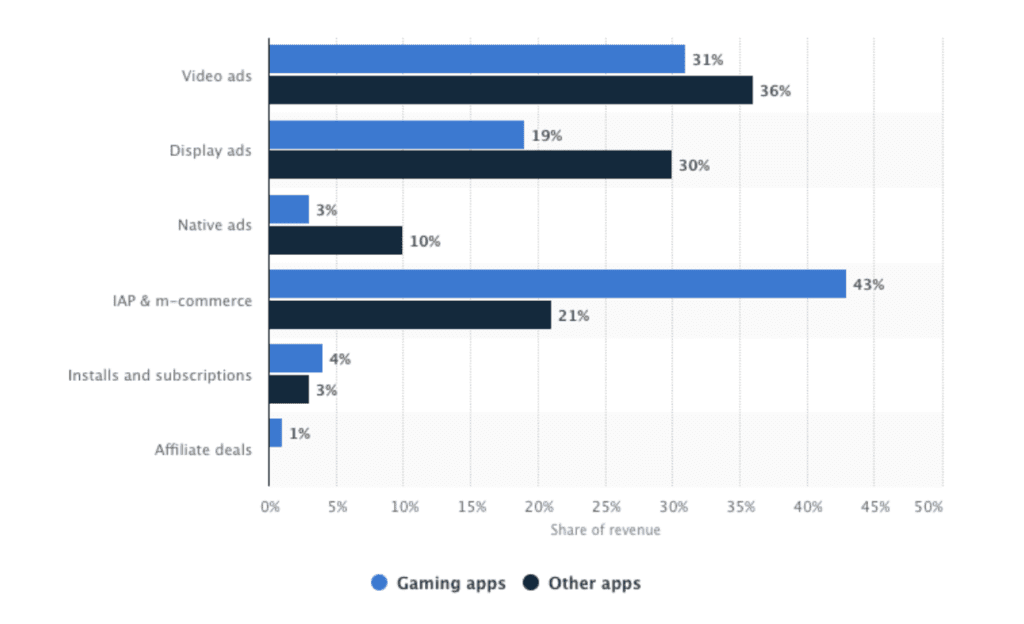
With free apps, you may get significantly more downloads, but the users could be less engaged. If they don’t pay, there’s no commitment. They could potentially download your app, check it out once and never use it again.
While they may sound discouraging, you shouldn’t look at it that way.
It doesn’t cost you anything to have users download your app and never use it.
Sure, you’d prefer active users, but at the end of the day, it’s not going to be detrimental to your company.
If you’re on the fence about releasing a free or paid app, I’d lean towards recommending a free download.
It will increase the chances of getting more downloads, and you can make money through other sources.
Here’s a look at the ad CPM rates in the US for different mobile app advertisements.
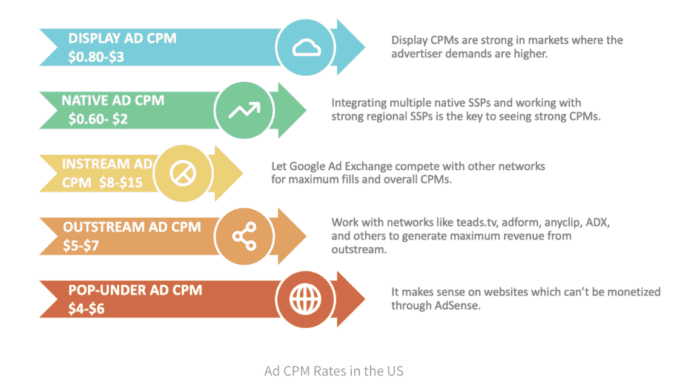
So there’s definitely some money to be made here if you can sell advertising space on your app.
Keep in mind, these numbers are just averages, and they aren’t set in stone.
If you have tons of active daily users and your app grows in popularity, you can negotiate a higher rate from advertisers based on those numbers.
Freemium Upsell
Free apps make money. You could always use the freemium model, which is popular in startups and gaming apps. With this method, the free version of your app might have display ads, pop-ups, sponsorships, video ads, banner ads, or other ways to generate app revenue from your target audience. You can earn money through a monthly sponsorship fee from top advertisers.
But then offer paid versions of the app with premium features, like eliminating mobile ads. The ad-free version delivers a better user experience.
Some of the most successful apps make money by offering premium app content to make money. Others have a free app version and another version for paid apps.
Here’s an example. Let’s take a look at how a popular dating app accomplishes this on their platform. I’m sure you’ve heard of Tinder. Users can download the app for free and use the basic functions. But they offer premium content and functions based on a monthly subscription.
The concept is super simple. Users create a profile and add photos of themselves.
Based on their location and preferences, they’ll see photos of other users who match their search criteria (age, gender, etc.).
If they like another user’s profile, they swipe right. If they don’t, they swipe left.
When two people both swipe right on each other, they get connected and can start a conversation.
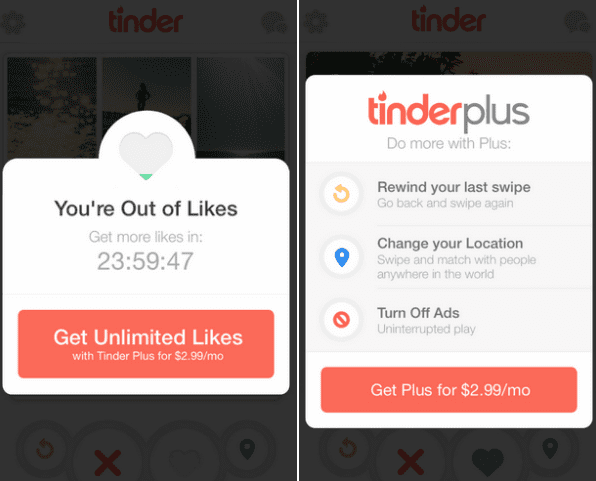
Everyone who downloads this app has access to these features for free. But there are certain restrictions. If users swipe right on too many profiles in a day, they can’t continue searching for 24 hours.
Subscription Models
Another way to generate money from a free app is with upgrades and subscriptions. The subscription model is great for recurring revenue.
That’s where a premium subscription comes in play.
If users want to have unlimited likes, they can upgrade their account to access this functionality.
The upgraded subscription comes with other bonus features like a location change, rewinds, and an experience without advertisements.
You can apply this same business model and pricing strategy to your app. Let users download and use the app for free, but withhold the best features for users who are willing to pay.
Advertising
Displaying in-app advertisements is another popular monetization strategy. This is one of the easiest ways to start making money from an app right away.
Unless you have affiliate marketing partners, then displaying your ads through a third-party ad network is the play here. Those ad networks will automatically display ads to your users, and you’ll be compensated accordingly.
The exact monetization model varies based on the ad type, and your agreement with the network. For example, you just get a fixed fee for ads based on the views they’re getting. Other times, you could get a higher payment if a user clicks the ad or performs an action based on the ad.
The four main types of mobile ads are interstitial ads, banner ads, in-app video ads, and native ads.
Referral Marketing
Referral marketing is another form of mobile advertisements. With referral programs, you’ll be advertising a third-party product or service in your app.
Many referral programs are higher paying than traditional ads. This expands on what I was describing above. There is typically a referral link that you’ll be promoting, and the payout is usually based on one of these models:
- Cost Per Action or Cost Per Acquisition — This measures a post-installation action to see how engaged users are with the ad. For example, registering for a free trial, buying a product, or creating an account could all fall into this category.
- Cost Per Click (CPC) — As the name implies, you’ll get paid based on the number of times users click the advertisement in your app with the CPC model.
- Cost Per View (CPV) — With CPV models, you’ll get paid just for displaying the ad. As long as it’s viewed by a user, you’ll get paid per view. These are typically lower paying, since the user doesn’t need to click the ad or perform an action.
- Cost Per Install (CPI) — This is a specific type of action. You’d be paid each time a user clicked an advertisement that led to the installation of another app.
Referral marketing programs can be highly lucrative if you find the right partners.
Here’s a quick recap on how free mobile apps make money:
- In-app advertising (native ads, banner ads, and in-app ads like the Weather Channel App and other such apps)
- App purchases (products or service apps)
- Offer in-app purchases (like an upgrade in gaming apps)
- Freemium apps
Regardless of your app idea, you can still launch a free mobile app, drive free app downloads, and have a successful app that makes money. Some of the most popular mobile apps are free and still get plenty of app downloads.
Conclusion
Not all apps earn money.
If your plan is to just build one without an app monetization model and just sit back to collect your money, you’ll be in for a rude awakening.
Like a business, you need to have a strategy and goal before you start building an app. It could take some time to get right. When you make your own app or use a mobile app development company, you’ll need to decide on the best monetization strategy for your situation.
You might have better luck with some platforms over the other. App users behave differently. So it wouldn’t be shocking if you had more success selling paid apps for your iOS apps compared to Android apps. For your Android app, you might need to use another monetization model to make money, like a freemium model or in-app advertising. Results will vary from the respective app stores.
Mobile users prefer apps compared to mobile sites.
So while your company definitely needs a website that’s optimized for mobile devices, an app can make the customer experience much better.
Sure, you’ll have some upfront costs when you build, develop, and launch your app.
But you can save time and money by creating an app through the Buildfire platform.
If you’re selling a physical product, having a mobile app will help you generate more money.
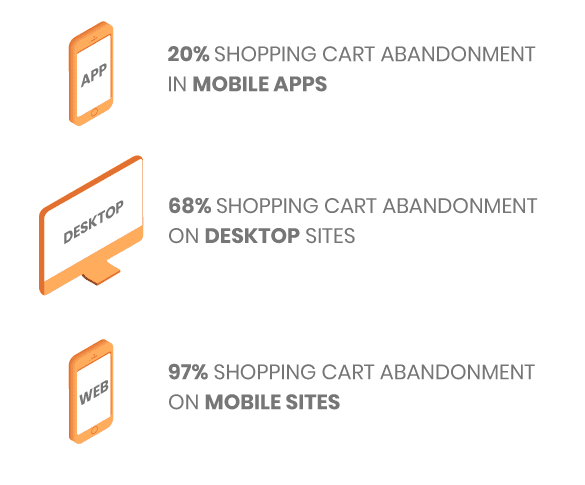
Compared to desktop sites and mobile websites, mobile apps have the lowest shopping cart abandonment rates. Why?
The whole process is easier for the customer. They can buy something with just a few clicks as opposed to entering all of their information.
You’ll also want to decide if you’re going to offer the app for free or make users pay to download it. Ultimately, that decision is completely up to you. But I’d recommend offering free downloads.
App owners and app developers can still generate money from in-app purchases, advertisements, and subscriptions that offer premium upgrades.
If you follow this guide, you’ll be on the right track to building a mobile app that actually makes money.
Do you plan on releasing your mobile app on iOS for the Apple App Store, Android for the Google Play Store, or both?
The amount of money you can make from 1,000 app downloads directly depends on your monetization strategy. It’s also important to remember that downloads might not mean return users. So, you should consider how much money you can make from 1,000 users from your chosen monetization strategy.
Apps that have