

The short answer: Mobile app marketing is the full-lifecycle discipline of acquiring, activating, and retaining app users — not just driving installs. Teams that separate acquisition from retention leave most of their growth on the table.
Mobile app marketing is the full-lifecycle discipline of acquiring, activating, and retaining users across a native iOS or Android app. It spans every channel and tactic from the day you decide to launch to the year-three retention campaigns that keep your best users engaged. It is not a synonym for “get more downloads.”
The frame matters because the frame determines the budget. Apps that treat marketing as a download-acquisition problem optimize for installs, watch retention collapse, and spend the next quarter trying to refill a leaky bucket. Apps that treat marketing as a returning-user problem — with an acquisition step at the front — build compounding growth instead.
This guide maps the full picture: the pre-launch groundwork most teams skip, the channel set that actually moves the needle, a channel-selection matrix you can apply to your own situation, a 12-month plan skeleton, the most expensive mistakes, and where a platform fits in the stack.
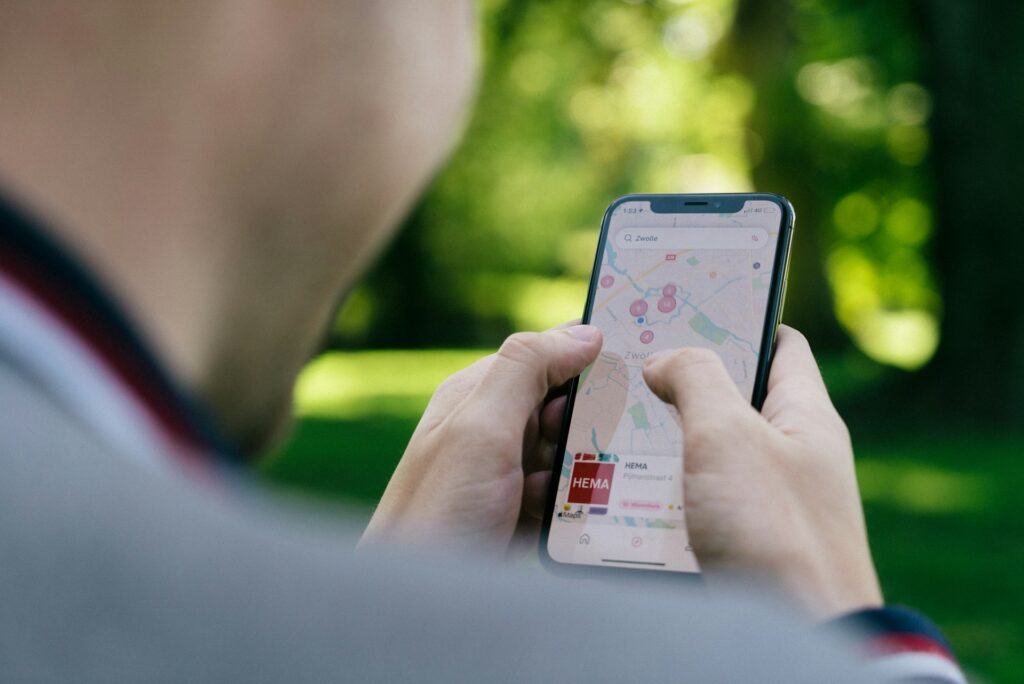
What is mobile app marketing?
Mobile app marketing is the coordinated set of strategies and channels a business uses to reach potential users before they download, convert them to active users after they do, and keep them engaged and spending over time. It covers three phases: pre-launch (building awareness and a waitlist before the app is live), launch and acquisition (paid and organic channels that drive installs), and retention marketing (push notifications, in-app messaging, loyalty mechanics, and lifecycle campaigns that pull users back).
The distinction from general digital marketing is specificity of surface. App marketing operates across App Store product pages, in-app touchpoints, and mobile-first channels — all governed by platform rules that change without warning. A campaign that works on desktop web may fail entirely when the user’s primary interface is a 6-inch screen with a notification badge on it.
Why does mobile app marketing matter in business terms?
App Annie (now data.ai) reported in its 2023 State of Mobile that consumer spending in apps exceeded $170 billion globally that year. That money flows to apps with high retention, not high install counts. The business consequence of getting this wrong is straightforward: you pay user-acquisition cost once, and if users churn in week one, you pay it again to replace them — indefinitely.
Retention is where margin is made. According to Bain & Company’s foundational research on customer loyalty, increasing customer retention rates by 5% increases profits by 25% to 95%. The mechanism in apps is the same: a retained user generates lifetime revenue, refers friends, and costs nothing to reacquire. A churned user costs you twice — the original acquisition spend and the replacement spend.
The second business consequence is store visibility. Apple’s App Store and Google Play both rank apps partly on engagement signals: session length, ratings, and re-opens. An app with strong retention ranks higher organically, which reduces paid acquisition cost. The two levers are not independent.
What are the core app marketing channels?
App marketing solutions fall into six broad categories. Each has a different cost structure, time-to-result, and fit by business type.
App Store Optimization (ASO)
ASO is the practice of improving an app’s visibility in App Store and Google Play search results through keyword targeting, creative optimization, and ratings management. It is the organic search equivalent for app stores. A 2023 study by Sensor Tower found that over 65% of app downloads on iOS come from App Store search — making ASO the highest-leverage, lowest-cost channel for any app with a 12-month horizon. It compounds: unlike paid spend, a well-optimized listing keeps working without ongoing budget.
Paid user acquisition (UA)
Paid UA includes Apple Search Ads, Google App Campaigns, Meta’s Advantage+ app campaigns, and TikTok App Installs. Apple Search Ads typically delivers the highest-intent installs on iOS because the user is already searching in the store. Meta and Google cast wider nets at lower CPIs but require stronger creative volume — Meta’s internal benchmarks suggest creative fatigue sets in within 2–4 weeks. Budget for creative production, not just media spend.
Owned channels — push, in-app, and email
Push notifications, in-app messages, and email are the highest-ROI retention channels because they reach users you already have at near-zero marginal cost. OneSignal’s 2023 Mobile Engagement Benchmarks report found that personalized push notifications drive 4x higher open rates than broadcast messages. This is where most app marketing budgets are underallocated. A well-structured push notification platform and a purpose-built in-app messaging platform are infrastructure decisions, not campaign decisions — get them in place before launch.
Content and SEO
Content marketing drives app discovery through web search, builds brand authority, and feeds the top of the acquisition funnel at scale. For apps targeting a specific vertical — fitness, restaurant ordering, events — keyword-targeted content can capture users before they’ve even searched the app store. The conversion path (web article → app store listing → install) is longer, but the cost per acquired user is often 70–80% lower than paid UA at scale.
Referral and word-of-mouth
Referral programs turn your existing users into an acquisition channel. Dropbox’s referral program — which gave both referrer and referee extra storage — is the canonical example: it grew the user base by 3,900% over 15 months (Dropbox case study, 2010). The mechanic works in any app where the product has network value or social proof. For loyalty-driven apps, a Loyalty plugin can structure referral rewards alongside points and tiers.
Partnerships and cross-promotion
Distribution partnerships — co-marketing with a complementary brand, placement in a partner’s newsletter, or a presence at an industry event — can deliver high-quality installs at negotiated cost rather than auction cost. For apps serving a specific vertical (a membership app, a restaurant app, an event app), a single partnership with a relevant trade association or media brand can outperform a month of paid spend.
What is retention marketing, and why does it belong inside app marketing?
Retention marketing is the set of tactics that bring existing users back to the app, deepen their engagement, and extend their lifetime value. It includes push notification campaigns, in-app onboarding flows, loyalty and rewards programs, lifecycle email, re-engagement paid campaigns, and win-back sequences for users who have gone dormant.
It belongs inside app marketing — not inside product, not inside CRM, and not in a separate “engagement team” — because the channels overlap completely. The same tool that sends an install attribution ping sends a day-seven re-engagement push. The same analytics platform that tracks campaign-level CPI tracks 30-day retention. Splitting the function creates handoff problems and attribution gaps that cost more to reconcile than to prevent.
Appsflyer’s 2023 State of App Marketing report found that apps in the top quartile for retention spend roughly 40% of their marketing budget on retention channels. Median apps spend under 15%. That gap is where the compounding happens.
How does a mobile app marketing channel selection matrix work?
Not every channel fits every business. The decision framework below maps channels against two axes: budget and business type. Use it to prioritize, not to exhaustively run everything at once.
| Channel | Minimum viable budget (monthly) | Best fit — business type | Time to measurable result |
|---|---|---|---|
| ASO | $0 (time cost only) | All app types | 60–90 days |
| Apple Search Ads | $1,000–$5,000 | Apps with clear search intent | 2–4 weeks |
| Meta App Campaigns | $3,000–$10,000 | Consumer, B2C, lifestyle | 4–6 weeks |
| Push notifications | Platform cost only | All — highest ROI for retention | Immediate |
| In-app messaging | Platform cost only | All — onboarding and upsell | Immediate |
| Content / SEO | $2,000–$5,000 (content production) | Vertical-specific apps with search demand | 3–6 months |
| Referral program | Reward cost + dev time | Apps with network or social value | 30–60 days |
| Partnerships | Negotiable — often non-cash | Vertical apps with clear partner set | Highly variable |
The selection principle: start with the channels that have the shortest time-to-result at your current budget, then layer in the compounding channels (ASO, content) once you have enough retention data to know your LTV. Running paid UA before you know your day-30 retention rate is spending money to fill a bucket you haven’t checked for holes yet.

What does a 12-month mobile app marketing plan look like?
This skeleton is a framework, not a prescription. Adapt the timing and budget allocations to your specific launch date and channel mix.
Months 1–3: Pre-launch and foundation
- Build your App Store and Google Play listings: keyword research, screenshots, preview video, and description copy. This is the single highest-leverage pre-launch task.
- Start a content program targeting the top 10–20 keywords your potential users search on web. Organic content takes time; the clock starts now.
- Set up your analytics stack. You need mobile attribution (Appsflyer, Adjust, or Branch), store analytics, and a retention cohort view before launch — not after.
- Build a waitlist and email audience. Even 500 engaged pre-launch subscribers materially improves launch-day install velocity, which improves store ranking.
- Identify your top 3 partnership targets and open conversations.
Months 4–6: Launch and paid acquisition
- Launch with your best creative — not your minimum viable creative. First-week store ranking signals are hard to recover from.
- Run Apple Search Ads on exact-match brand and category keywords from day one. This is the highest-intent, lowest-risk paid channel at launch.
- Set up your day-1, day-7, and day-30 push notification sequences. Onboarding is not a product problem; it’s a marketing problem.
- Monitor your day-7 retention rate weekly. If it drops below your benchmark, pause acquisition spend and fix the onboarding before adding more users to the funnel.
- Collect and respond to early reviews. App Store rating affects both conversion rate and organic ranking.
Months 7–9: Growth and channel expansion
- Expand paid UA to Meta and Google once you have 90 days of retention data and a validated LTV estimate.
- Launch a referral program if your retention cohorts show strong day-30 numbers. Referral programs amplify retention — they don’t compensate for churn.
- A/B test your App Store listing: icon, screenshots, and short description. Apple Product Page Optimization and Google Store Listing Experiments are free to use.
- Activate your partnership distribution. Co-marketing placements typically perform best when you have social proof (reviews, press) to point to.
Months 10–12: Retention and lifecycle depth
- Build a formal lifecycle email and push program: new user onboarding, feature adoption, re-engagement for dormant users (30-, 60-, 90-day segments), and win-back for churned users.
- Layer in loyalty mechanics — points, tiers, or exclusive content — if your app type supports them. Loyalty programs reduce churn by making leaving costly, not just inconvenient.
- Run a formal ASO audit: refresh keyword targeting based on 9 months of search traffic data, update screenshots to reflect new features, solicit a new round of ratings.
- Set your year-two budget allocation. If your retention curves are healthy, shift budget toward scaling acquisition. If day-30 retention is still below benchmark, double retention investment before scaling.
What are the most common mobile app marketing mistakes?
Skipping pre-launch ASO
Most teams treat the App Store listing as a publishing step, not a marketing asset. They write the description the week before launch and move on. The result is a listing with no keyword coverage, generic screenshots, and a preview video that explains features rather than communicating value. This costs organic visibility for months — often permanently, because a listing that launches with weak signals tends to stay ranked poorly. ASO is not a post-launch fix; it’s pre-launch infrastructure.
Scaling paid UA before measuring retention
This is the most expensive mistake in app marketing, and it happens because paid acquisition has a clear feedback loop (spend → installs → attributed conversions) that feels like progress. Retention is slower to measure and harder to attribute to a single campaign. The result: teams spend tens of thousands of dollars acquiring users who churn in week one, then wonder why their LTV doesn’t justify the CPI. The fix is simple — don’t increase paid UA spend until you have at least 30 days of retention data on a meaningful cohort.
Treating push notifications as broadcast messages
Push notifications sent to all users regardless of behavior or segment perform like email blasts from 2008: high unsubscribe rates, low opens, and the permanent loss of the notification permission. OneSignal’s 2023 benchmarks show median push opt-out rates spike when apps send more than 2 non-personalized notifications per week. The channel is not broken — the approach is. Segment by behavior, personalize by lifecycle stage, and test frequency rigorously.
Orphaning retention inside a “product” function
When push notifications are owned by engineering, in-app messages are owned by product, and lifecycle email is owned by CRM, the user sees a disjointed experience with redundant messages, contradictory offers, and gaps in critical moments (like day 7, when most churn occurs). Retention marketing needs to be a marketing function with access to all the channels, coordinated around user lifecycle stages rather than team org charts.
Ignoring competitor visibility
Your App Store ranking is relative, not absolute. A competitor’s ASO improvement can push you down the rankings without you changing anything. Teams that don’t monitor competitor keyword coverage, creative changes, and rating trajectories are flying blind on their own organic performance. Keeping that signal in view — even manually, via periodic competitor audits — is what separates teams that understand their ranking movement from teams that are just reacting to it.
How do you measure mobile app marketing performance?
The metrics that matter depend on the lifecycle stage, but five numbers should be on every app marketing dashboard, every week:
- Day-1, day-7, and day-30 retention rate — the foundational health metric. Industry median day-30 retention across categories is approximately 25–35% (Appsflyer, 2023); gaming skews lower, utility apps skew higher.
- Cost per install (CPI) by channel — tells you where acquisition efficiency lives, but only meaningful when paired with LTV by channel cohort.
- Push notification opt-in rate — a leading indicator of how much of your user base you can reach at near-zero cost. Rates vary widely by category but typically range from 45% to 70% on iOS (Airship, 2023).
- App Store conversion rate — the percentage of store page visitors who install. Improvements here reduce effective CPI on every paid channel simultaneously.
- Monthly active users (MAU) as a percentage of total installs — the blunt instrument for cumulative retention health. A declining ratio means you’re losing users faster than you’re replacing them.
A mobile app analytics platform that surfaces these five metrics in a single view is not a luxury — it’s the minimum instrumentation for making informed budget decisions.
How does app marketing differ by app type?
The channel mix and lifecycle priorities shift meaningfully depending on what kind of app you’re running.
Membership and community apps live or die on activation — getting a new member to complete their profile and participate at least once in the first 48 hours. Referral programs and in-app onboarding flows are the highest-leverage investments. A membership app also has natural cohort structure (membership tiers, annual renewal cycles) that lifecycle marketing can exploit directly.
Restaurant and food-service apps have naturally high-frequency use cases (ordering is habitual) but intense competitive pressure from aggregator platforms. The marketing priority is convincing users to order direct rather than through a marketplace. Loyalty mechanics — points per order, free-item milestones — have a strong track record for shifting ordering behavior. Buildfire’s restaurant app builder integrates these mechanics directly.
Event apps have a different lifecycle entirely: intense engagement during the event window, then near-zero engagement between events. Marketing for event apps needs to solve the dead-period problem — content, year-round community features, and early-access offers for the next event are the primary tools. See how event apps approach this lifecycle.
Workforce and internal apps operate in a mandatory-adoption environment, which removes the acquisition problem and intensifies the engagement problem. Marketing is internal communications and change management. Push and in-app messaging are the retention channels; the objective is habit formation rather than voluntary re-engagement.
Where does Buildfire fit in a mobile app marketing stack?
Buildfire is a mobile app development platform — it’s where the app gets built, published, and managed. The marketing capabilities are built into the platform rather than bolted on afterward, which matters because the gap between “the team that built the app” and “the team running marketing on it” is where most execution problems live.
The mobile app user engagement platform covers the owned-channel layer: push notifications, in-app messaging, and audience segmentation — the infrastructure that retention marketing runs on. You bring your paid UA and ASO strategy; the platform gives you the tools to keep the users you acquire.
Buildfire is honest about what it isn’t: it’s not an ad network, not an ASO agency, and not a substitute for a media budget. If you need an end-to-end managed acquisition service, that’s a different category. What Buildfire provides is the infrastructure to make your acquisition spend worth something — because users who land in a well-instrumented, well-messaged app stay longer, spend more, and refer more than users who land in a generic one.
This same toolkit handles the product-side mechanics that marketing campaigns trigger: session depth, feature adoption, and the behavioral signals lifecycle campaigns use for segmentation — all inside the one Control Panel, not spread across separate marketing and product-analytics tools.
If you’re earlier in the process — still deciding whether to build or trying to understand what the right app type looks like for your business — the relevant starting point is the platform overview, not the marketing layer. Get the foundation right before you build the marketing machine on top of it.
Frequently asked questions
What is mobile app marketing?
Mobile app marketing is the full-lifecycle discipline of acquiring, activating, and retaining users for a native iOS or Android app. It covers pre-launch awareness, app store optimization, paid user acquisition, and retention marketing via push notifications, in-app messaging, and loyalty programs — not just driving installs.
What is the difference between app marketing and app store optimization (ASO)?
ASO is one channel within the broader app marketing mix. It specifically covers improving an app’s visibility in App Store and Google Play search results through keyword targeting, creative assets, and ratings management. App marketing encompasses ASO plus paid UA, owned channels like push and in-app messaging, content, referral programs, and partnerships.
How much should you spend on mobile app marketing?
Budget allocation depends on your lifecycle stage. Pre-launch, the highest-leverage spend is on content production and ASO — both of which are relatively low cost. At launch, Apple Search Ads is the highest-intent paid channel and is viable from $1,000–$5,000 per month. Retention channels (push, in-app messaging) operate at near-zero marginal cost once the platform is in place. Don’t scale paid UA budget until you have 30-day retention data — spending before that point means you may be paying to refill a leaky funnel.
What is a good app store conversion rate?
App Store conversion rates — the percentage of page visitors who install — vary widely by category and creative quality. Sensor Tower reported in 2023 that median iOS conversion rates range from roughly 30% to 65% depending on category, with utilities and productivity apps typically converting higher than games. Improving your conversion rate with better screenshots, a preview video, and a compelling short description reduces effective CPI on every paid channel simultaneously.
What is retention marketing in the context of a mobile app?
Retention marketing is the set of campaigns and channels designed to bring existing users back to the app, deepen their engagement, and extend their lifetime value. It includes push notification sequences, in-app onboarding flows, loyalty and rewards programs, lifecycle email, re-engagement paid campaigns, and win-back sequences for dormant users. Appsflyer’s 2023 State of App Marketing report found that top-quartile apps allocate roughly 40% of their marketing budget to retention channels.
What channels drive the most mobile app installs?
Sensor Tower’s 2023 data shows that over 65% of iOS downloads come from App Store search, making ASO the single highest-volume organic install channel. For paid installs, Apple Search Ads delivers the highest-intent installs on iOS. Meta App Campaigns and Google App Campaigns reach broader audiences at lower CPIs but require strong creative volume and longer testing cycles.
How do you measure mobile app marketing success?
The five core metrics are: day-1, day-7, and day-30 retention rate; cost per install (CPI) by channel; push notification opt-in rate; App Store conversion rate; and monthly active users as a percentage of total installs. LTV by acquisition channel cohort is the number that should govern all paid UA budget decisions — CPI alone tells you nothing without it.
When should you start marketing a mobile app?
Marketing should start before the app launches — ideally 2–3 months ahead. The pre-launch window is when you build your App Store listing with proper keyword coverage, start content that feeds organic search traffic, and build a waitlist that improves launch-day install velocity. Teams that start marketing on launch day leave the most valuable lead time on the table.