
Qualify Your Leads
It’s tempting to work with every business that has a need for your services. But being a bit more selective is one of the best ways to improve your agency’s profitability. You might ultimately sign fewer clients, but the prospects that end up converting will be much better for your business. Lots of agencies do have some type of lead qualification process. However, most of that is based on whether or not the client actually needs the services being offered. But in terms of profitability, you need to take those qualification factors one step further. For example, let’s say you’re a web designer or a developer. There’s a big difference between a single person looking to start a personal blog and a small business owner that wants to improve their online presence. Sure, each prospect is a potential lead, but one definitely has more profitability opportunities than the other. The best way to qualify profitable small business agency clients is with the “BANT” approach.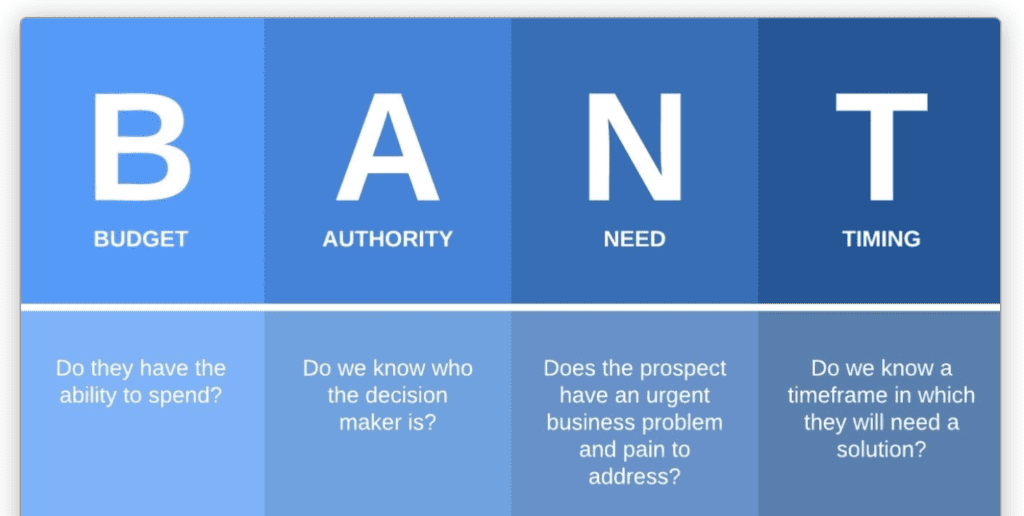 It’s easy to qualify prospects using these criteria on a lead generation form or through an initial discovery call.
Don’t leave the budget form field open-ended. Instead, let your leads select an option within a range. For example:
It’s easy to qualify prospects using these criteria on a lead generation form or through an initial discovery call.
Don’t leave the budget form field open-ended. Instead, let your leads select an option within a range. For example:
- $2,500 – $5,000 per month
- $5,000 – $10,000 per month
- $10,000 – $15,000 per month
- $20,000+ per month
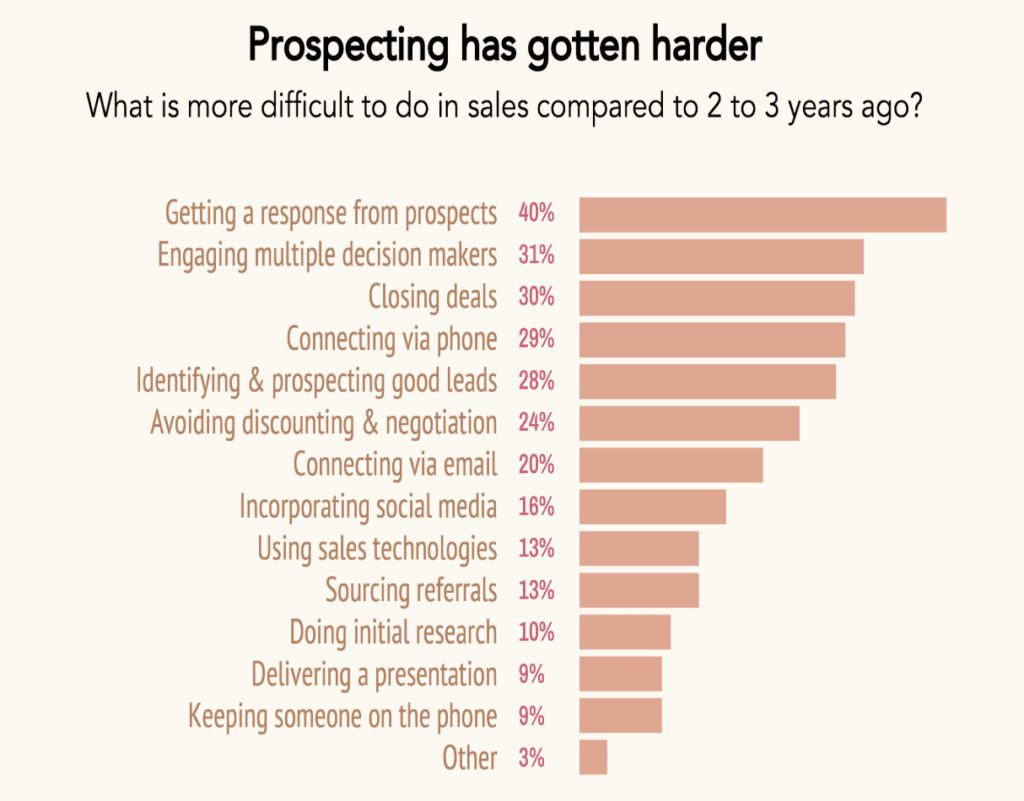 Rather than stressing and wasting valuable resources hunting down leads that aren’t in a rush to proceed, you can focus your efforts on the ones who are. This lead qualification strategy will ultimately help your agency secure profitable agency clients.
Expand Your Services
Another reason why some agencies struggle with securing profitable small business agency clients is because the services they offer are simply not very profitable. This is especially true for labor-intensive tasks and services. Don’t get me wrong. I’m not suggesting that you abandon your existing offerings. But by expanding to new services that have higher profit margins, you can make up for the difference in low-margin services. I suggest adding on services that are hands-off and low-maintenance. These will deliver the highest profit margins. For example, let’s say your agency currently provides content and SEO solutions for small business clients. There aren’t any shortcuts to success here. Content actually needs to be created. Real results need to be delivered by you and your team. Whether it’s blog posts, landing pages, video content, or emails, someone has to do the work. At times, this type of agency work can be tedious and deliver low profits. But if you become a white label app reseller, your agency can benefit from high profits with very little manual labor. All you need to do is pay the for the app reseller platform, and upcharge your clients whatever rate delivers your desirable margins. You’re simply re-branding your agency’s name on a platform that already exists, and delivering those benefits to your small business clients. Expanding your service offerings will also make your agency more attractive to small business clients. For example, let’s say you have a marketing agency. According to a 2020 study, just 6% of small business owners outsource their marketing needs.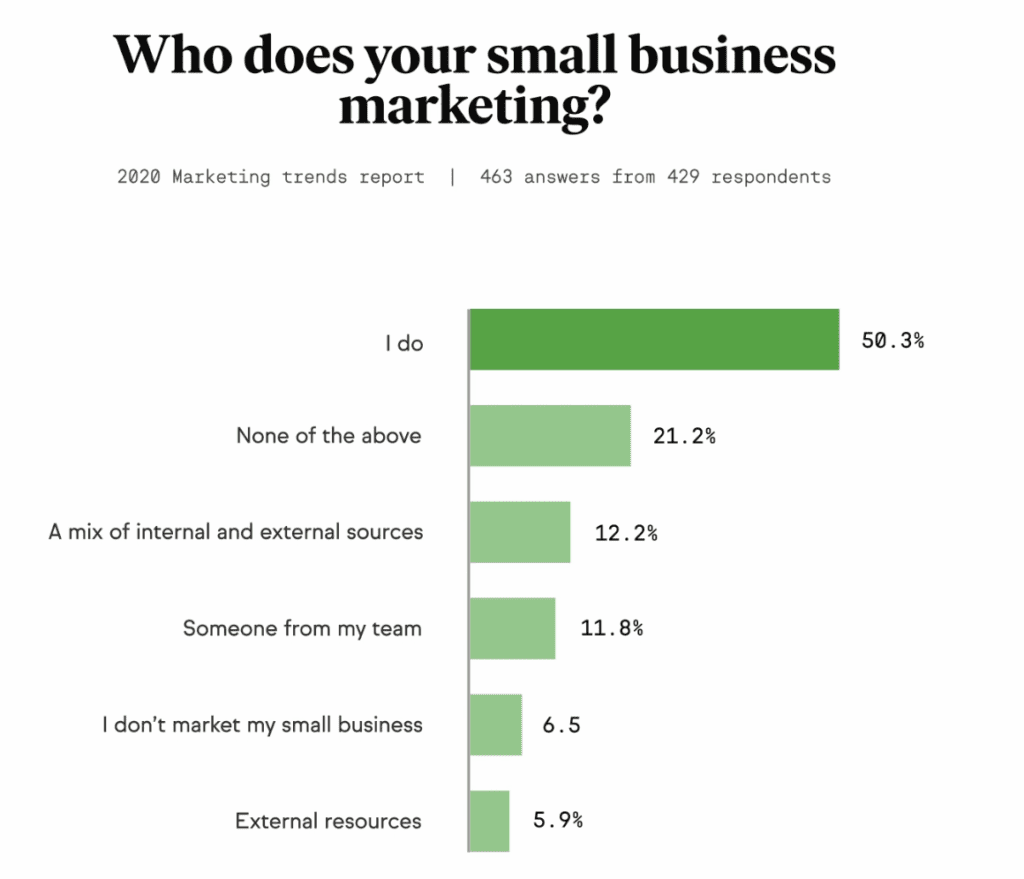 That’s such a small portion of the market that’s actually interested in your services. An even smaller percentage will fall within your qualification standards, as previously discussed.
So you need to find other ways to attract small business clients to your agency.
Small business owners have enough on their plate as it is. They aren’t interested in working with two or three different agencies for various services. It’s much easier for them to find a one-stop-shop for all of their needs.
That’s such a small portion of the market that’s actually interested in your services. An even smaller percentage will fall within your qualification standards, as previously discussed.
So you need to find other ways to attract small business clients to your agency.
Small business owners have enough on their plate as it is. They aren’t interested in working with two or three different agencies for various services. It’s much easier for them to find a one-stop-shop for all of their needs.
Follow Industry Trends
Your agency needs to keep its finger on the pulse. The goals and mindset of a small business owner in 2020 are very different from those back in 2015. So if you’re still using an outdated formula, it will be challenging to secure the most profitable small business agency clients. Staying informed about industry trends will also keep you one step ahead of your competitors. On the flip side, ignoring new trends will give your competitors an edge over your agency. I’d recommend following agency trends, small business trends, as well as any niche-specific trends for businesses that you work with. For example, your agency might specialize in ecommerce, law firms, or healthcare. Regardless of your industry, you’ll quickly learn that all mobile trends are on the rise. These are two helpful resources to educate you on the latest mobile movements and tendencies. You should review the mobile app development trends of 2020 and the mobile commerce trends that will dominate 2020. Here at BuildFire, we want your agency to have the tools you need to be successful. So we’re always coming out with new guides and the latest research to keep you informed. Following the trends isn’t something you do once a year and forget about it. This will always be an ongoing process to further your knowledge. The more you know about your small business prospects’ wants and needs, the easier it will be to secure profitable agency clients. According to a recent study, 42% of small businesses currently have a mobile app.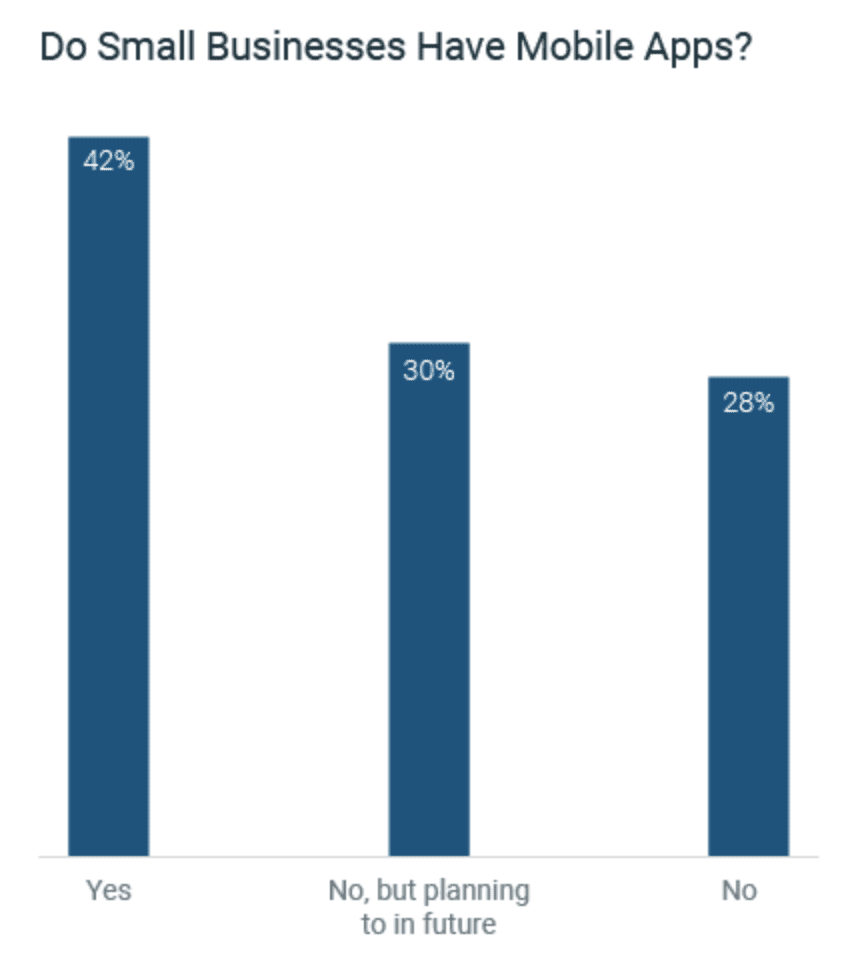 30% have plans to develop one in the future. The remaining 28% will surely adapt sooner or later as well.
This is a tremendous opportunity for agencies. If you can offer mobile app development services to small business clients, you’ll quickly benefit from high-profit margins.
Here’s the thing. Your clients need an app. If they don’t get it from you, then they’ll find someone else to help them build it. Since apps are in such high demand right now, it’s a service that your agency can charge a premium to provide.
30% have plans to develop one in the future. The remaining 28% will surely adapt sooner or later as well.
This is a tremendous opportunity for agencies. If you can offer mobile app development services to small business clients, you’ll quickly benefit from high-profit margins.
Here’s the thing. Your clients need an app. If they don’t get it from you, then they’ll find someone else to help them build it. Since apps are in such high demand right now, it’s a service that your agency can charge a premium to provide.
Upsell Your Existing Clients
I see so many agencies struggle with profitability because they’re continually focusing on customer acquisition. Obviously, your agency needs new customers to survive. If your new to the game and just getting started, this will definitely be a top priority for you. But that’s not the case for agencies that are well-established. Even if your profit margins are slim, you can make more money without getting new clients. Just look at your existing customers and find ways to provide them with new services. If you’ve had success helping your clients with one service, they’ll be inclined to listen to you when you offer them something else. You need to understand that small businesses don’t have infinite budgets. So they might be hesitant to use all of your services from day one. You may have five or ten different offerings, but a client might just start with one. That doesn’t mean that you’ll never get them to use your other services. Just give it time some and work on your upsell strategies. Acquiring new customers is costly, which will eat into your profit margins.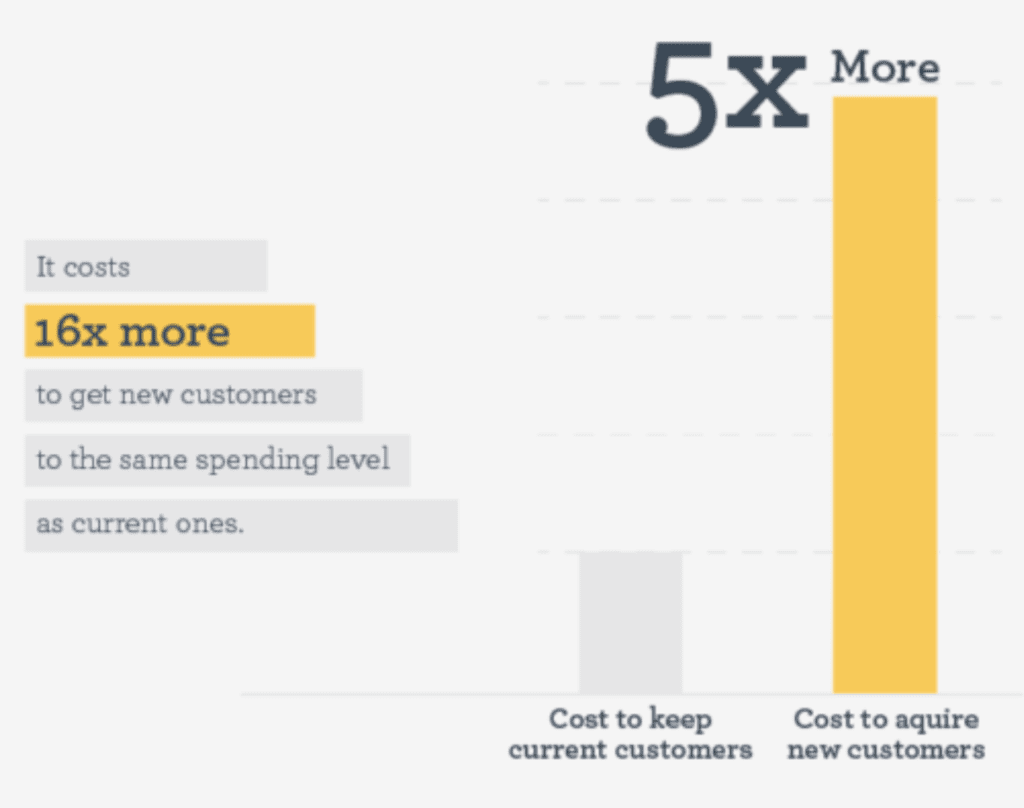 Obviously, keeping costs low is one of the best ways to remain profitable. Focusing on upselling your current clientele will be an ideal way to accomplish this.
Furthermore, you have about a 20% chance of selling a service to a new prospect. But your agency has a 70% chance of getting an existing customer to buy.
So if you can’t get your small business clients to buy your most profitable services from the beginning, don’t panic. You’ll still have plenty of opportunities to upsell them in the future. Take the time to get to know their business so you can offer exactly what they need. It might be three, six, or even 12 months down the road. But if you’re persistent, the client will buy.
Obviously, keeping costs low is one of the best ways to remain profitable. Focusing on upselling your current clientele will be an ideal way to accomplish this.
Furthermore, you have about a 20% chance of selling a service to a new prospect. But your agency has a 70% chance of getting an existing customer to buy.
So if you can’t get your small business clients to buy your most profitable services from the beginning, don’t panic. You’ll still have plenty of opportunities to upsell them in the future. Take the time to get to know their business so you can offer exactly what they need. It might be three, six, or even 12 months down the road. But if you’re persistent, the client will buy.
Prioritize Long Term Services
Providing more services will help your agency focus on client retention. Increasing retention rates by just 5% can boost profits by up to 95%. The most valuable agency services are long term. If you’re doing tasks that only take a month to complete and don’t require any further assistance, you’re going to be spending too much money on acquisition. As we previously discussed, that’s not a sustainable way to operate. For example, let’s say your agency specializes in small business web design. It’s unlikely that the business owner will want to change the design of the website on a regular basis. They might need some slight adjustments from time to time, but for the most part, once the design is complete, the client won’t have a need for your services anymore. To maximize your profits, you need to think of big picture solutions. What is something that your clients need that you can provide them with for years to come? Mobile app development is the perfect example. We already talked about the massive opportunity in this space for agencies targeting small businesses. App development projects can take six or even 12 months to complete. Once the app is built and launched, the client will still need ongoing maintenance and updates. These services will last for the lifetime of the app, which will be years. Even if you’re not a developer and don’t know how to code, you can become a white label reseller and allow your clients to create an app on their own using an app builder. It’s both a low maintenance and high margin offering for you, and it can result in securing clients for life. Check out this case study to learn how a real agency boosted its profits with an app reseller program. Your agency can have the same success in this space.Master the Pitch
Your agency services might be outstanding; I have no doubts about that. Unfortunately, the quality of your offerings is irrelevant if you can’t convey that message to your clients. This holds true for new prospects as well as your existing customers that you want to upsell. The very first thing you need to do is make sure you’re addressing the right person. If you’re not pitching the company’s decision-maker, it’s going to be a waste of your time and resources. In most cases, the owner will have the final say for small businesses. Next, you need to make sure that your pitch is actually solving a problem. Don’t be generic here. Each business will have different needs, so the pitch has to be unique. Here’s an overview of the top challenges for small businesses in the US.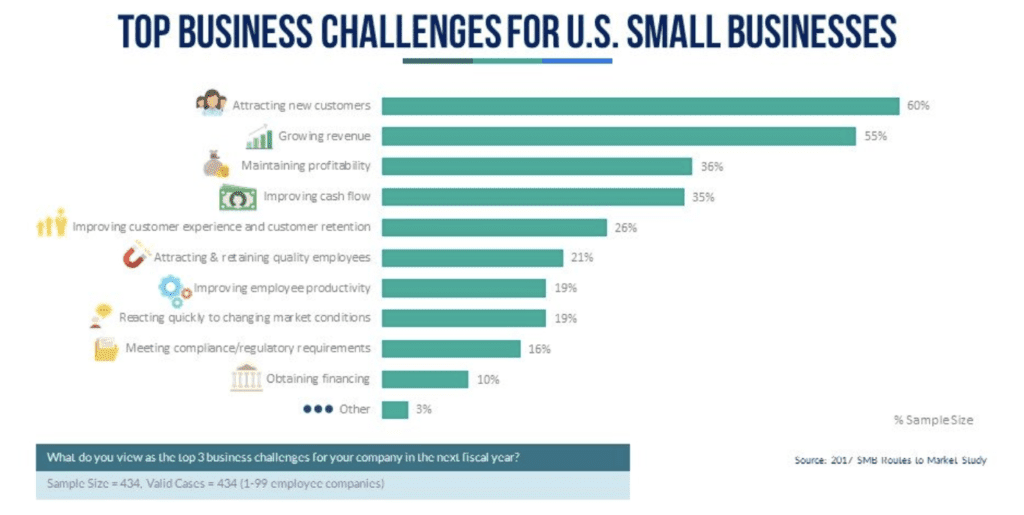 This is another reason why you have a significant advantage if you’re pitching a service to an existing client. Once you establish a relationship with this client, you’ll have a much better understanding of their needs.
For example, after working with a client for three or six months, you might realize that they have a serious problem with internal communications.
You can take this information and pitch a workforce app to increase engagement with their remote employees.
Or maybe your client is struggling with ecommerce sales or customer loyalty. You can explain how a mobile app will address both of those concerns simultaneously.
Be prepared to walk your clients through the steps and timeline of any new proposal. Put emphasis on the value the new offering provides, and explain how it will give them an edge over the competition.
Mastering an agency service pitch isn’t easy. It will take time and practice before it’s perfect. Just don’t take any shortcuts and try using the same pitch for each client. You’ll have a higher success rate if you do the research for each small business ahead of time.
This is another reason why you have a significant advantage if you’re pitching a service to an existing client. Once you establish a relationship with this client, you’ll have a much better understanding of their needs.
For example, after working with a client for three or six months, you might realize that they have a serious problem with internal communications.
You can take this information and pitch a workforce app to increase engagement with their remote employees.
Or maybe your client is struggling with ecommerce sales or customer loyalty. You can explain how a mobile app will address both of those concerns simultaneously.
Be prepared to walk your clients through the steps and timeline of any new proposal. Put emphasis on the value the new offering provides, and explain how it will give them an edge over the competition.
Mastering an agency service pitch isn’t easy. It will take time and practice before it’s perfect. Just don’t take any shortcuts and try using the same pitch for each client. You’ll have a higher success rate if you do the research for each small business ahead of time.
Analyze Your Pricing Strategy
It sounds simple, but a pricing adjustment could give your agency a significant profitability boost. Where did you get prices from? If you just pulled numbers out of thin air, then it’s unlikely that you picked a winning price point. Some agencies will set their prices based on the market, and price themselves right around the competition. But this is another mistake that can crush profits. Two agencies could have the exact same services at the exact same price. One of them could be operating at a 50% profit margin, and the other could be working at a 10% loss. Before you can even consider setting your prices, you need to know your breakeven point, which could be significantly higher or significantly lower than your competitors. I’d recommend offering custom pricing to your small business clients. Give each client a unique quote based on their needs. While this process is a bit more involved, it ensures that you’re always operating with high margins. This gives you the opportunity to analyze your break-even point for each project, so you can set your rates accordingly.Conclusion
Learning how to secure profitable agency clients for your agency isn’t as complicated as you might think. Whether your agency is brand new or well-established, you can follow the tips and best practices that I’ve outlined in this guide. You might have noticed a common theme here. Arguably the biggest key to profitability for an agency targeting small businesses can be summed up in just a couple of phrases:- Low maintenance
- High margins
Frequently Asked Questions
Why is custom pricing beneficial for small businesses?
Custom pricing allows businesses to tailor their services to the specific needs of each client, ensuring better margins and client satisfaction.
How can I calculate my breakeven point?
To calculate your breakeven point, divide your fixed costs by the difference between the unit selling price and variable cost per unit.
What factors should I consider when setting prices?
Consider your costs, competitor pricing, market demand, and perceived value when setting prices.
How often should I review my pricing strategy?
Review your pricing strategy regularly, at least annually, or whenever there are significant changes in costs or market conditions.