

It’s easy to come up with an idea.
But following through with that idea and building a mobile application is not the easiest process.
Fortunately for you, I’ve been through this before.
I know what it takes to validate an idea and turn your app into a reality.
Key Takeaways
- Validation is crucial: Skipping validation can lead to wasted resources on non-viable ideas.
- Target audience identification: Narrow down your audience to ensure your app meets specific needs.
- Market research importance: Understanding competitors and market gaps can position your app for success.
- Platform choice impacts: Consider user demographics and monetization strategies when choosing between iOS and Android.
- Clear app definition: A well-defined app concept guides development and branding efforts.
It’s absolutely essential that you go through the validation process. Otherwise, you could start dumping money into an idea that won’t give you any return on your investment.
I’ve seen that happen to people as well.
If you want to develop a successful app, you’ll need to be ready to put in the time.
It’s not really something you can just do as a small side project.
Mobile applications are a business, and that’s exactly how you should treat the process.
One of the biggest problems I see from people who have failed app development projects is that they get in over their heads.
They think their idea is great, so they tell a couple of friends and they hear, “You should totally make that an app!”
So they hire a developer and start building, but they skipped the validation steps.
If you follow the procedure that I’ll show you, it will make the process much easier and minimize the chance of failure.
At worst, you’ll learn early on that your app isn’t a viable business before you pour too much money into it.
Here’s what you need to do.
Find an audience for your app
The first thing you need to do is find out who is going to be using your app.
“My app is for everyone,” isn’t a valid response here.
You need to narrow that audience and target a more specific group.
Take a look at how teenagers in the United States feel about their smartphones.
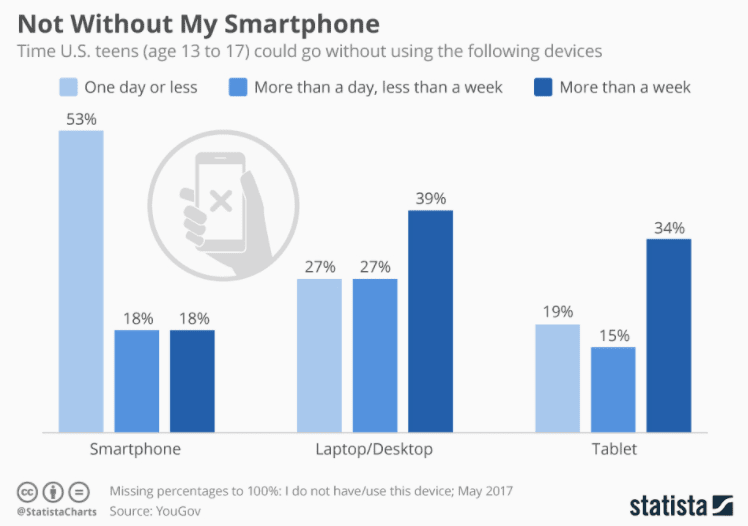
Compared to their computers and tablets, this group of people says that they can’t go more than a day without using their phones.
So you’ll want to find data like this to help you find a specific audience for your app.
You can break these segments down even further.
There are hundreds of millions of people who have smartphones.
That doesn’t mean you need to target everyone.
Instead, look for communities and subgroups who need an app to help them do something.
How can your idea make someone else’s life easier?
If you’re able to answer that question, you’re on the right track to validate your idea.
For those of you that don’t have a concrete answer to that question yet, it may be time to go back to the drawing board.
Think about the apps that you use the most on a daily basis.
Do you use mobile banking?
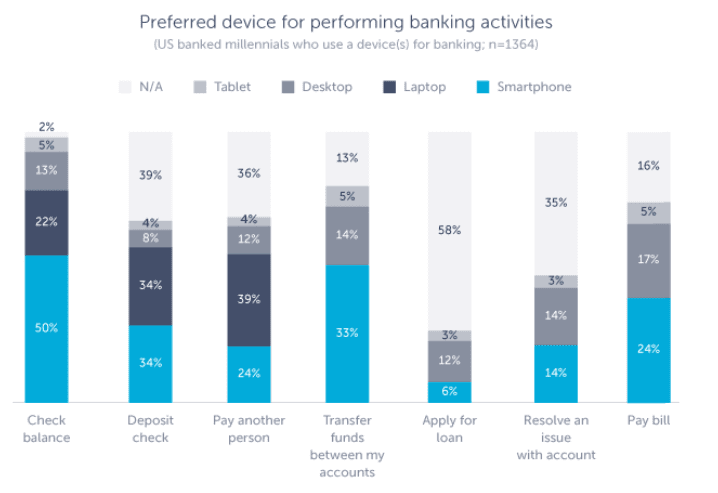
Smartphones are the preferred device for different banking needs because it’s easier than going into a physical branch.
Financial institutions recognize this, and that’s one of the reasons why they developed mobile apps for their customers.
Uber is another great example.
They recognized a problem with taxi cabs and other car services and developed an app that gets users connected to a driver with way less friction.
So just make sure that you clearly define which group your app is going to help.
This will make the rest of your validation process much easier.
Research the market
Once you define who the app is for, you’ve got to figure out how to appeal to them.
Don’t jump ahead and start launching a marketing campaign just yet. We’ll get to that later on.
Basically what you’re doing here is the preliminary research that will help with your eventual marketing efforts.
In our previous step, you figured out who the app was for and how it will help them with their problem or make their life easier.
Now you’ve got to see if any other companies have already solved that problem, or at least attempted to.
You’re going to have some competition.
Unless you think you’re developing a unicorn like Snapchat, then chances are that other apps perform a similar function to yours.
Plus, other people are trying to get into this space as well, just like you are.
But don’t let that scare you.
There’s nothing wrong with a little bit of competition.
How many pizza shops are located in your city?
There’s room for more than one to be successful.
Same goes for the app world.
But part of your market research efforts means that you’ll need to find a way to position yourself with an advantage of the competition.
What makes your app stand out?
How will you get your app to the user?
You’ll want to differentiate yourself from your competitors in the app store.
Understand how app store optimization works.
For example, look at the impact of having keywords in your title.

Other factors that affect your search ranking include:
- Description
- Ratings
- Reviews
- Screenshots
- App category
- Icon
- Download rates
So start planning ahead for these when you’re conducting your initial market research.
What title or keywords will speak to your target audience?
If it’s a PWA (progressive web app), you’ll need to figure out how the user will get to the site or location where you can push the app to them.
Clearly define the app
Now that you’ve picked the audience and know how to reach them, it’s time for you to clearly define your app.
This definition will give you a general direction, purpose, and goal.
Doing this will also help you brand your app, which we’ll get to shortly.
Is your app going to stand alone for your company?
Or is it going to be just one aspect of an already existing business or your startup company?
For example, let’s say you already have a business that operates on an ecommerce platform.
You could set a goal for your app to get more dollars spent per purchase from your existing customers, or it could be a way for you to lure in new customers.
Maybe both.
Or let’s say your app is a startup company.
Your goal might be to use this app to get brand exposure and eventually partner with a major corporation.
Do you want to keep your app forever? Or is your ultimate goal to get bought out?
These are all different examples of questions you would ask yourself to determine a clear vision for the future of your company.
The functions of your app need to be clear as well.
Is it a game?
Are users going to be able to connect with one another?
Does it have educational tools?
Pick a direction and stick with it.
That way you can also determine your minimum viable product.
This prevents you from saying, “we can also add…” once development has already started.
If that happens, it’s going to tack on more time and more money.
So get everything sorted out ahead of time.
Pick a Platform
Choosing a platform isn’t as simple as flipping a coin.
You’ve got to understand the differences between the Apple App Store and Google Play Store.
| Aspect | Apple App Store | Google Play Store |
|---|---|---|
| User Demographics | Higher income, more likely to spend on apps | Larger global user base, more diverse income levels |
| Development Ease | More restrictions, but potentially quicker development | Fewer restrictions, easier to launch |
| Monetization | Better for paid apps | Better for ads and in-app purchases |
For starters, look at the users.
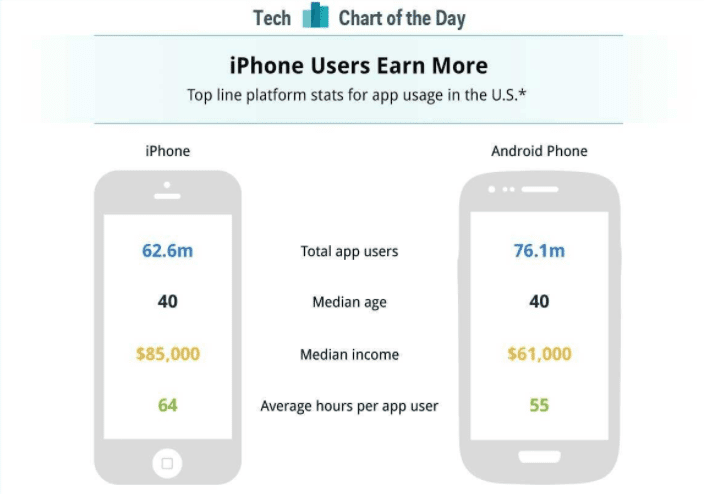
While some of your initial research may have shown that there are more Android users across the globe, people with Apple devices make more money.
It’s also easier to develop your app for the Android platform.
There are less restrictions and barriers if you choose to launch your app on the Google Play Store.
With that said, it’s less expensive and quicker if you build an app for the Apple App Store.
This is a big decision for you because there are so many factors to consider.
You’ve got to go back to the target audience that we defined earlier.
Find out what kinds of devices they are using.
For example, if your primary target market is a group of people in a country outside of the United States, building for Apple first would be a mistake.
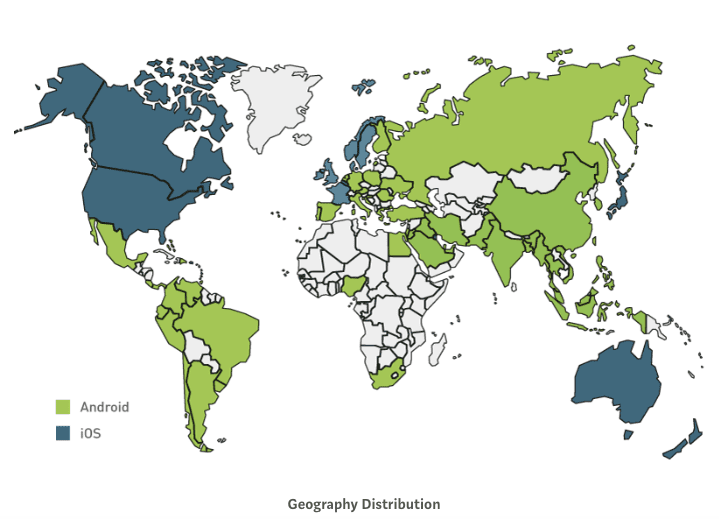
While the distribution for users in the United States is closer to 50/50, Android dominates globally with over 80% of the market share.
Your monetization strategy can also impact which platform you decide to develop for.
If you want to charge users to download your app, it’s better to build for Apple.
The primary way to make money from Android users is through advertisements and in-app purchases.
You’ll get less money per purchase, but have access to more users.
Another option is developing for both platforms simultaneously.
An alternative option, which is more cost efficient, is building a hybrid app.| Option | Platforms | Code Requirement | Cost Efficiency |
|---|---|---|---|
| Separate Native Apps | Apple and Android | Write code twice | Less cost efficient |
| Hybrid App | Apple and Android | Write code once | More cost efficient |
| PWA | Both platforms (with reduced functionality) | Write code once | Varies (depends on functionality needs) |
You could also build a PWA if you’re OK with temporarily reduced functionality until both platforms catch up with the current technology.
Frequently Asked Questions
What are the key steps in turning an app idea into reality?
The key steps include validating the idea, identifying your target audience, conducting market research, defining the app clearly, and choosing the right platform.
How do I choose between iOS and Android for my app?
Consider your target audience’s demographics and monetization strategy. iOS users tend to spend more on apps, while Android has a larger global user base.
What makes an app idea viable?
An app idea is viable if it solves a real problem for a specific audience and has a clear market demand.
How important is app store optimization in app development?
App store optimization is crucial for visibility and downloads. It involves using the right keywords, descriptions, and visuals to attract your target audience.