

As a marketing director or Shopify store owner, you always need to keep your finger on the pulse.
That’s because the landscape of the ecommerce industry is constantly evolving. Consumer buying habits have changed. So your sales strategy from back in 2015 won’t necessarily work on your ecommerce website today.
But once you’re able to recognize the latest trends, it will be much easier for you to adapt your sales and marketing strategies accordingly. That’s what inspired me to write this guide.
I’ve taken the time to research and analyze the latest ecommerce tendencies of 2025.
Based on the data that I’ve found, I’m expecting these trends to continue throughout the second half of the year as well.
1. Increased conversion rates
Conversion rates will always vary based on a wide range of factors.
- Industry
- Country
- Product
- Traffic source
- Device
These are just a few categories of how conversions are measured in terms of averages and benchmarks.
For example, according to research from Growcode, the average ecommerce conversion rate for the arts and crafts industry is 3.83%. Whereas the baby and child industry has 0.84% conversion rate. Germany’s ecommerce conversion rate is 2.22% and Italy’s is 0.99%.
But with that said, the overall ecommerce conversion rates across the globe are rising. Increased conversion rates translate to higher sales. Ecommerce sales in April of this year were 20% higher than April of last year.
What does this mean for your ecommerce shop or Shopify store?
First of all, it’s encouraging news. Ecommerce has become widely accepted by consumers worldwide.
But with that said, it’s still up to you to design a website and checkout process in a way that drives conversions. Websites and mobile apps with complex checkouts won’t benefit from high conversion rates.
This is something that you need to constantly be working to improve. Run A/B tests on every element of your website.
- Features
- Shopping cart functionality
- Design
- Color scheme
- Images
- CTA size
- CTA wording
- CTA placement
The list goes on and on. That’s what industry leaders do, and that’s why some companies have higher conversion rates than others.
For example, the top 25% of companies selling health and beauty products have a 5.24% conversion rate. But the median conversion rate for the health and beauty market as a whole is 3.08%.
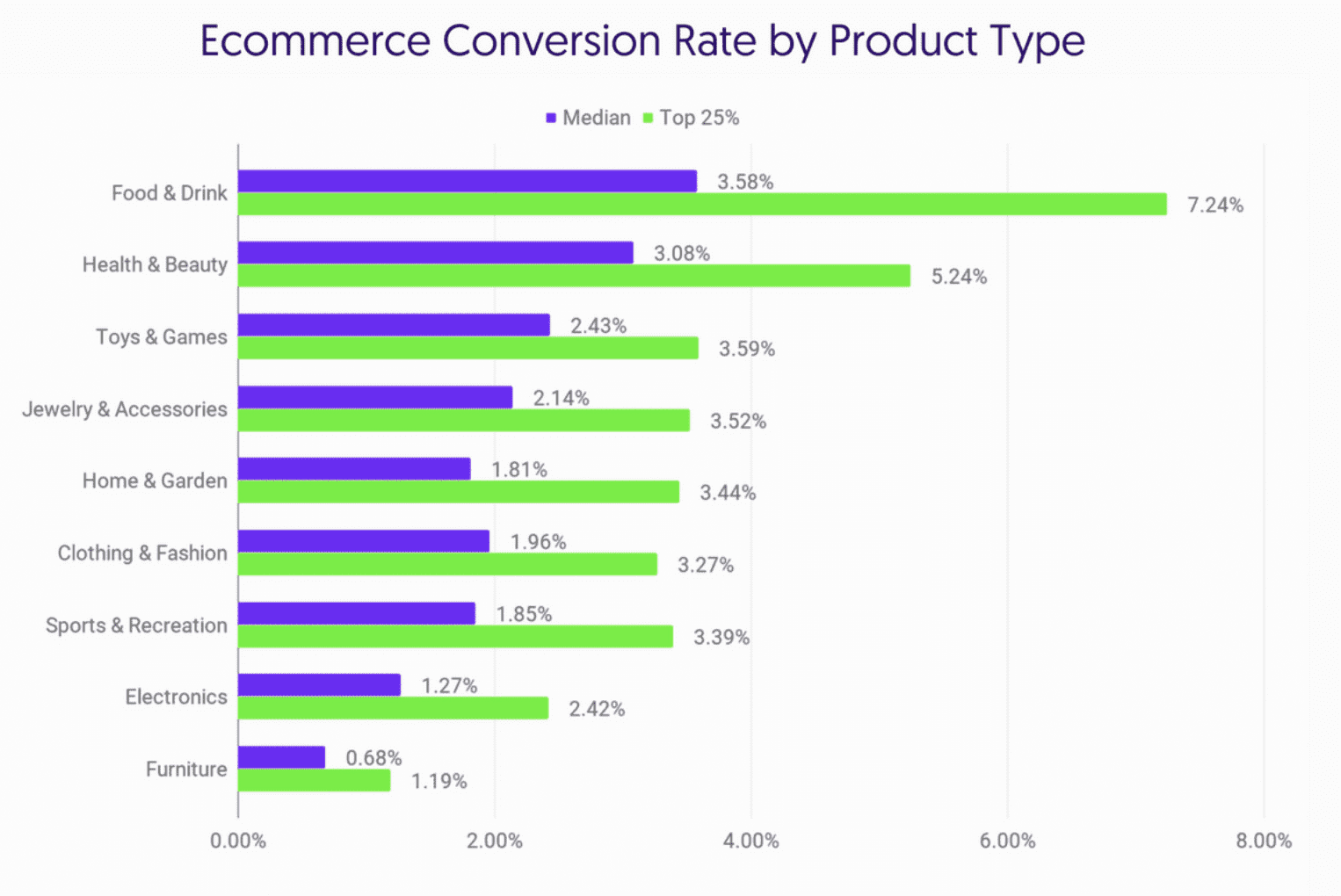
This graph clearly shows how the top players in each product category outperform their competitors. You can use this as a benchmark to see where you stack up compared to other ecommerce sites in terms of your conversions.
2. Artificial intelligence
AI is on the rise in seemingly every industry. This technology is being used for such a wide range of purposes and applications.
But in the ecommerce world, AI chatbots are starting to become the new norm. Here’s an example of what a chatbot looks like on the Levi’s Jeans ecommerce site.
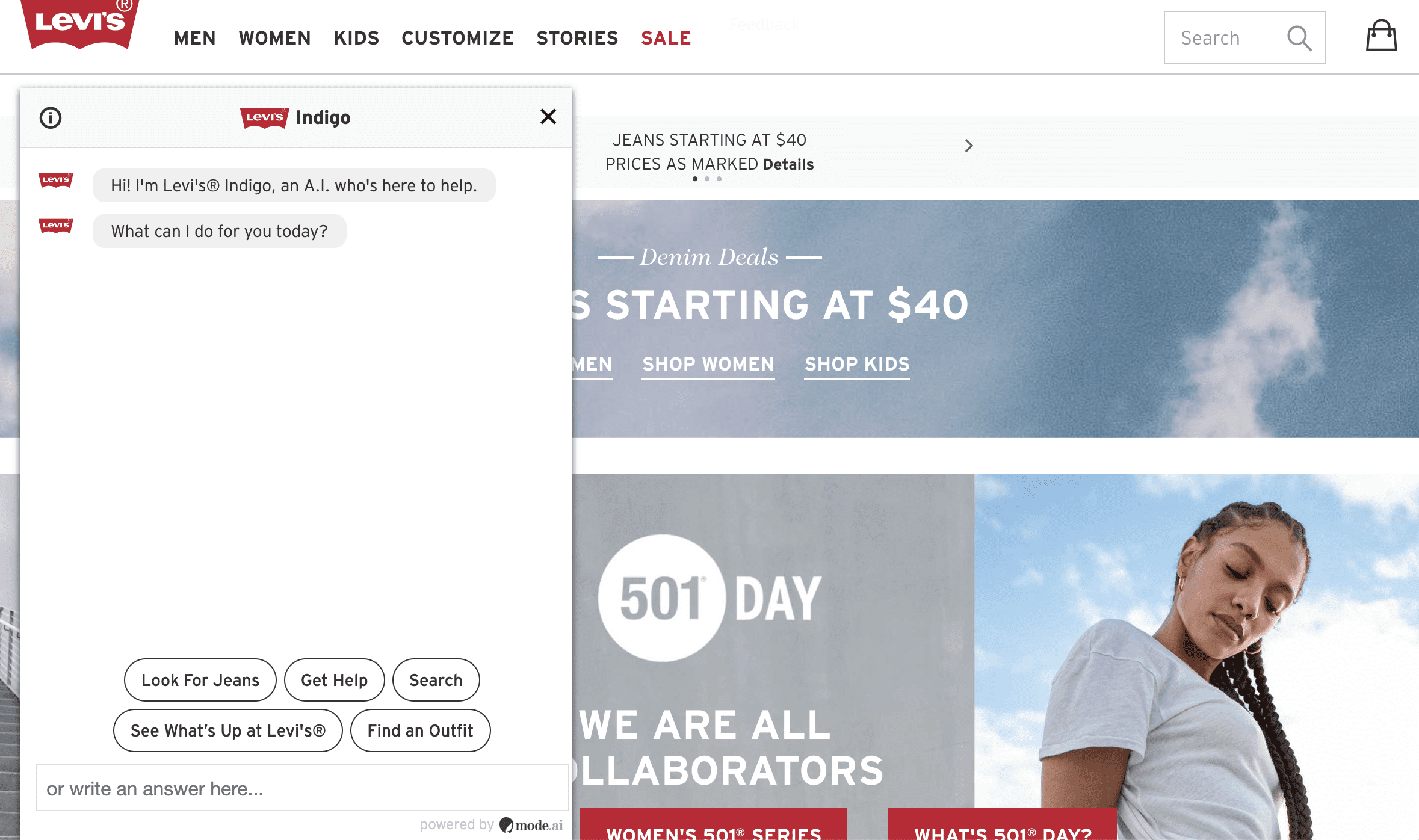
Unlike other chatbots, this one comes right out in the first message saying that it’s using AI. So there is never any doubt or deception that the customer isn’t speaking to an actual person.
Even if you don’t currently have a chatbot on your Shopify store, I’m sure you’ve seen these before when you’re browsing the web.
Adding it to your ecommerce shop will be extremely beneficial for both you and your customers.
For starters, 79% of consumers say they prefer live chat because they get their questions answered immediately. This makes sense, considering that live chat offers the fastest customer service response times compared to other methods.
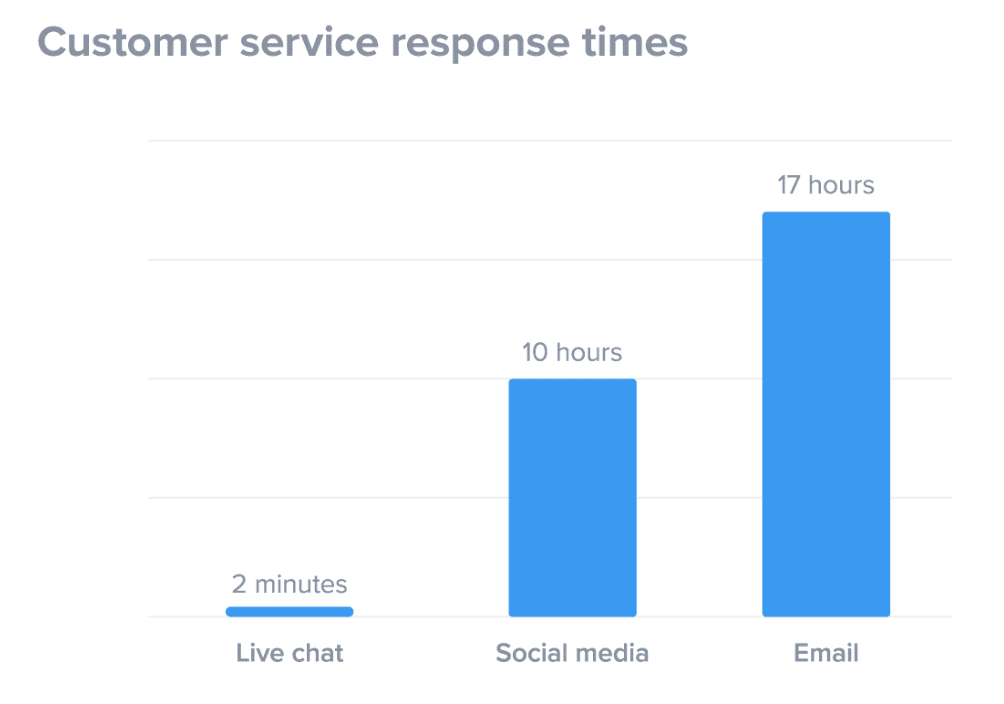
Furthermore, live chat has a 73% customer satisfaction rate. This compares to 61%, 48%, and 44% for email, social media, and phone support, respectively.
Think about it. With chatbots, you don’t need to pay as many employees to answer the phone. Shorter wait times lead to higher customer satisfaction. Plus, chatbots can work 24 hours per day, 7 days per week, 365 days per year. You don’t have to worry about giving AI vacation time or health benefits either.
That’s not all. 79% of businesses say that live chat has had a positive impact on their sales, revenue, and customer loyalty.
38% of consumers are more likely to buy from ecommerce sites that offer live chat. Customers who take advantage of live chat before buying have a 10% higher average order value.
Virgin Airlines saw a 24% boost in conversions after adding live chat to their website. Intuit benefited from a 43% increase in AOV once live chat was added to their checkout page.
So for those of you who aren’t currently using live chat, I strongly recommend that you implement this form of AI on your ecommerce site.
85% of all customer support interactions are handled without human contact. So if you don’t adjust to this trend now, your brand will be in the minority moving forward.
3. Mobile commerce
With ecommerce growing year-over-year, mobile commerce is following suit. These numbers are even more astonishing on a global scale.
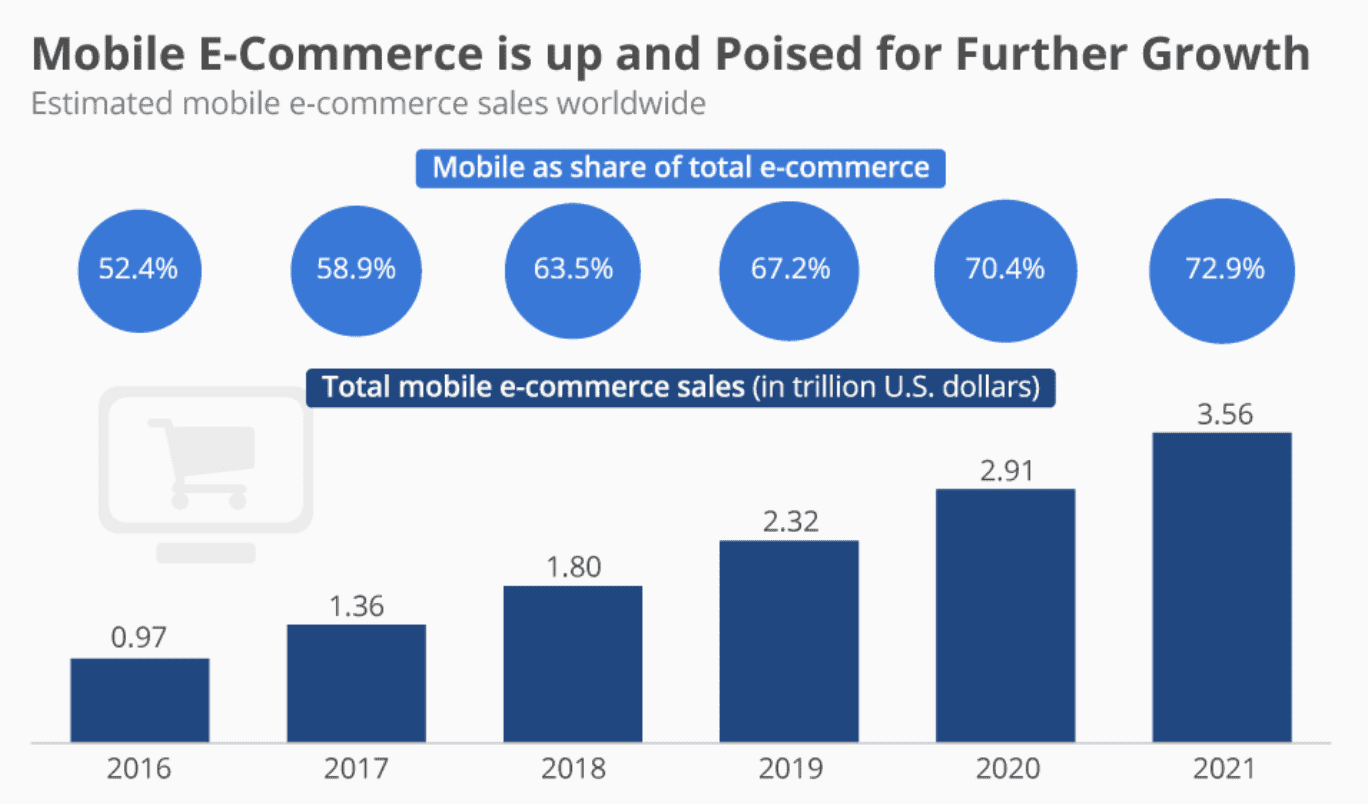
According to Statista, mobile commerce holds 73 of ecommerce sales worldwide.
Consumers no longer need to be on their computers to buy something from your ecommerce shop.
Look around. People seemingly have smartphones glued to their hands for every waking minute of the day. Take advantage of this.
A successful mobile commerce strategy goes far beyond an optimized mobile website.
Building a mobile app is the secret weapon for driving mobile commerce sales.
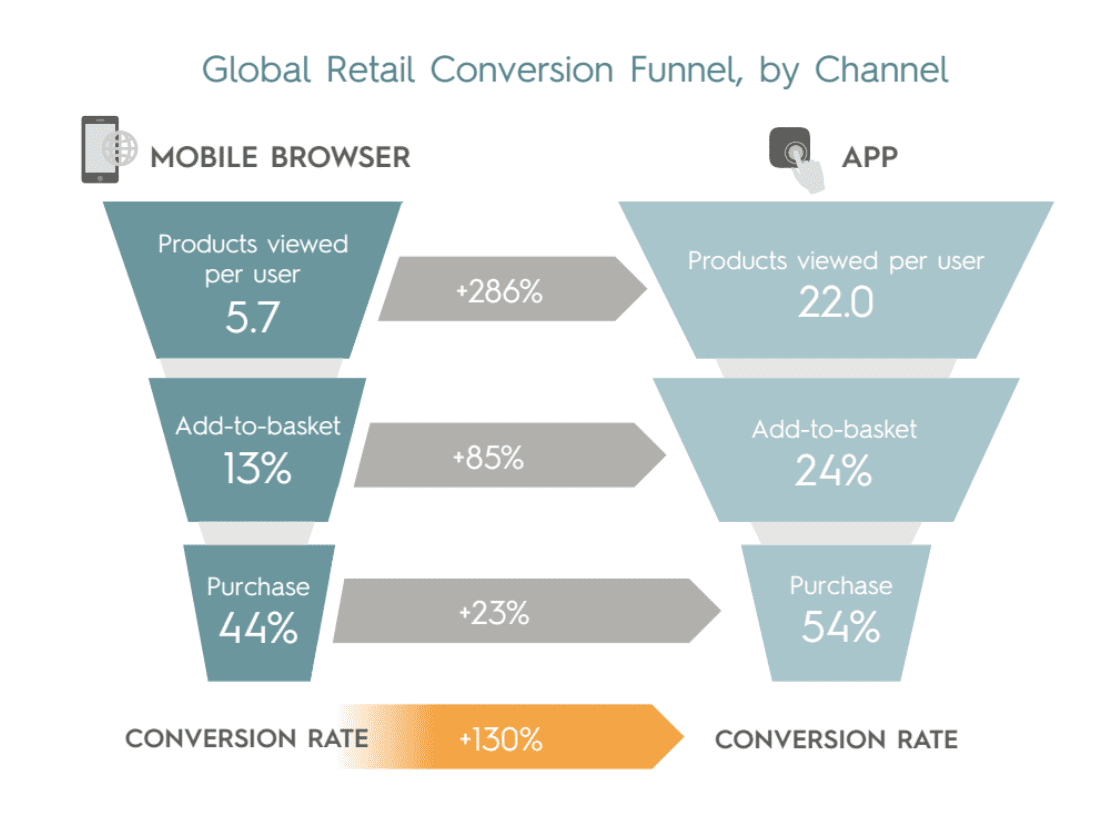
Look at the data from the graph above.
When browsing from a mobile app, consumers viewed 286% more products and added items to their cart at an 85% higher rate, compared to mobile web browsers.
Mobile apps yield 130% higher conversion rates than mobile browsers.
Why?
Well, 90% of all mobile time is spent on apps. That’s just what customers have grown accustomed to.
Plus, apps are much more user-friendly. It’s easier for people to browse and make purchases from a UI standpoint.
When it’s time to check out, all of their information is saved.
- Name
- Shipping address
- Credit card number
- Phone number
- Billing address
This is a pain to type out manually every time you want to buy something, especially from a smaller device without a full keyboard. Mobile apps have less friction, which yields higher conversions.
For those of you who aren’t prioritizing mobile sales yet, you will likely need to build a mobile app to truly make this strategy work. Mobile sites are still necessary, but alone, they just don’t get the job done.
4. Flexible payment options
The days of businesses only accepting Visa and Mastercard are over.
In addition to all major credit cards and debit cards, ecommerce shops are starting to accept alternative payment methods as well.
- PayPal
- Venmo
- Apple Pay
- Google Pay
- Cryptocurrencies
Don’t get me wrong; it’s not like these methods have taken over and made credit cards obsolete. But alternative payment options are becoming more readily available for consumers who shop online.
Credit and debit cards are still leading the way. But with that said, alternative payment methods made up 38% of all online transactions last year. Here’s something else to consider. 45% of online payments came from stored credit cards, compared to just 17% that were entered manually.
This piggybacks off of our previous point about mobile commerce. If your ecommerce brand has a mobile app, it’s easy for you to securely store payment information for your customers. Then at checkout, they won’t have to manually enter anything. They’ll be able to complete the purchase with just a few clicks.
What does this mean for your ecommerce shop?
You need to make it a priority to accept as many payment methods as possible. I know that some cards, companies, or services, charge you more money; but it’s worth it in the long run.
The last thing you want to happen is for people to buy from one of your competitors because you don’t take their preferred payment method.
5. Voice search
The way that customers are browsing online is changing in 2025 as well. Voice search is at an all-time high, and continuing to rise.
According to The Verge, roughly 25% of American households own a smart speaker. 40% of those homes have multiple smart speakers.
Furthermore, 62% of people who own a smart speaker made their purchase in the last six months, meaning this trend is very new.
Here’s something else to consider. According to Google, 41% of adults and 55% of teenagers use voice search more than once per day.
Take a look at what people are using their smart speakers for.
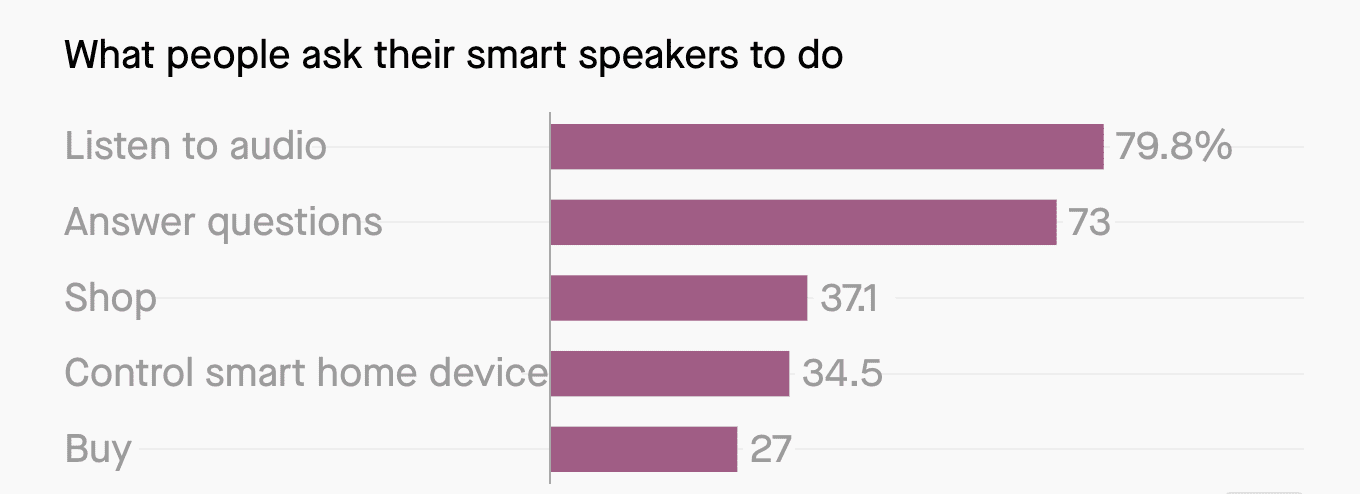
37% of people use their smart speakers for shopping, and 27% of smart speaker owners use their devices to actually buy something.
As smart speakers continue to grow in popularity, it’s only natural that shopping via voice search will follow the trend as well.
So if you have a Shopify store, you need to make sure that your site has been optimized for voice search.
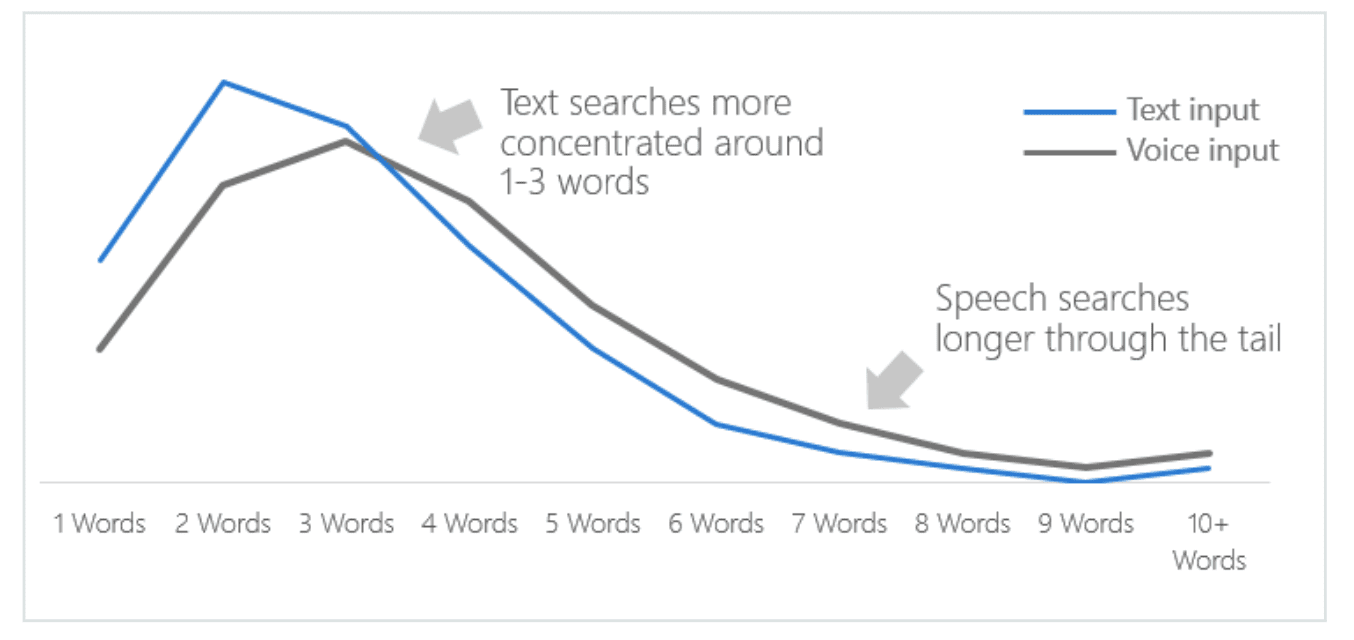
As you can see above from this study by MOZ, voice searches are longer than traditional text search. This makes sense since it’s easier for people to talk than type.
Voice search also needs to be taken into consideration when it comes to mobile app accessibility, which has become the new must in mobile development.
6. Video
Videos absolutely need to be incorporated into your ecommerce site.
Pictures alone are no longer acceptable. A video can show more about your products than a picture ever could. Here’s why.
Roughly 50% of consumers say their biggest concern with online shopping is that their products don’t look the same when they are delivered, compared to their online perception. This creates unsatisfied customers and will lead to higher return rates instead of repeat orders.
It’s your job to alleviate any of those concerns and make the customer feel as comfortable as possible when they’re shopping.
69% of consumers say that product demonstrations help them make a buying decision. 80% of consumers have a higher buying confidence when they purchase a product after watching a video about it.
54% of people say they want to see more videos from brands.
Businesses have recognized this and adapted accordingly. 87% of brands now use videos for marketing purposes. With video marketing, 66% of businesses get more qualified leads.
So how can you use video to improve your ecommerce shop? Here’s a great example from Thule.
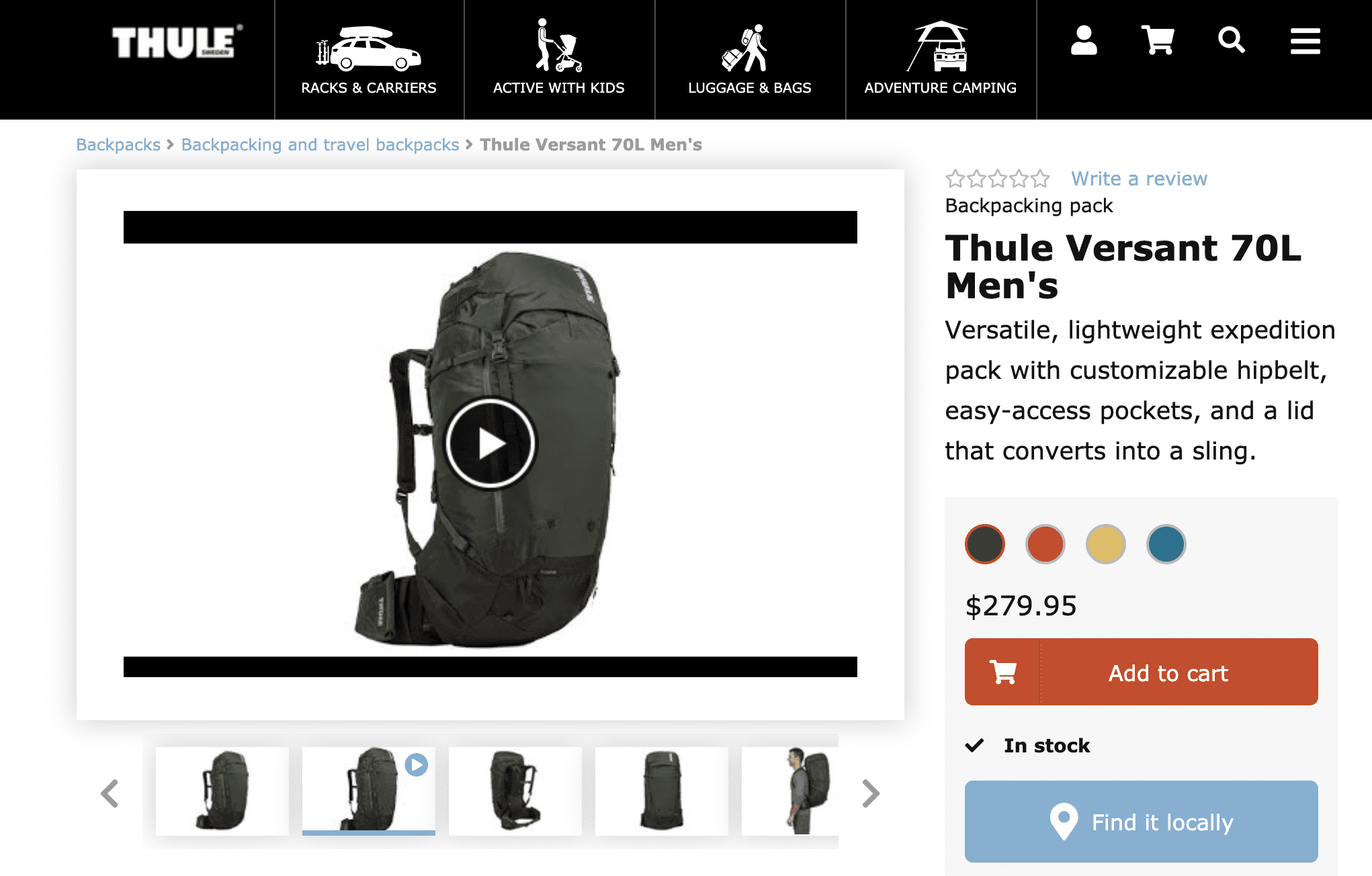
Every product on their website has a video demonstration that’s included along with the photos on the product page. The example above is for a hiking backpack.
Pictures alone just can’t show all of the features. Customers wouldn’t know how to adjust straps, access hidden pockets, or attach the weather protector.
But the video makes all of this very clear.
Making these videos might be a bit more time consuming, but the benefits will definitely be worth it. The great part about video content is that you can repurpose it on all of your distribution channels. So start adding more product videos to your ecommerce site and mobile app.
7. Augmented reality
On the surface, the term augmented reality sounds so intimidating. But at the core, it’s really not that complex.
Essentially, AR helps your customers experience products better when they’re shopping online.
It gives shoppers a better sense of the details of your product with a 3D view, while simultaneously showing size and scale.
If you have a Shopify store, you can take advantage of the AR features offered by 3D Warehouse.

You can leverage this technology for your mobile app as well.
This is a great option for those of you who are in the home goods space. If you recall, earlier I shared a graph of ecommerce conversion rates by product type. Furniture ranked last on the list.
That’s because shopping online for something like a couch can be very challenging. But AR makes that process much easier.
AR technology allows customers to see what that couch would look like in their home. All they’d need to do is point the camera in the space where the furniture would be positioned. They’d have a greater sense of how the product would fit in the room, without having to take any actual measurements.
Ecommerce shops that offer this type of technology also let customers customize options based on things like color. So you could see what a black couch looks like in your living room compared to a white leather couch.
This type of technology isn’t really necessary for those of you who are selling something simple, such as a t-shirt. But there are definitely industries that can benefit from AR.
It’s also worth noting that 66% of consumers say they’re interested in using AR for online shopping purposes. So give those people the option that they’re looking for.
8. Customer personalization
Personalizing the customer experience drives sales.
Today, more than ever before, businesses are leveraging tools and technology to make this happen. They’re monitoring browsing behavior with cookies, and then using remarketing campaigns with Google PPC ads.
Websites give customers the option to create a profile so they can recommend products, and send targeted emails based on their purchase history.
Ecommerce shops personalize content based on location. If you sell clothing, a customer who lives in Hawaii shouldn’t have the same homepage as a customer who lives in New York during the winter.
74% of ecommerce marketers say that personalization tactics have a strong impact on conversion rates. 80% of consumers are more likely to buy from brands that offer a personalized shopping experience.
Take a look at these other benefits of personalization.
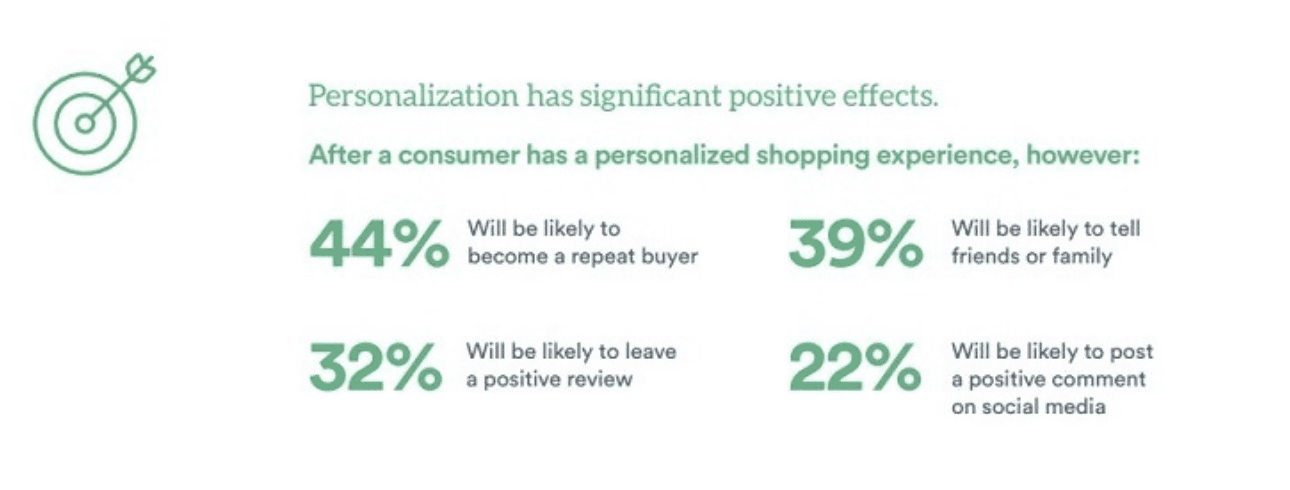
Personalizing the user experience is going to be crucial for those of you who have plans to build a mobile app for your ecommerce shop.
With the app, you can store information about your customers. Then you can use that information to personalize everything they do.
Offer product recommendations. Create a customer loyalty program. Make it easy for your customers to track rewards, view their purchase history, or make repeat orders.
This is much better than just offering a cookie-cutter experience for every single person who visits your ecommerce shop.
9. Influencer marketing
Your ecommerce site doesn’t exist in a vacuum. So you can’t always rely on people navigating directly to your site or mobile app to make a purchase.
You need to have a presence on other channels, like social media, to market your brand.
This is nothing new. However, the way that ecommerce brands have been advertising through social media has evolved. Sponsored content in 2025 doesn’t look the same as it did in the years prior.
Influencer marketing has completely changed the game.
Essentially, businesses partner with people who have a high social media following. Then those people advertise products through their own channels and profiles.
Brands are putting more emphasis on working with micro-influencers. These are people who have between 1,000 and 100,000 followers, as opposed to celebrities with millions of followers.
First of all, working with micro influencers is much more cost-effective than partnering with a celebrity. Furthermore, micro influencers also have higher engagement rates.
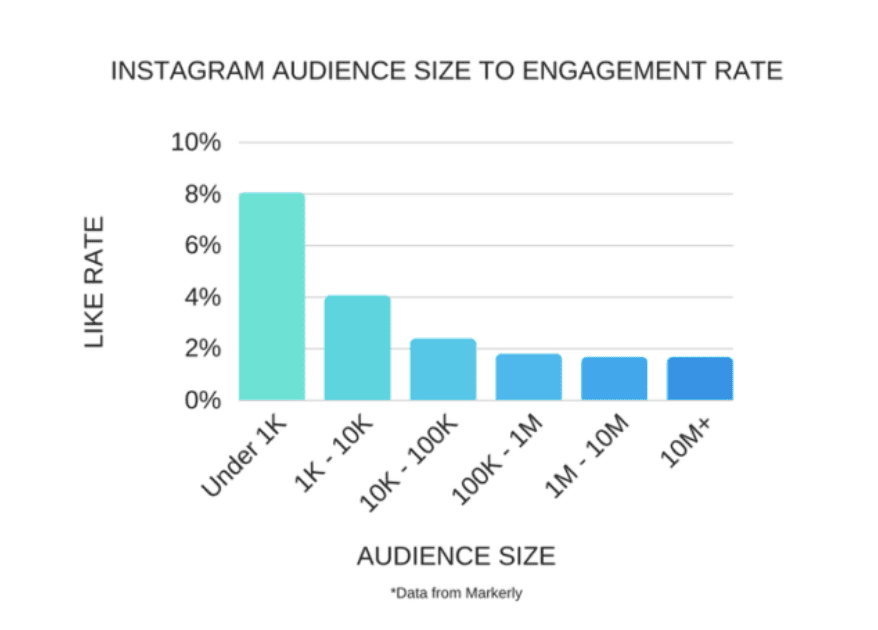
Your customers are more likely to trust micro influencers because they are perceived as normal people.
The average Joe can’t relate to people like Kanye West or Beyonce. But they can definitely relate to a regular guy who has a real job and just happens to have lots of followers on social media.
That’s why 30% of consumers are more likely to buy products that have been recommended by a non-celebrity influencer.
Influencer marketing is continuing to trend upward. In fact, this search term has grown by more than 1,500% over the past three years. 63% of businesses are planning to increase their influencer marketing budgets this year.
10. Shoppable posts
Let’s continue our discussion about social media and its impact on ecommerce.
You can use your social platforms to directly drive sales to your ecommerce shop. All you need to do is integrate your Shopify store with your Instagram profile to set up shoppable posts.
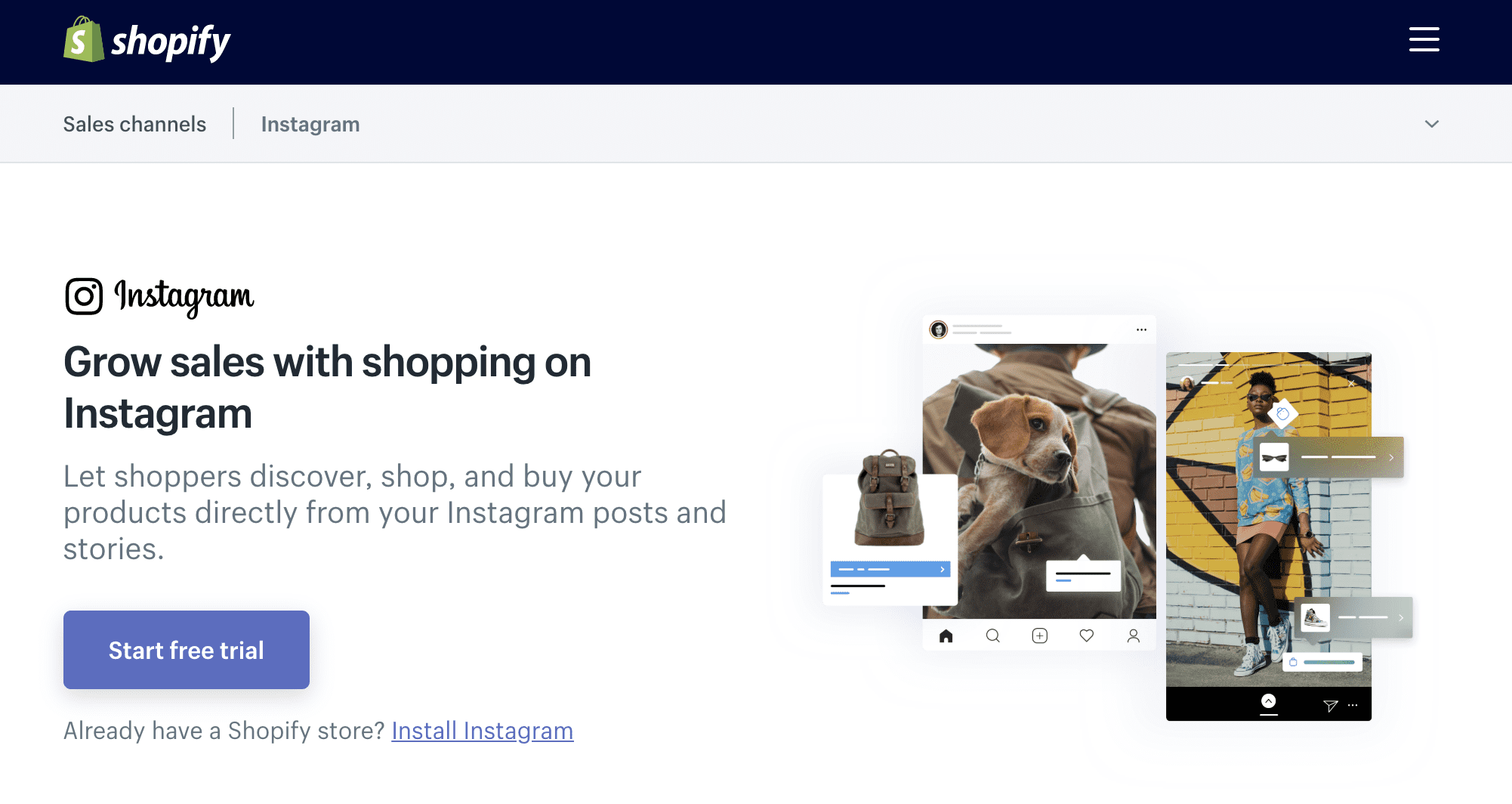
Here’s what you need to realize. You can’t expect your customers to visit your website or mobile app every day. That’s just unrealistic.
However, you can definitely expect them to be on social media daily.
With shoppable posts, you can tag products in your images, just like you would tag a person or another account. It’s that easy. You can set up shoppable stories as well.
60% of people use Instagram to discover new products. 75% of Instagram users take an action after viewing posts from brands.
Shoppable posts make this much easier for your current and prospective customers.
If they see something they like on your page, they won’t need to open a web browser, visit your website, and then search for it directly on there. That’s just too many steps.
It’s much easier for them to buy directly through shoppable posts. Plus, the Shopify integration makes it so easy for you to implement this as well.
11. D2C
Direct to consumer, better known as D2C, has also been on the rise in 2025.
Simply put, this ecommerce strategy cuts out the middleman. Here’s a visual representation of the differences between D2C and a traditional sales model.
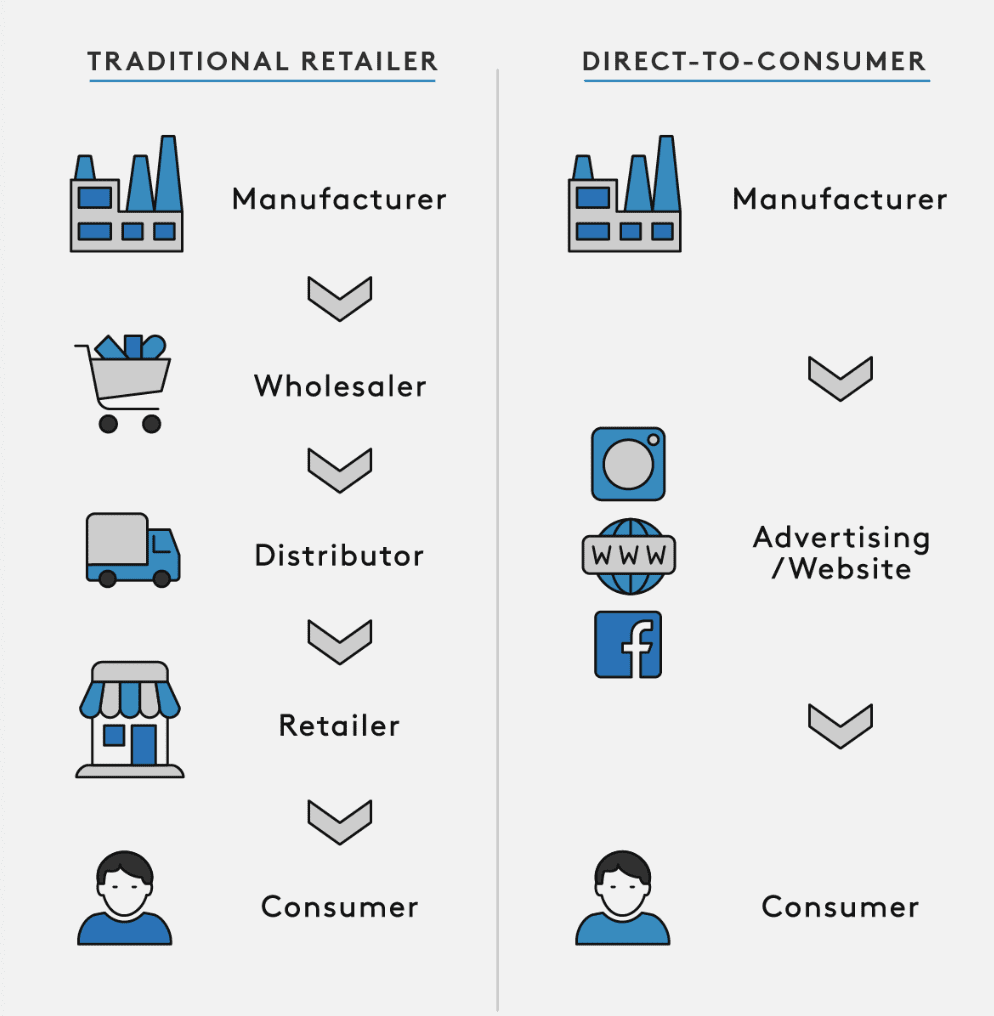
With D2C, the product goes straight from the manufacturer to the consumer, with your ecommerce site acting as the only medium between the two.
This process is simple and has become a great way for businesses to make more money since the overhead costs are significantly lower.
Ecommerce businesses don’t need to touch the products that they’re selling. This also reduces the risk in terms of buying too much inventory that can’t be sold.
Businesses are pivoting away from the traditional sales model to D2C. Shopify dropshipping has become one of the biggest trends of 2025.
In fact, the search term for dropshipping reached an all-time high in August 2020, according to Google trends.
More businesses are starting to enter the ecommerce space because this method has made it easier than ever before. This means you can expect more competition. So you need to be sharp and follow the trends if you want to remain relevant.
Conclusion
These are the top 11 ecommerce trends that have taken over 2025.
As I’m sure you’ve noticed, all of these trends have been backed up by research, facts, and statistics. Based on the data, it looks like everything on this list will continue trending upward as we close out the year and continue to remain relevant in 2025.
There are certain trends on this list that simply cannot be ignored. For those of you who haven’t been prioritizing mobile users, it’s time for you to leverage mobile apps increase your sales.
If you’ve never built an app before and need some assistance, we’d be happy to help. Here at BuildFire, we can help you design a high-converting mobile commerce app that compliments your ecommerce shop.
Make sure you keep an eye on these trends for the remainder of the year.
Frequently Asked Questions
What are the biggest ecommerce marketing trends for 2025?
Key trends include rising conversion rates, artificial intelligence, mobile commerce, flexible payment options, voice search, and video — the shifts reshaping how online stores reach and convert customers.
Why do ecommerce marketing strategies keep changing?
Because the landscape constantly evolves and consumer buying habits change. A sales strategy that worked in 2015 won’t necessarily work on your ecommerce site today, so staying current matters.
How is AI changing ecommerce marketing?
Artificial intelligence is one of the leading 2025 trends, giving marketing directors and store owners new ways to personalise, automate, and optimise how they reach shoppers.
Does mobile commerce matter for my online store?
Yes. Mobile commerce is among the top trends for 2025, reflecting how much buying now happens on phones — a shift store owners need to keep their finger on the pulse of.