

Love your customers.
Effective Strategies for Engaging Your Customers
I guess you already know that. But the question is, “do you really love them?”
Or you’re just concerned about milking them dry.
Think about it. If you truly love them like you claimed, then, why are you in so much a hurry to get their money?
Don’t you think it’s more honorable and easier to engage customers first, and fan their hunger and thirst for your product?
Customers are the lifeblood of your business. Whether you sell ebooks, software, consulting, coaching, or a physical product (e.g., clothing), without loyal customers, you’ll fail.
If you’re looking for actionable “no regrets” strategies to engage your customers, this in-depth article is for you.
Key Takeaways
- Customer Loyalty: Loyal customers are essential for business success across all industries.
- Engagement First: Prioritize engaging customers before focusing on sales.
- Experience Matters: Positive customer experiences lead to word-of-mouth promotion and loyalty.
- Multi-Channel Interaction: Track and engage customers across both desktop and mobile platforms.
- Social Media as a Tool: Use social media to connect and provide solutions, not just as a platform.
I’m not really here to lecture you. You already know that without engaged customers, it would be difficult – perhaps, impossible to win them.
Most brands tend to pay more attention to lead generation and customer acquisition.
They forget that until these ideal customers are motivated, and upgraded in their state of mind, they’ll likely switch to competitors – it’s only a matter of time.
The way you treat your customers matters. Are you giving them a good experience?
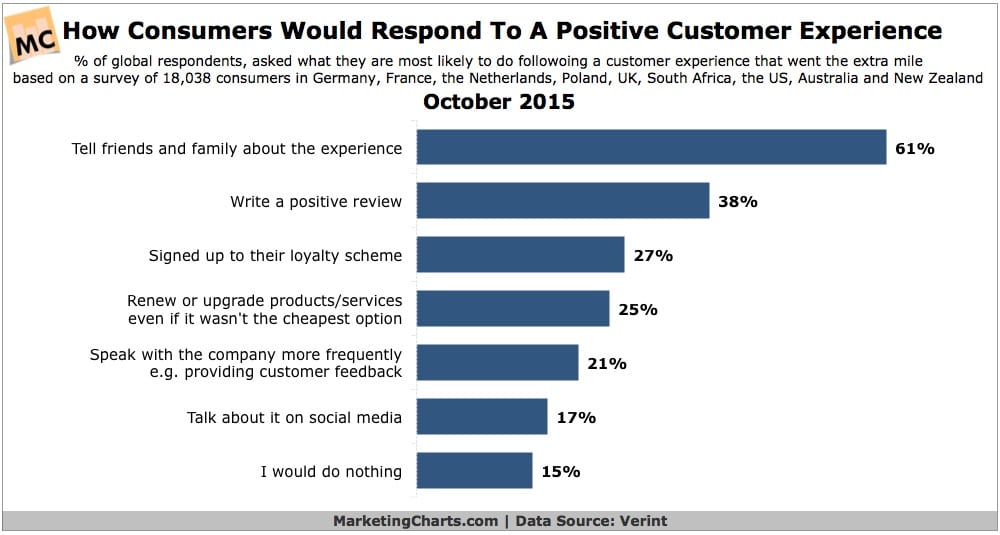
According to Verint, 61% of consumers would tell friends and family about their experiences, while 27% reported that they would sign up to the company’s loyalty scheme.
People have a diminishing attention span. Since these people (customers) come from different sources, it’s important to track engagement on both desktop and mobile devices.
According to a recent report from IMRG Calpgemini, “a total of 52% of web traffic to retail sites currently comes via smartphones and tablets.”
More so, over a third (36%) of online sales are now completed on a smartphone or tablet device.
More customer interactions across channels and devices will give them a “welcome note” to remain loyal.
Let’s explore the 13 customer engagement strategies together:
1. Use social media as an engagement tool and not simply a platform
You’re closer to reaching your personal peak, if only you can change your mindset about social media.
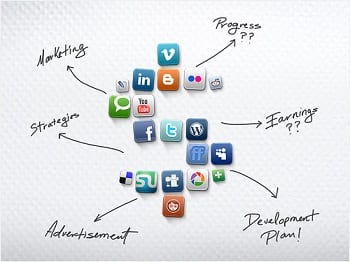
Listen up: social media networks, such as Facebook and LinkedIn are not merely platforms for connecting with people.
Yes, these social platforms are primarily for that, but you should use them as tools, if you want better results.
The rapidly evolving behavior of consumers in this age should impact your perception about social media marketing.
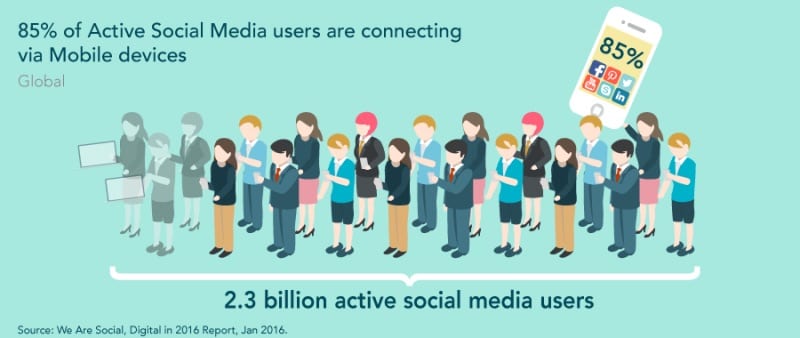
Social media is huge. As of July, 2015, the total worldwide population is 7.3 billion. And out of these, about 2.3 billion people are active social media users.
What do you think that these billions of people want?
Do you think that connecting with them is all they want? If that were all, then, it doesn’t make sense – because you can connect with people outside of Facebook.
When people follow you on Twitter, or like your page on Facebook, they took that action because they trust that you’ll help them.
Make no mistakes about it, these people have problems that need urgent solutions. Through customer engagement, you can retain and make customers happier.
Begin to see social media as a tool, not just a platform. This means that you can use the tool to connect, share, identify questions, research influencers and other experts, and create content that your fans will scream, “Wow, ‘ve been looking for this!”
Most brands merely regard Facebook, Twitter, and other social media networks as platforms.
But Lenovo, a global leader in computer technology sees social media differently. As a brand, the company uses digital social tools to deliver immense value to its customers.
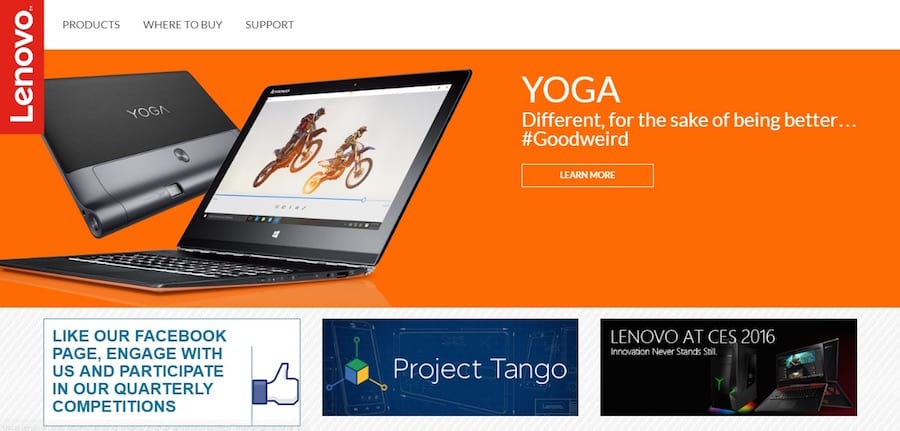
The company uses social media to obtain user data and after analyzing it, gets ahead of its competitors – in terms of consumer trends.
For example, after listening to customer feedback, ranging from color preferences for laptops, to screen sizes, Lenovo has mastered product development.
Like Lenovo, if you begin to view social media as a new and viable means to engage with prospects and customers, you can shift your brand’s social media strategy – and begin to cater for your customers.
2. Engage customers with In-Product messaging
When it comes to product messaging (i.e., notifying your customers about your new product), there are several key channels that you can use.
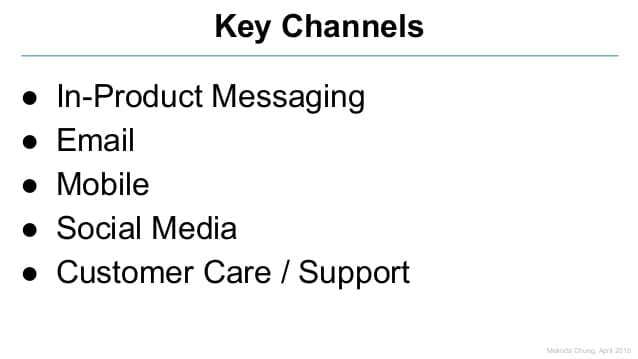
Out of these four channels, in-product messaging happens to generate the best conversion.
Overall, follow up emails have poor conversion rate.
But you can improve your conversions, by sending in-product messages. Because, that’s what your intimate customers are desperately looking for.
According to Wikipedia, in-product messaging means:
“Content, and related media delivered directly to a user’s internet-connected device or software application, with the purpose of informing, gathering feedback from, engaging with, or marketing to that specific user or segment of users at often-higher engagement rates than other digital marketing and online marketing channels.”
The part of this definition that you should consider critically is:
“Marketing to that specific user or segment of users.”
From the definition, you can see that when you send targeted message to a segment of your users, you’ll get higher engagement rates.
You should segment your email list. Because if you don’t, you’ll blindly send the same message to everyone.
Sadly, not everyone of your subscribers or ideal customers want your latest product or ebook.
Sending out of context emails will likely increase your customer’s email fatigue.
The ideal approach is to message a specific segment of your customer base with the exact product/offer which they’ve indicated interest.
In-product messaging is a viable strategy to adopt, because there is a market fit, which is the direction correlation between product and market.
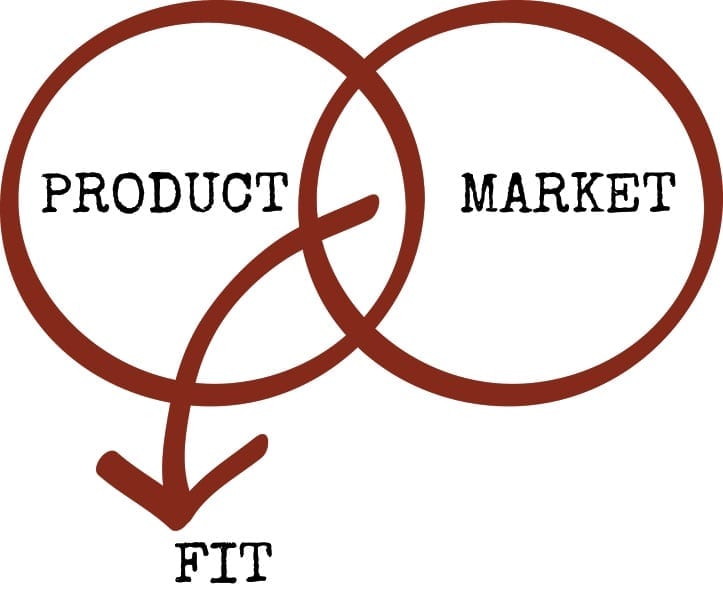
Not all CRM software are equipped with in-product messaging feature. If you find any marketing automation software that supports it, you should grab it with both arms.
A lot of startup and software companies agree that you can leverage in-product messaging to move new customers through a seamless onboarding process and use email to engage customers who are still stuck on a step.
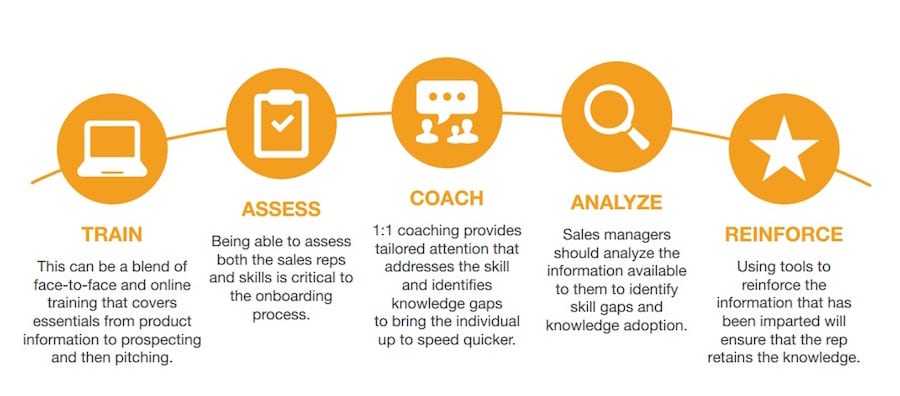
3. Nurture free trial prospects and get them to upgrade
Free trial prospects have gone beyond “onlookers.”
They’re actually customers – even
Frequently Asked Questions
How can social media be used effectively for customer engagement?
Social media should be viewed as a tool rather than just a platform. Platforms like Buildfire make this straightforward by providing features that allow businesses to connect, share, and engage with their audience effectively.
What is in-product messaging and why is it important?
In-product messaging involves delivering content directly to a user’s device or application to engage them. Tools like Buildfire allow businesses to implement this strategy effectively, enhancing user engagement and conversion rates.
How can I improve customer loyalty through engagement?
Improving customer loyalty involves providing positive experiences and engaging customers across multiple channels. Buildfire, for instance, offers solutions that help track and enhance customer interactions.
What role does customer feedback play in engagement strategies?
Customer feedback is crucial as it helps businesses understand customer needs and improve their products or services. Engaging with feedback can lead to better customer satisfaction and loyalty.
How can I use segmentation to enhance customer engagement?
Segmentation allows you to target specific groups of customers with tailored messages, increasing engagement rates. This approach ensures that your communication is relevant and effective.
if you haven’t charged them yet. By definition, a customer is someone who had made a transaction that would benefit the business.
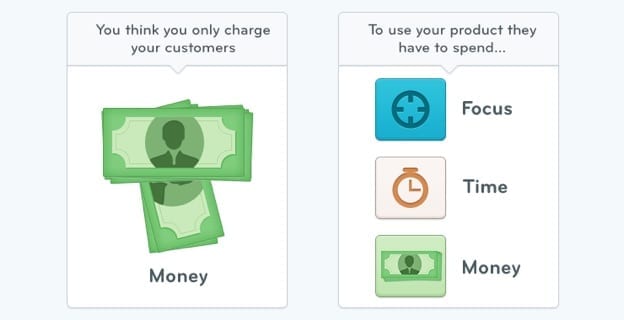
To use your product, customers have to spend focus, time, and money.
How often do you sign up to try a new software or solution but never actually upgrade or renew account?
It’s very easy for free trial users/prospects to get overwhelmed when they first signed up to a new service. The ultimate question in
| Type of VIP Customer | Description |
|---|---|
| Liberal VIP Customers | These are customers who are loyal to your brand. They usually purchase the most over a period of time. Doug Fleener says he measures spending over an 18 – 24 month period. |
| Community VIP Customers | These are important group of customers, too. According to Fleener, they aren’t actually big spenders, but you can’t do without them. Because, they refer qualified customers. Social media influencers and pro bloggers fall into this category. When they tweet your post or new product, you can expect tens if not hundreds of new subscribers and buyers. |
| Advocates/liberal VIP customers | These are customers who make impact in your brand. They’re brand advocates as well as big spenders. They’re not only happy after purchasing your product, but they can tell others, too. |
| Company | Approach | Outcome |
|---|---|---|
| Shopify | Embraced content marketing by creating custom content for existing customers. | Acquired and nurtured over 165,000 loyal customers billed on a monthly/yearly basis. |
| Moz | Announced events like MozCon and offered opportunities for customers to win free trips. | Engaged existing customers and strengthened brand loyalty. |
| KISSmetrics | Created custom content to inform customers about new features and how to use them. | Effectively communicated with customers and enhanced user experience. |
| Aspect | High Marketing Budget | Low Marketing Budget |
|---|---|---|
| Content Strategy Development | Very Effective | Less Effective |
| Hiring Chief Content Marketer | Very Effective | Less Effective |
12. Respond promptly to customer calls
How fast do you respond to customer calls?
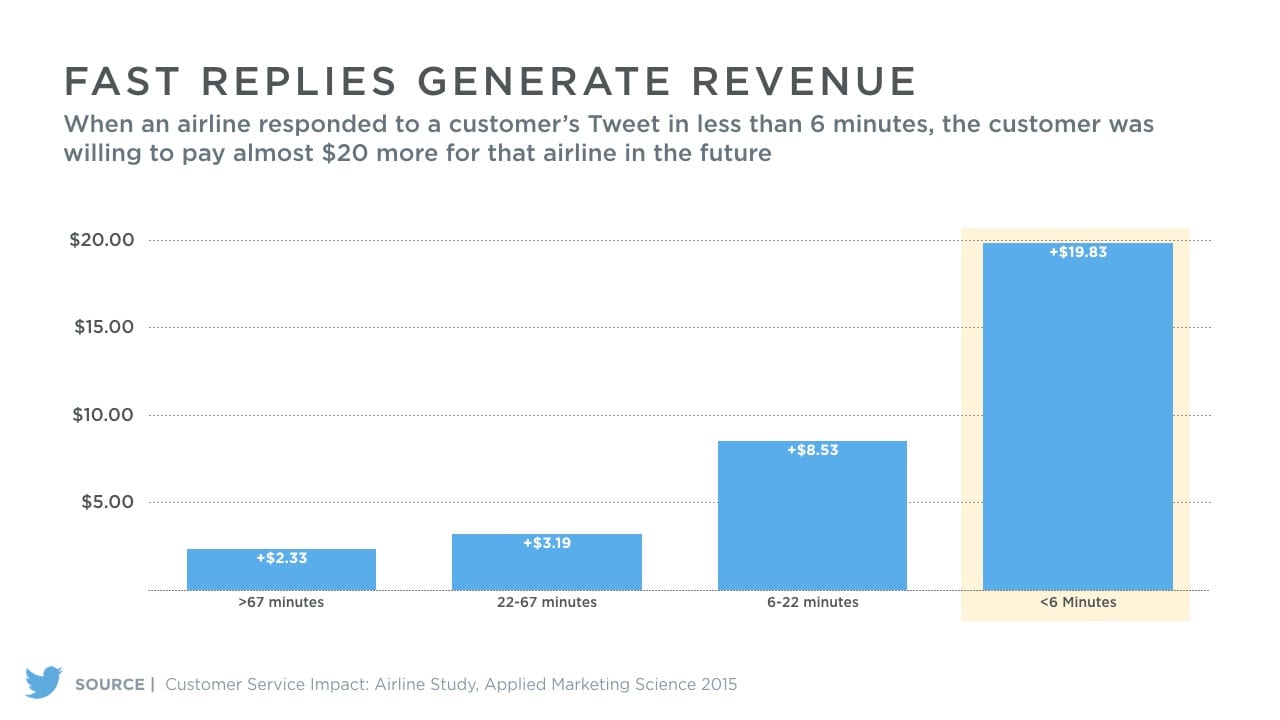
Fast replies generate revenue. When an airline responded to a customer’s Tweet in less than 6 minutes, the customer was willing to pay almost $20 more for that airline in the future.
By “calls,” I’m referring to feedback, not just phone calls or emails. The customer is the absolute priority.
Companies like Dell, Xerox, Starbucks, Apple, and several the like are leading the way – because they respond promptly to customer calls.
In case you don’t know, here’s a shocker:
Customers are impatient.
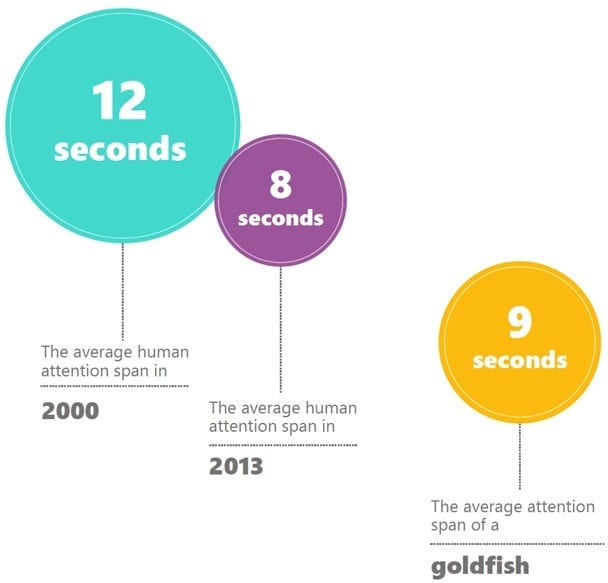
It’s estimated that humans attention span is 8 seconds – which is 1 second lower than that of a goldfish.
You’ve got to understand that people are not ready to wait for 48 hours to get their questions answered, when another brand can answer within 24 hours.
| Response Time | Customer Experience |
|---|---|
| 48 hours | Negative |
| 24 hours | Positive |
Even if the question requires some technical know-how, it’s vital to up your game. You can achieve tremendous results if you have a technical team or department to handle these technical issues.
When it comes to responding to customer’s feedback quickly, don’t make excuses.
How fast you respond will help you gauge and understand the difference between customer service and customer experience. “Experience” is as a result of the service you provide.
If your service is awesome, but you are slow, customer experience will be negative.
On the other hand, if the service is great and the time it took to deliver it blends properly, customer experience will be high and positive.
Don’t wait for a customer to resend a question, or create a new support.
Although, I use GetResponse email autoresponder, but their response time is discouraging. The last time I emailed support, I didn’t receive feedback until after 2 days.
I agree that the company is good at what they do, but I can’t recommend them in terms of customer service.
Speed is critical.
13. Create mobile apps
Have you created your first mobile app yet?
If no, what are you waiting for?
It’s easy to learn different programming languages.
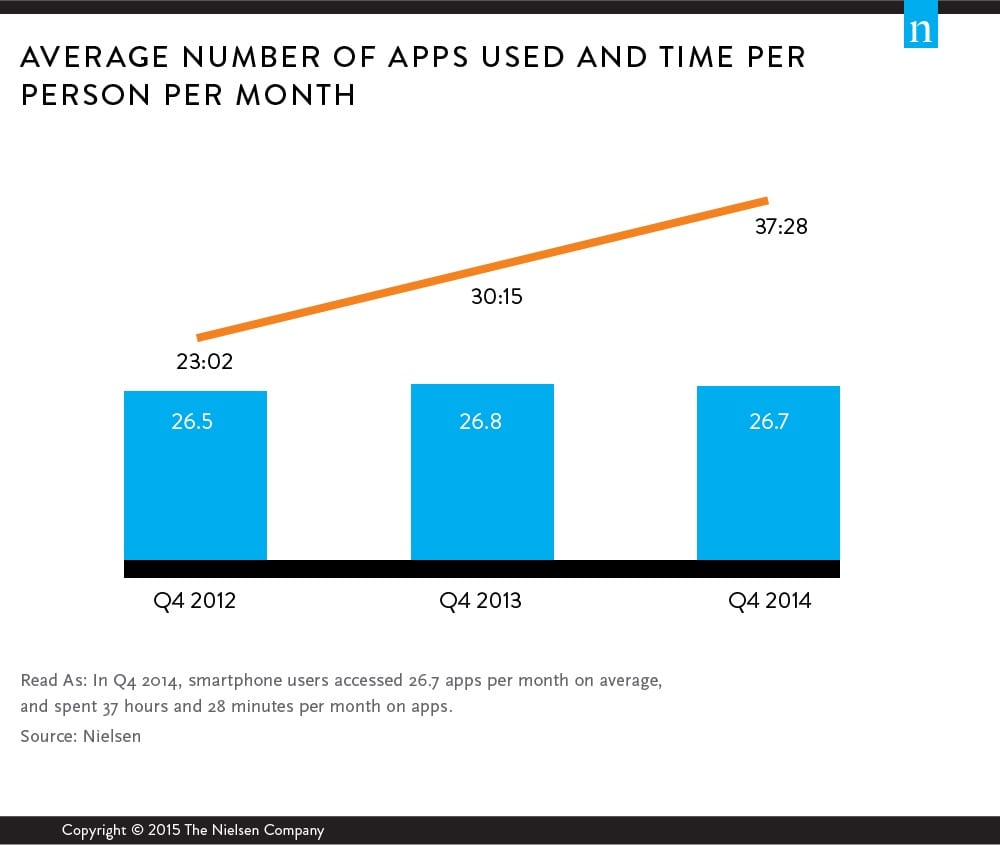
You can drive growth easily with mobile apps. Take a look at the average number of apps used and time per person each month, from Q4 2012 to the Q4 2014.
Deep analytics combined with good psychology for user behavior are the defining factors that differentiates an app from a website or other software.
When it comes to customer engagement, we’ve seen firsthand how apps can turn a casual conversation into a bonded relationship that generates sales.
Having a unique app icon helps too.
If you’re looking to engage your customers, while providing unfeigned value that will remain fresh in their minds for years to come, then you should seriously consider creating mobile apps.
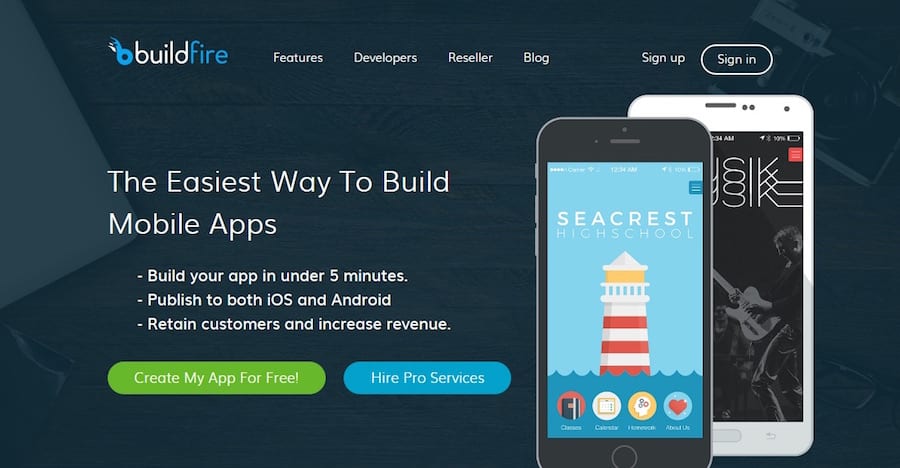
By the way, you can get started with your first mobile app in 15 minutes – Sign up with buildfire.com
Conclusion
The key learning here is that customer engagement isn’t a destination, but a journey. Because it doesn’t stop.
I’m yet to find any brand, business that can boast of mastering customer engagement 100%.
If only you can take these 13 strategies to heart and implement them, you’ll not only inspire your customers, but you’ll build a brand that thrives in the midst of market downturns.
Using Buildfire to create your app will help keep costs low.
Which of these customer engagement strategies have you used in your business?
FAQ
- What is customer engagement? Customer engagement refers to the interactions between a customer and a company through various channels, aiming to build a strong relationship.
- Why is responding promptly to customer calls important? Prompt responses can enhance customer satisfaction and loyalty, potentially increasing revenue.
- How can mobile apps improve customer engagement? Mobile apps provide a direct and personalized way to interact with customers, increasing engagement and retention.
- What are VIP customers? VIP customers are those who are highly valuable to a business, either through frequent purchases or influence.
- How can content marketing benefit customer engagement? Content marketing can educate and inform customers, building trust and encouraging long-term relationships.