
Today, I’m going to show you 19 different marketing strategies that have a proven history of success for small businesses.
Half of these options will probably be viable growth strategies for your unique business.
Four of them are probably worth testing out over the next month.
And one of them has the potential to skyrocket your growth over the next year.
Key Takeaways
- Proven Strategies: Discover 19 marketing strategies with a track record of success for small businesses.
- Growth Potential: Identify strategies that could significantly boost your business growth within a year.
- Cost-Effective Options: Explore inexpensive ways to promote your mobile app and reach your target audience.
- Digital and Offline Channels: Learn about both digital and offline marketing channels to expand your reach.
- Targeted Advertising: Utilize advanced targeting options on platforms like Facebook and Instagram for better results.
These work really well if you want to find inexpensive ways to promote your mobile app.
Once you’ve achieved product/market fit, your growth is simply a matter of smart marketing on the front end and a good customer retention on the backend. By the end of this article, you will know exactly what to do next with your marketing.
But before we get started, let me share a secret with you.
There Is No Magic Marketing Strategy
There is no magic bullet.
The goal of marketing is to connect your business’ value to the right customer base. It’s a simple concept but it can take on a million different shades.
- What demographics make up your customer base?
- Where do they live?
- Where do they hang out online?
- How do they look for products in your niche?
- Who do the listen when making decisions relative to your product?
The answers to these questions determine which marketing strategies will be viable and which will be a waste of time.
In other words, the key to success for your business is not Facebook Ads.
It’s not SEO.
It’s not conference networking.
There is no magic, universal strategy that will revolutionize your business. I have literally no clue what will work for you, because I don’t know you. I don’t know your business. I don’t know your customers.
But fortunately, you DO know your business! You DO know your customer base!
And after reading this guide, you will have an expanded awareness of viable marketing channels, any of which could hold the key to your future growth.
Eight of the channels we will discuss are strictly digital strategies, which will be conducted online. The other eight are a bit more general, with strategies that can be conducted offline (although many have online applications as well).
Let’s get started.
1. Facebook Advertising
Two million small to medium sized businesses advertise on Facebook; it’s an inexpensive and effective way to market to virtually any audience.
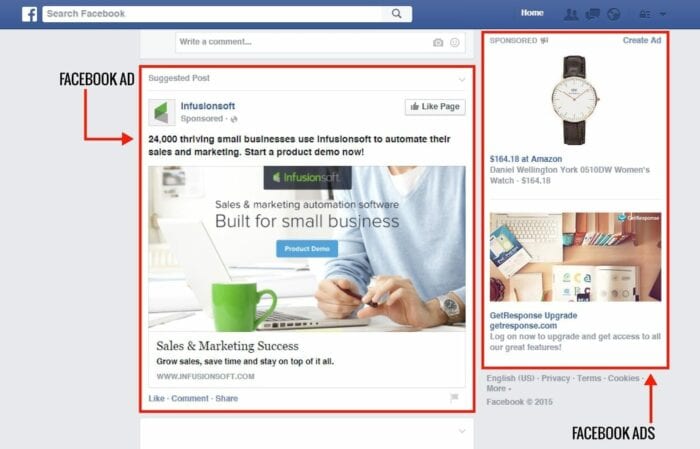
Image Credit: ibisinfotech.com
Facebook ads excel at advanced targeting. They allow you to target a specific audience based on location, interests, age, sex, online behavior, and many other factors.
Creating Facebook ads is very easy. You just need a solid headline, a bit of descriptive copy, one image, and a link.
Promote your app icon here as well.
The Facebook Ads Manager also makes it fairly simple to run and test multiple ad sets, allowing you to hone in on a winning formula and reach profitability without needing advanced technical expertise.
That said, many new users have a lot of difficulty succeeding with their initial campaigns. It takes some persistence, but on the plus side, Facebook’s popularity has produced numerous 3rd party tools that can help you succeed.
If you decide that Facebook is the right channel for you, I’d recommend using a tool like AdEspresso to run your campaigns and speed up your journey to positive ROI.
If you run a business that has a strong visual component, it might be worth trying out Instagram Ads instead. As a subsidiary of Facebook, Instagram Ads benefit from the same data base and targeting options, while allowing you to connect with an audience that is better primed for visual sales.
Additional Reading
- Facebook Advertising Made Simple: A Step-by-Step Guide by Neil Patel
- How to Run App Install Ads On Facebook by Aki Merced
2. Google My Business
Ranking your Google My Business (GMB) listing is one of the most powerful things you can do for your business.
In fact, if you run a local business targeting local clients, I would dare to say it is THE most powerful strategy available to you.
For example, if someone searches for a “Portland contractor”, this is what they see:
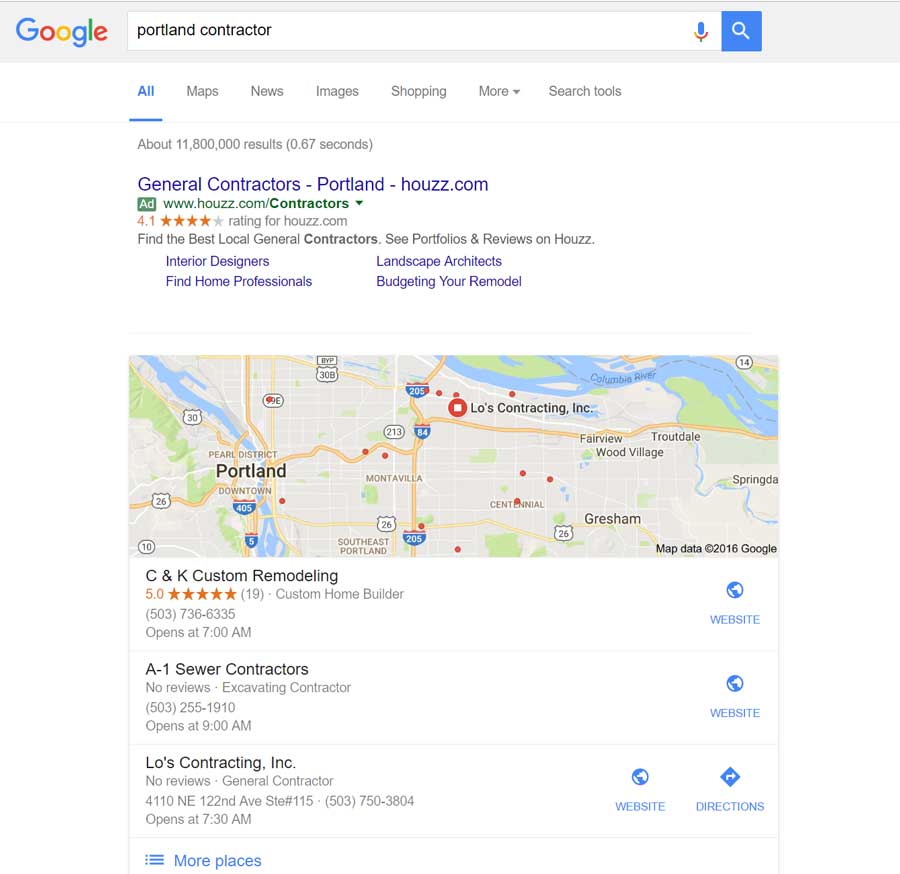
What you are seeing here is one paid ad, followed by THREE Google My Business listings before we even see the normal organic search results. If you can rank your GMB listing in these top 3, you can pull in large numbers of highly qualified leads day in and day out without needing to spend a dime on ads.
Google My Business combines all your different Google platforms into one central place, which includes your Google+ profile, Google Maps profile, your Google reviews, access to data on Google Analytics and Google Insights, and more.
If you have a unique brand name, you can even get a large display like this to show when people search for that name:
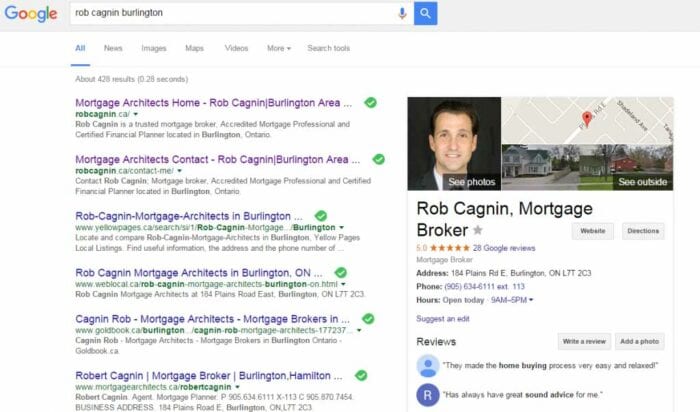
GMB immediately gives your business credibility and visibility, and as I said before, if you run a local business, it should be #1 on your priority list.
And best of all, ranking your GMB listing is really not that hard. It simply requires you to optimize your profile and then collect reviews and citations.
Additional Reading
- How to optimize your Google My Business listing: expert tips by Graham Charlton
- 7 SEO Mistakes That Leak Money From Local Businesses by Jacob McMillen
3. Google Adwords
There are more than 40,000 search queries on Google every second. No other advertising method has the potential to get your business before that many pairs of eyes.
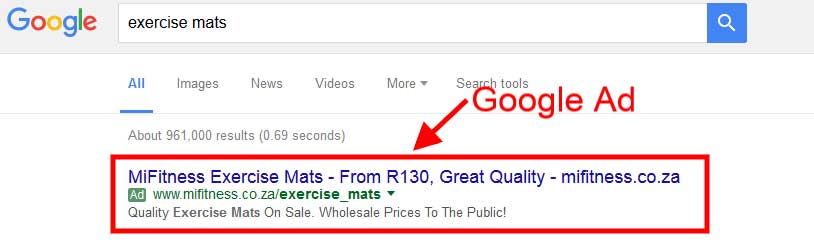
Google Adwords is sort of the godfather of online marketing channels. It’s been around a long time. It’s competitive. It’s expensive. And if you know what you’re doing, it can work very, very well for you.
Despite being a paid channel, Adwords’ goal is still to deliver relevant search results to users, and as a result, it will be less expensive for you when you are utilizing proper on-page SEO.
Google assigns a quality score to your ad, which is dependent on CTR (Click Through Rate), relevance and the landing page your ad sends traffic to. This quality score factors into the bid rate you will need to get an ad displayed, with higher scores lowering the bid cost.
Unlike many of the channels we will discuss today, Adwords is a remarkably symbiotic channel that can be paired with many other strategies to maximize output. As a paid marketing channel, it also allows you to obtain immediate results and can scale as far as your budget allows.
Additional Reading
- The Complete Google AdWords Tutorial by Jerry Banfield
- The Iceberg Effect: How Your AdWords Strategy Is Slowly Drowning by Johnathan Dane
4. Content Marketing
18% of marketers say that content marketing has the greatest commercial impact on their business of any channel in 2016.
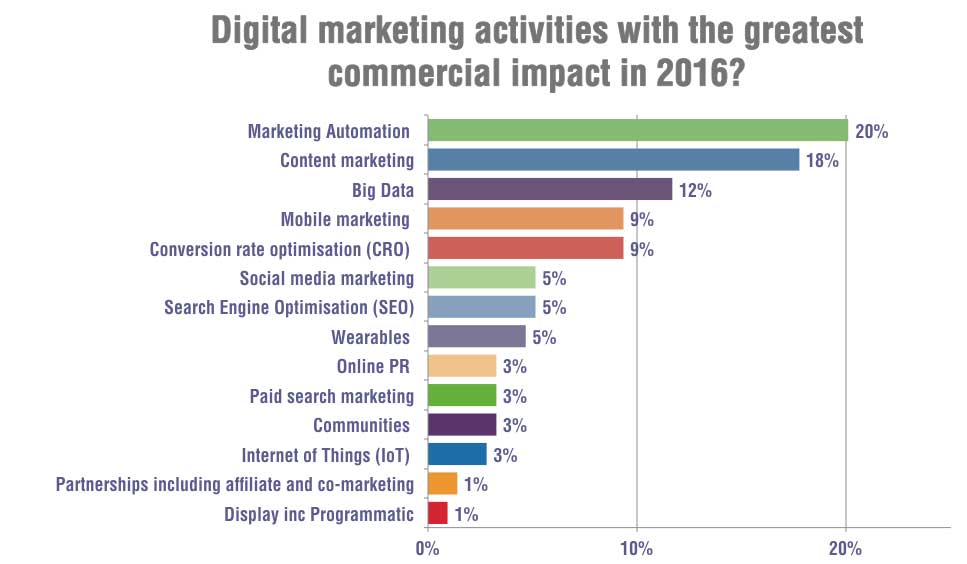
Image Credit: SmartInsights
Content marketing is the process of creating and distributing valuable, relevant, and consistent content to attract and retain a clearly-defined audience and drive profitable customer action.
Unlike paid advertising, content marketing focuses more on long-term results. The initial payoff tends to be low, but the long-term, sustainable growth in visitors, leads, and customers can single-handedly carry a
6. Coupon Deal Sites
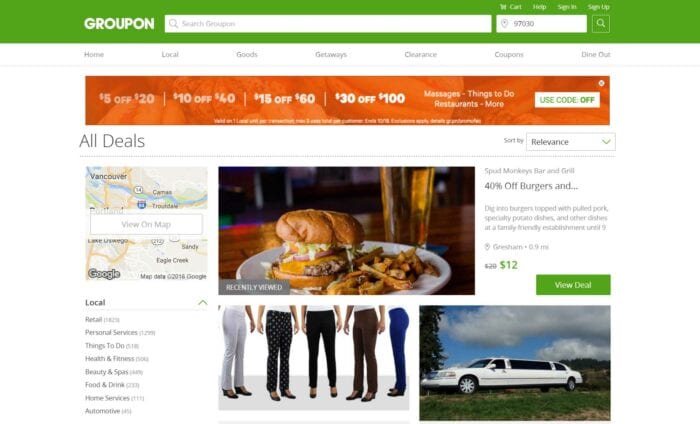
Whether you sell a product or offer a service, you can use coupon deal sites like Groupon to quickly promote your business.
Coupon deal sites amass massive audiences, grouped by location, and then allow local, regional or even national businesses to offer limited-time discounts to their members.
| Benefits | Costs |
|---|---|
| Mass exposure | Low revenue per sale |
| Targeted local advertising | Discount product by at least 50% |
| Increased brand awareness | At least half the revenue goes to Groupon |
| Influx of new customers | Potential to lose money without a 300% markup |
In other words, unless you are running a 300% markup, you will lose money on your Groupon deal. It’s essentially paid advertising.
The primary purpose for using coupon deal sites is not sales. The more significant your discount, the more popular your deal will be. The goal is to get people in your door or trying your product, and from there, your customer retention strategies kick in.
As an added bonus, many new potential customers will browse your website even if they don’t decide to purchase the deal.
But be warned!
If your deal gains traction, you can quickly be overcome by more customers than you are prepared to handle, and if you don’t do the math correctly, you can lose a lot of money. It’s important to be ready and to have a plan for handling different tiers of new business.
It’s also important to have flawless customer service during the period after running your deal, with the expectation that your coupon-driven customers will be even harder to please than normal customers.
DO YOUR HOMEWORK. Follow deals going on in your area and see how they play out. If you can, talk with fellow business owners who have run deals and learn from their experience.
And make sure – for the love of all that is good and decent – make sure you do the math.
Additional Reading
- Doing The Math On A Groupon Deal by Jay Goltz
- The Real Cost of Groupon and What it Means to Your Marketing Planning by Mana Ionescu
10. Offer Staff Incentives
Referrals are one of the best ways to find new customers, and who better suited to obtain referrals than your current staff?
Your employees know your product or service. They know your customer base. Some of them will take initiative without financial motivation, but most won’t, and those you bring in new business should be encouraged to repeat the process with financial or otherwise meaningful reward.
| Type of Incentive | Description |
|---|---|
| A sleep-in day | Staff get to sleep in late for a certain period of time. |
| Membership to publications | Staff choose publications they are interested in. |
| Vouchers | For massages, movie nights, restaurants. |
Like any type of compensation, incentives are about matching your business’ goals to the goals of your employees. If you can find out what they want most, you can motivate them to help grow your business.
It’s also important to give them the tools they need, whether that’s a customized landing page, printed coupons, a special discount for employee referred clients, or whatever.
Hold training sessions and teach your staff how to effectively promote your business, but remember that this form of marketing will only work if they genuinely feel good about your business and are properly motivated to pitch it to friends, family, and acquaintances.
Additional Reading
- How to Create a Referral Program that Boosts Retention & Rewards Employees by Joe Flores
- Determining The Most Effective Rewards For Employee Referrals by Dr. John Sullivan
15. Direct Mail Marketing
Like print media, direct mail marketing is not dead.
As online channels become more and more saturated with content, fewer companies look to direct mail, and that means opportunity for you.
Like with any marketing strategy, success comes down to targeted creativity. You can’t just spam people and expect a return on your investment. Just like you need to compel people to click your blog post headline, you need to compel mail recipients to open your letters.
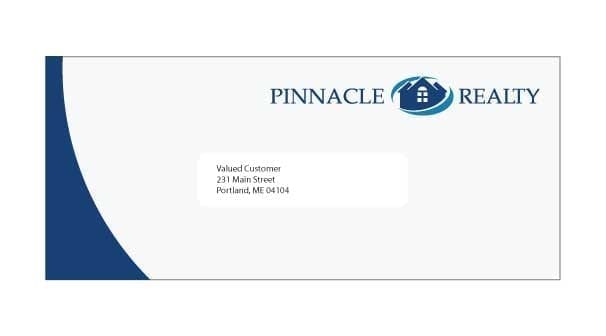
Start with the envelope, which will never be opened if it looks like a run-of-the-mill promo piece. Stand out. Use a colored envelope. Use an unusual shape, size or material. Make it look interesting.
If possible, handwrite the address on every envelope or include something bulky inside to make the envelope lumpy – anything you can do to grab attention
| Envelope Type | Likelihood to Open |
|---|---|
 |
Less likely |
 |
More likely |
Image Credit: Freelogoservices and KezzysCreations
The next thing to focus on is the content. If you want the best results, your headline has to be enticing, and your copywriting needs to hold the reader’s attention through the duration of your pitch.
Like most offline campaigns in 2016, direct mail is typically run in conjunction with an online marketing funnel.
Additional Reading
- How to Create a Direct Marketing Campaign by Entrepreneur.com
- How to Plan Your Direct Mail Marketing Campaign by George Oliveira
Conclusion & Summary
Well, that’s the scoop: 16 proven marketing strategies that have worked for thousands of businesses and can work for you.
Here’s the full list:
- Advertise on Facebook
- Rank your Google My Business listing
- Use Google Adwords
- Invest In content marketing
- Grow your organic social reach
- Run a coupon deal
- Build an email marketing funnel
- Host a webinar
- Offer a free consultation
- Incentivize employees to refer new clients
- Advertise in niche print media
- Write a column
- Join a local business group
- Partner with other businesses
- Launch a direct mail campaign
- Speak at events
- Small Business SEO
- Link Building
- On-Page Optimization
| Criteria | Questions |
|---|---|
| Demographics | What demographics make up your customer base? |
| Location | Where do they live? |
| Online Presence | Where do they hang out online? |
| Product Search | How do they look for products in your niche? |
| Influence | Who do they listen to when making decisions relative to your product? |
Use the answers to select four viable channels from today’s list of marketing strategies for small businesses, and then run small tests with each strategy to see what fails and what performs.