

Boost Your Mobile App Growth with In-App Referral Programs
Your app has finally launched. You’ve got lots of users who are active and using your app on a regular basis. This is great news.
But if your download rates are starting to plateau or even possibly taper off, you’ll need to come up with creative strategies to get your app in the hands of new users.
There are lots of ways that you can approach this. But one of my favorite ways to get new downloads is by getting your current users to recommend your app to other people.
Why would anyone do something like this? You’ve got to give them a reason to. Implementing an in-app referral program is the way to make this happen.
Key Takeaways
- Referral Incentives: Offering rewards encourages users to refer your app to others.
- Cost-Effective Strategy: In-app referrals keep user acquisition costs low.
- High ROI Potential: Quick returns on investment due to low initial costs.
- Timing Matters: Launch referral programs when user engagement is high.
- Effective Communication: Use push notifications to inform users about referral opportunities.
For those of you who aren’t that familiar with this concept or need some help getting steered in the right direction, you’re in luck.
As an industry expert, I’ve got plenty of experience with in-app referrals. I’ll show you how to implement a mobile app referral program that actually works.
Here’s everything you need to know before you get started.
Keep user acquisition costs low
Any time you start a new marketing campaign, the cost is always the first thing that should come to your mind. You’ll want to make sure that you budget accordingly so that you don’t run out of money.
How much does it cost you right now to get a new user or customer? If this number gets out of control, your business could be in serious trouble.
You need to come up with inexpensive acquisition strategies.
That’s one of the best parts of an in-app referral program. It’s not going to cost you much money at all, which makes it one of my favorite mobile app marketing promotions.
Here’s a look at the average cost per app install from different countries.
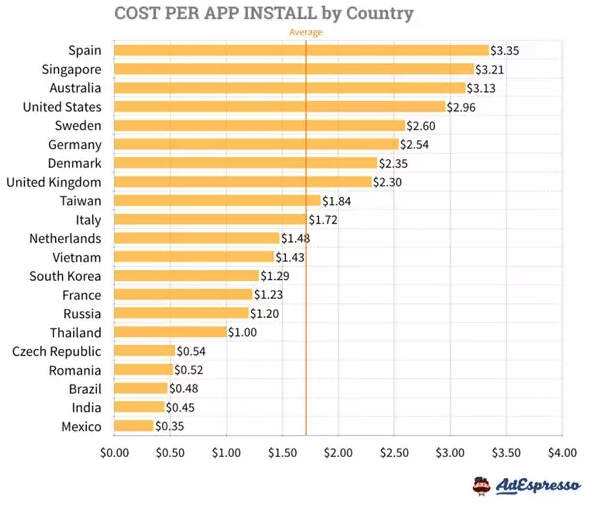
In every business, acquisition costs are everything. You can use this as a reference to see where your app stacks up.
The reason why user acquisition costs will be so low a referral is because you don’t need to promote it to new people. That’s the beauty of it.
You’ve just got to inform your current users about the program and let them to all of the work. This won’t cost you anything because you can already contact them via email, push notifications, or whenever they open up your app.
It’s not the same as launching a new and expensive marketing campaign where you have to collect new information from prospective customers. You don’t need new email subscribers.
Now it’s just a matter of knowing when to contact your current app users and how to pitch the program to them. I’ll cover all of this in much greater detail as we continue.
Get a high ROI fast
Another benefit of an in-app referral program is that you’ll get a high return on your investment. This has a lot to do with the fact that your acquisition costs are so low because these two numbers always go hand in hand.
But it should be pretty easy for you to make your money back fast.
The only major cost of your in-app referral program is whatever you’re offering to your current users and new users.
To explain what I mean in greater detail, I’m going to talk about a recent case study. This study focuses on Uber’s ride-sharing app, which I’m sure you’re familiar with.
Here’s how their program works. When a current user refers a new one, they each get a $20 credit toward a ride. So their user acquisition cost is $40. This number may seem high, but stay with me for a minute here.
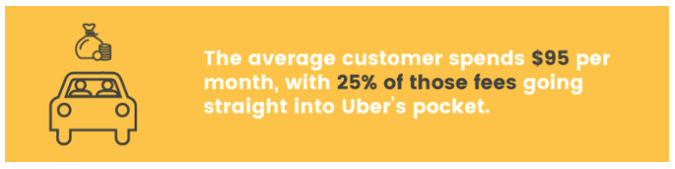
Take a look at how much their average customer spends each month.
| Aspect | Uber’s Referral Program |
|---|---|
| Referral Incentive | $20 credit for both referrer and new user |
| Acquisition Cost | $40 per new user |
| Average Monthly Spend | $95 per user |
| Break-even Time | Less than two months |
With the average user spending $95 per month and Uber keeping 25% of that, they’ll break even on their initial new download cost in less than two months.
Now they can benefit from these new users continuing to spend for the duration of that customer’s lifecycle with the company. So even if your initial investment sounds high, you can get a return on it fast with a strategy like this.
I always like to follow the lead of those who succeeded before me. Uber’s referral program is definitely a model that you can follow. Their success speaks for itself.
Offer an incentive for referrals
You may get the occasional user that refers your app to someone out of the kindness of their hearts. However, that’s not a viable or long term strategy for scalable growth.
You need to give people a reason to refer others. Make it worth their while. Look back at the case study that we just discussed. $20 is definitely something that people can get excited about.
For the most part, monetary benefits are the best. You should have a section of your app that’s dedicated to your referral program. Here’s a great example of what this looks like from the Airbnb mobile app.
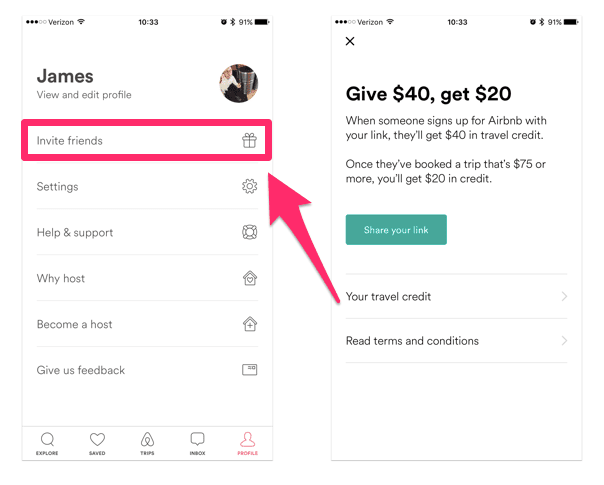
Users shouldn’t have to go through a complicated process to refer others. They should easily be able to send the link via text or email to their friends and family.
Another way to do implement this strategy is with a referral code. You can randomize a unique set of letters and numbers for each user, and then they can share that with their friends. Or even better, they can customize their own referral code so it’s easy to remember.
But again, they’re only going to do this if you offer a legitimate incentive. So for the Airbnb example above, the new user gets $40 and the current user gets $20.
A current user could easily get $100 in credits by referring five people. That may even be worth a free night or two somewhere, depending on the location.
If money isn’t exchanged on your app, you’ll need to come up with another incentive to encourage downloads. For example, if you’ve got a game app, you could offer free coins to help improve the gameplay experience to users who refer their friends.
Timing is everything
So you just launched your app. Time to release your referral program, right? Not so fast.
You don’t need to have a referral program as soon as you build your app. But you don’t want to wait too long either. Here’s why.
If the referral program is available too soon then people who download your app aren’t engaged and loyal customers yet. They don’t have a reason to refer anyone yet because they don’t even know if they want to continue using your app.
But waiting too long could be a problem too. Over time, people might start using your app less and less. So you’ve got to design your user lifecycle funnel to create loyal, engaged, and active customers.
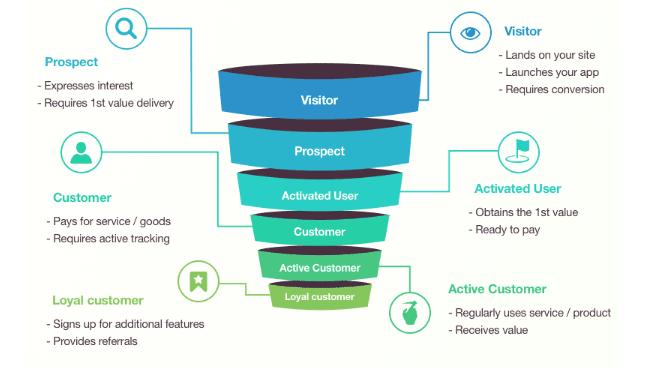
So keep an eye on your app analytics. Find the sweet spot for when you have lots of downloads and plenty of daily active users who are engaged.
This is the best time to launch your referral program. This will maximize the growth of your program as well as the success of your app and brand.
Use push notifications to remind users about the program
Once your referral program is set up and live, you’ve got to tell people about it. One of the best ways to do this is through push notifications. Platforms like Buildfire make this straightforward by allowing you to send targeted messages directly to your users’ devices, ensuring they are aware of the referral opportunities available.
What incentives are you offering for your in-app referral program?
Frequently Asked Questions
How can I effectively promote my in-app referral program?
Utilize push notifications and in-app messages to inform users about your referral program.
What incentives work best for in-app referrals?
Monetary incentives, such as credits or discounts, are highly effective. For example, Uber offers ride credits, which has proven successful.
When is the best time to launch a referral program?
Launch your referral program when user engagement is high. Monitoring app analytics can help determine the optimal timing.