

They’re in all of our pockets now, aren’t they?
I’m talking, of course, about mobile devices. And the core functionality of those devices (other than making phone calls, I’ve been told) is to run a whole host of applications that serve nearly every imaginable purpose.
Businesses from all corners of the world, offering a ridiculous range of products, have begun migrating from the physical world of handing out leaflets, printing advertisements, and hanging billboards, to the mobile realm. And you should too.
Now, I know what you might be thinking:
Key Takeaways
- Mobile App Necessity: Transitioning to mobile apps is crucial for modern businesses to stay competitive.
- Customer Engagement: Apps enhance customer interaction and loyalty through features like loyalty programs.
- Brand Strengthening: Mobile apps help in building stronger brand awareness and trust.
- Improved Customer Service: Apps provide consistent and accessible customer service, enhancing satisfaction.
- Profit Increase: Businesses see significant sales boosts by integrating mobile apps.
Our business doesn’t need a mobile app to sell products to our loyal customers!
And maybe that’s been the case in the past. But if you want to prepare for the future and start seeing the massive benefits right out the gate, you’ll need a mobile app.
Not so easily convinced? Then here are 4 ways (and then some) that your business will reap the benefits of creating a mobile app for your customers.
1. Provide More Value to Your Customers
Business is all about reciprocation. You offer a product, the market opens their wallets with their demand, right?
Maybe you’ve sat down with your employees and tried to nail down the best way to encourage more of this wallet-opening engagement from your customers. You want to increase their interaction with your business to promote sales, of course, but you also want to provide a level of value for your customers that they can’t get anywhere else.
One way to do this is create a loyalty program within your app. It would work like this:
The more customers interact with your business and product, the more points they collect, which can in turn be used for great deals on the products they already know they want.
Starbucks uses their mobile app to their advantage by offering rewards exclusively to app subscribers, which then motivates customers to buy coffee (And other delicious snacks) from them. They’re even more ahead of the curve by allowing their users to pay directly from the app, speeding up the whole transaction process.
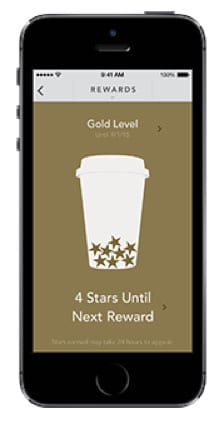
If you already have a program like this in place – great. You can incorporate it into your mobile app, digitizing the entire process, making data on their purchases available to you instantly. If you don’t have one, get on it, fast.
And when your customers see their points adding up in real time (rather than having to send in points in the mail or wait until they can access your website to enter them manually), they’ll be impressed and more enticed to follow up on their purchases in the future.

Build a profitable mobile app in less time and at a lower cost than traditional solutions with Buildfire GET STARTED WITH BUILDFIRE
2. Build a Stronger Brand
One of the most important things a mobile app offers to consumers is awareness of and communication with your brand. And through that regular interaction with your target market, you’re fostering trust.
The more your audience trusts you, the more likely they’ll be to listen to later sales pitches and even commit to your brand. With an app, you’ll demonstrate to your users why they should trust you by showing (rather than telling) what your brand stands for.
In the same way as distributing fridge magnets, calendars, and other random memorabilia with your company logo on it has served in the past both as advertisement and assistance, mobile apps strengthen your brand and educate your customers.
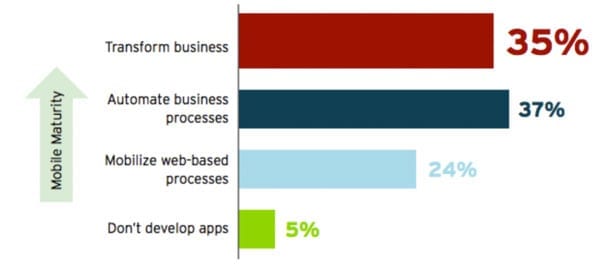
That’s why so many businesses across all the major sectors are developing strategies for mobile apps. Check out this data from the Red Hat Mobile Maturity Survey 2015:
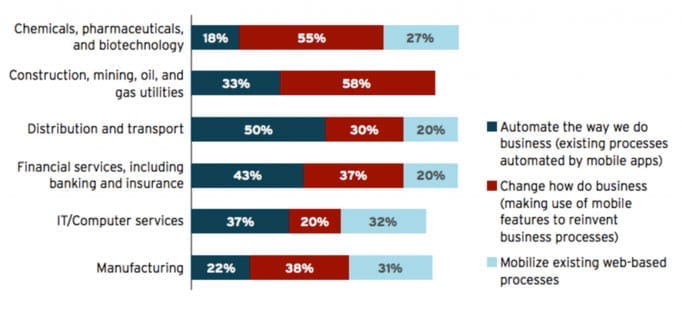
This is more than you can shake a stick at. Everyone is getting on board.
3. Connect Better with Customers
Customer service isn’t just about face to face communication between smiling sales associates and customers anymore.
Since 2.6 billion people now have high-powered mobile devices within arm’s reach at all times, the true game-changer in customer service is now mobile apps.
Why?
Firstly, your app won’t be merely a human being, subject to mood swings and poor performance.
And, through a solid mobile presence, you’ll always know you’re presenting to the customer the same face – an interface geared specifically to provide them with the best experience of studying and deciding whether they want to buy your product.
In fact, the vast majority of marketers see their apps as a means to primarily improve customer service.
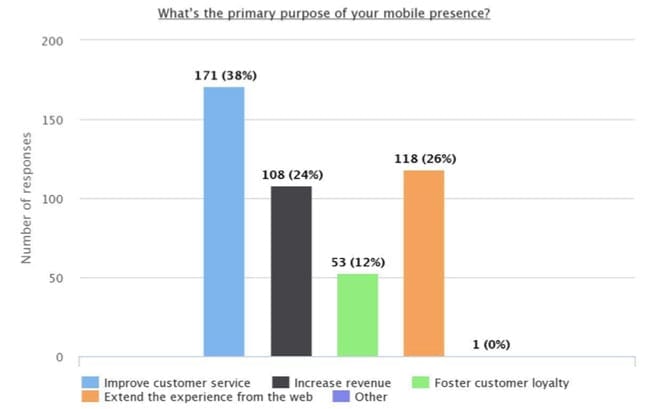
Without sounding creepy, your business is always with your customer. (Okay, maybe there’s no way around that one.)
But think about it. If a person hears about your app in the middle of the night and wants to get information ASAP, all they have to do is turn on their device and download your app. Later, when a thought pops into their head that they should buy your product, they can do it immediately, without having to wait for regular business hours when normal human beings are awake.
So, if customer service is one of your top priorities (like it should be), mobile apps are the answer to raising customer satisfaction across the board.
4. Boost Profits
When customer satisfaction increases, sales typically do too. In fact, according to SalesForce, 70 percent of buying experiences are influenced by how customers feel they’re being treated.
The more interested and pleased people become with your product and your business, the greater consumer demand will grow. And let me assure you, if you have a product your customers can’t wait to get their hands on, that demand is going to provide you with some serious returns.
That’s where the mobile app comes in like none other. But it’s important to keep costs low while you’re developing it.
Sure, you should have a website with a responsible design that can adapt to any of the various mobile devices there are now. This eliminates the necessity of having a frustrating, secondary “mobile” site to manage. But if you launch a mobile app in addition to your responsive website, you’ll boost sales while enhancing the customer experience.
According to Techcrunch.com, 35.4 percent of Black Friday sales last year were completed on mobile devices. That’s up from the 16 percent they were just a few years ago, according to 2012 IBM Holiday Benchmark Reports.
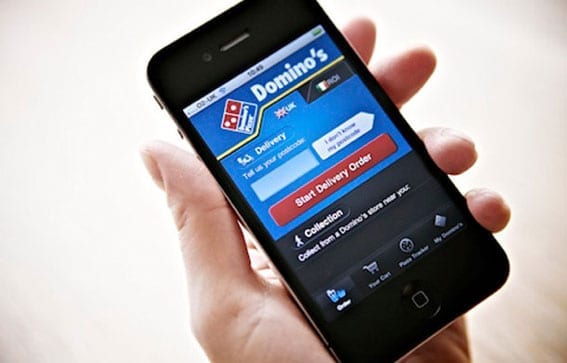
When Domino’s Pizza created a mobile app for ordering delivery or in-store pickup of their food, they saw an ecommerce rise of 28 percent in half-year pre-tax profits in the UK alone. And I know I’d rather use their app than actually call the store.
In fact, mobile devices now account for 52 percent of their online orders.
Are you seeing a trend here? If you aren’t using a mobile app that encourages more purchases while making it easier and more exciting for your customers to press the “buy” button, you’re missing out on a huge chunk of change from an ever-growing market.
Build a profitable mobile app in less time and at a lower cost than traditiona
Other Benefits of a Mobile App
If these points haven’t solidified in your brain the necessity of a mobile app, there are still more reasons to consider adopting a mobile app strategy to encourage more customer engagement and satisfaction.- Inform users of new products and offers
- Stand out from the competition
- Reach out to younger demographics
- Sync users’ email and social media accounts
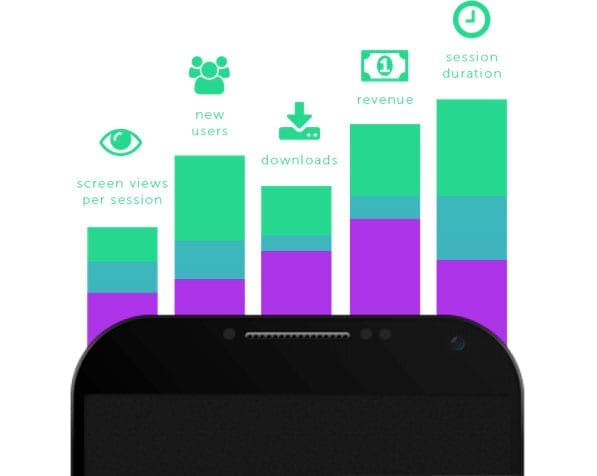 Another point to think about is location data. Apps are now, more than ever, providing their creators with location data on their users. If you were to apply this to your business, you could learn when and where people were purchasing your products most often, or which parts of the world are most interested in your business.
| Without Mobile App | With Mobile App |
|---|---|
| Limited customer engagement insights | Access to detailed analytics on user interaction |
| No location data | Ability to track user location data |
| Potentially left behind by competitors | Opportunity to stand out and expand business |
 If your business were to continue operating without this functionality, you might be left in the dark on these data while your competition takes advantage of it to skyrocket their sales and expand their businesses.
The Bottom Line
90 percent of companies plan to increase investment in mobile apps in 2016. If you don’t, there’s a good chance you’ll be left behind your competitors.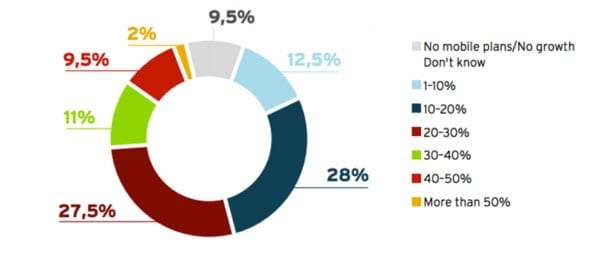 And no, a mobile app may not save your business, but it is a sure way of securing a strong presence in your industry. Instead of being some abstract concept of a brand your customers appreciate, that they imagine has a headquarters in some faraway city – you’ll be right in their pockets. Your logo will be placed on their mobile phone screens by default.
Just make sure you promote your app after it launches.
The convenience factor coupled with the undeniably cool element of new, rapidly evolving technology will place your business on the forefront of your industry. And hey, don’t you want to pull your device out of your pocket and play around on something you helped create?
And no, a mobile app may not save your business, but it is a sure way of securing a strong presence in your industry. Instead of being some abstract concept of a brand your customers appreciate, that they imagine has a headquarters in some faraway city – you’ll be right in their pockets. Your logo will be placed on their mobile phone screens by default.
Just make sure you promote your app after it launches.
The convenience factor coupled with the undeniably cool element of new, rapidly evolving technology will place your business on the forefront of your industry. And hey, don’t you want to pull your device out of your pocket and play around on something you helped create?
Does your business have a mobile app? Why or why not? Share your thoughts below in the comments section!
Frequently Asked Questions
How can a mobile app improve customer engagement for my business?
Mobile apps enhance customer engagement by providing features like loyalty programs and personalized notifications.
Can a mobile app really boost my business profits?
Yes, mobile apps can boost business profits by improving customer satisfaction and streamlining the purchasing process, leading to increased sales.
What role does a mobile app play in customer service?
A mobile app plays a crucial role in customer service by providing 24/7 access to information and support, enhancing the overall customer experience.