

Building a mobile application has many similarities to starting a business.
And just like running a business, there isn’t an official blueprint to follow that will show you how to be successful.
Every business venture is unique, and every mobile app development story will be slightly different from the others.
But with that said, you can still implement some of the same successful strategies that previous developers used to your own app.
Building an app is complicated, especially if you don’t learn from the lessons of those people who have come before you.
As an industry expert who has developed apps of my own as well as apps for other people, I’m very familiar with this process.
I know what it takes to be successful and what mistakes you need to steer clear from in order to avoid failure.
While there still isn’t a definitive black and white guide to building an app, I’ve narrowed down the process to seven rules that can drastically improve your chances of being successful.
Truthfully, I wish someone had given me some of these pieces of advice before I got started in this industry.
For the most part, I’ve been able to avoid any catastrophes, but there’s a handful of instances during my career where I wish I could have had a do-over.
Fortunately for you, you’ll get to read these rules before you get started.
Here’s what you need to know.
Rule #1: Take app development seriously
People who have an existing business have an advantage when it comes to mobile app development because they already have customers that they can market to.
But if you’re building an app as a startup company, there are so many reasons why it could fail.
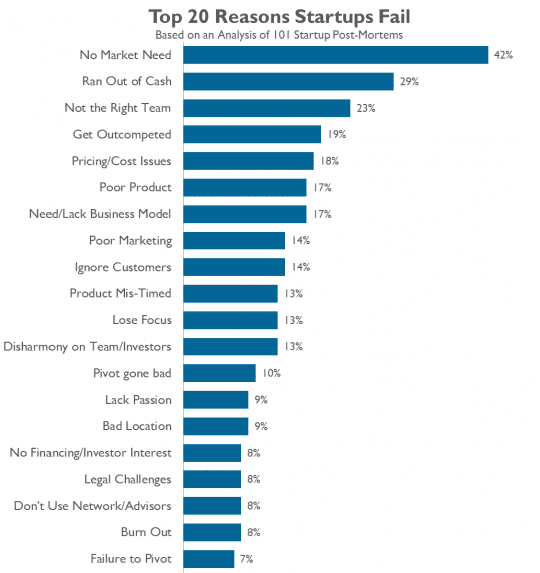
Don’t get me wrong, I’m not saying that launching an app as an extension or tool of your current company is foolproof.
There’s still plenty that can go wrong in those cases as well.
Trust me, I’ve seen it happen.
But the majority of those situations involved people who weren’t taking the process seriously.
You can’t go into this with a half-hearted mentality.
Putting your best effort forward is an absolute necessity if you want to be successful.
Apps take a long time to develop.
If you’re not on top of it every day trying to make things go as smooth and fast as possible, it’s going to cost you plenty of headaches and even more money.
Thinking you can build an app as a hobby or small side project is a very common misconception.
I’m not saying you can’t be involved in other business ventures.
But I am saying that building an app needs to be at the top of your priority list, especially during the development phases.
So if you’re prioritizing other businesses or personal matters, the longer it will take you to produce a quality piece of programming.
I get it, not everyone has unlimited free time in their day.
But depending on how much time you’re willing to put in will largely depend on how you choose to develop it.
You could do it yourself by learning to code, which you can do in less than 30 days.
Hiring an experienced developer or agency to put it together is another viable option.
There are risks and advantages to each of these options.
But you, and only you can determine which is best for your own life and circumstances.
Whatever you decide, just make sure you’re not taking the process lightly.
Rule #2: Come up with something special
I realize this is much easier said than done, but it’s true.
The app market is extremely crowded and competitive.
It’s becoming even more so every day.
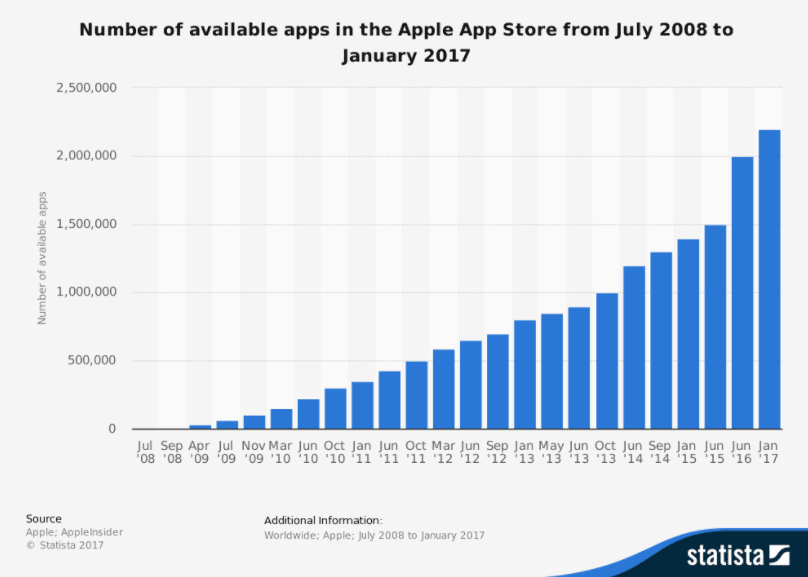
How do you expect to compete in a market that’s so saturated?
In order to succeed, you’ll need to come up with a way to stand out from the crowd.
Don’t get me wrong, not everyone is going to launch an app that’s as popular as Instagram or Snapchat.
There are still plenty of other apps on the market that are making plenty of money.
But they are able to achieve this because they’ve found a way to get users to buy into their brand.
If you want to create a buzz, you’ve got to get people interested.
How do you plan to generate a profit from this venture?
Some of the common monetization strategies include:
- charge per download
- advertisements
- in-app purchases
- ecommerce store
- subscriptions
Whichever strategy or strategies you’re planning to use, it all relies on getting users to download the app.
If you want to get downloads, you need to offer something that people can’t get anywhere else.
Why else would users download your app when there are over 2 million other options to choose from?
While you won’t necessarily be competing with every single app available on the market, it’s extremely likely that whatever you’re doing has been done before.
I’m assuming you don’t have a unicorn in your back pocket, but I won’t rule it out.
For now, we’ll operate under the assumption that your app has similar features and functions to other applications available for download.
Can we agree on that?
To get downloads, you’ll need to come up with a better version of this concept than your competitors.
Creating something special doesn’t always mean it has to be brand new.
Just make minor tweaks and changes that improve the user experience.
Rule #3: Make your app easy to grow (and fix)
If you think that you’re going to just launch an initial version of your app and forget about it, you’re sadly mistaken.
I mean that’s possible to do, but your app won’t prosper and will likely fail.
Your app is going to require regular maintenance, which isn’t always cheap.
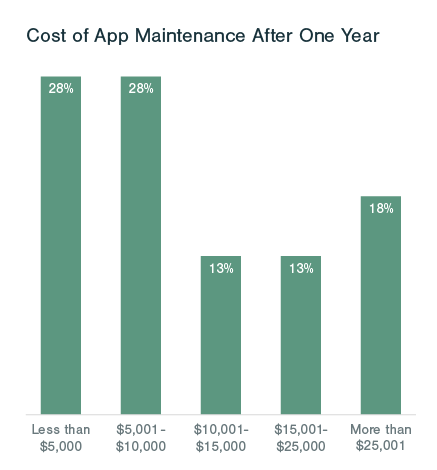
To save you time and money, you’ve got to preemptively develop for change.
Your app needs to be able to grow and adapt to the market conditions and user experience.
Having as much code and ideas that you can reuse or repair will save you a ton of headaches down the line.
No app is perfect.
Yours won’t be either.
It’s going to have some bugs, glitches, and need for updates or repairs.
But it’s much easier to be prepared for those instances then trying to scramble last minute when your app is down and it’s causing users to abandon it.
So don’t put yourself in a corner when you’re developing.
If you’re not doing the coding yourself, make sure that whoever you hire understands that you want to be able to make updates frequently.
In a perfect world, whoever develops and codes the app will also be around to handle the maintenance.
However, that’s not always the case.
So you want to make sure that the developer doesn’t over complicate the coding language or process.
That way whoever works on it in the future won’t have to face an uphill learning curve to figure out what’s going on.
Rule #4: Assemble the right team
This rule stems from my last point.
You want to work with the right people for the long run.
Don’t just think about what’s going to save you a buck or two over the next couple months.
Think long term.
Assembling a team that has the same vision, mindset, and work ethic as you is going to make this process so much easier.
I do not recommend building an app all by yourself.
It’s doable, but it’s not realistic.
There aren’t enough hours in the day, and there are just too many roles for one person to take on alone.
I would definitely suggest hiring a technical advisor right from the start.
If you don’t have a technical background, it may be difficult for you to tell the difference between developers who are legitimate and fraudulent.
But a technical advisor can help sort out any of the BS that unscrupulous developers will try to sell to the unwary.
Like any business, you’ll come across a couple of development agencies that aren’t necessarily ethical.
Here’s an comparison to illustrate my point.
Have you ever brought your car to a new mechanic for something simple like an oil change, only to find out you need all kinds of other work totalling large sums of money?
But the only thing you know about a car is how to put it in drive and reverse.
So you bring it to another mechanic and actually discover that you don’t need any additional work done.
Same goes here.
You don’t want an agency to try and talk you into a bunch of unnecessary features that you don’t need.
That’s why I think a technical advisor should be the first person you hire.
I’m not saying you need to bring an army of personnel on board. The average tech startup has five employees or less.
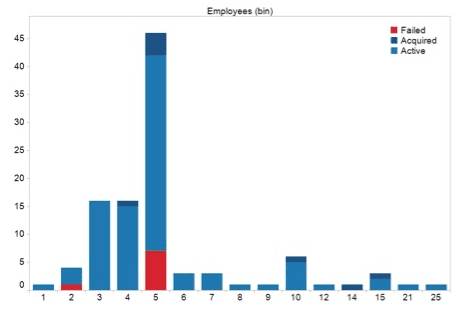
So after you get an advisor on your team, the next step is finding a developer.
Look for a developer who is trustworthy, reliable, and talented.
You want them to have experience, but you also need them to be able to focus their efforts on your app as a priority.
If they’re working on 20 other projects simultaneously, the quality of your product is going to suffer.
It’s also going to take much longer to launch your app.
While it may sound appealing because of the cost difference, try not to outsource development overseas.
From my experience, the distance, time zones, and language differences don’t make things much easier.
Rule #5: Make proof of concepts
Don’t just jump into full development on the first day.
One of the most crucial parts of creating an app is putting a prototype together.
But most companies overlook this step.
Building a proof of concept can do wonders for your app.
This will help you see if your idea can actually function from a technical perspective.
Think of it like an internship, but for your app.
Before a company commits to hiring a new employee, they may put them through an internship or trial period to see if they’re actually cut out for the job.
While the person may appear to be a good fit on paper, the hiring manager won’t actually know for sure until they get to work.
Same goes for your app.
Sure, any idea can sound good in theory.
But it’s better to test it out before you launch a full blown development project.
Prototypes can also help you concretely articulate your technical and business ideas.
You can beta test your proof of concept to see how it will respond to the marketplace.
If you have a mobile site, you can ask the beta testers to compare their experience between your app and the website.
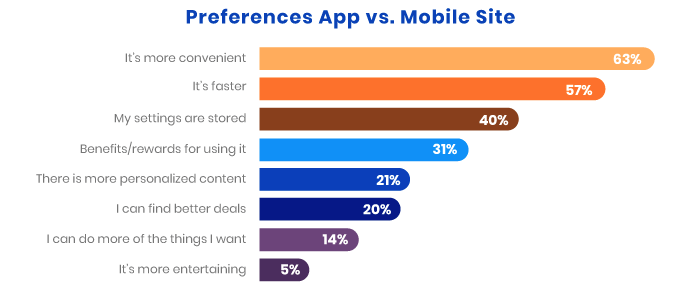
This can help you finalize any improvements before you start developing the app with all of the full features and components.
Plus, once you see your app in real life and actually have it in the palm of your hand, you can take it to potential investors.
Rule #6: Find investors
Now that you’ve got your prototype, it’s time to pitch your idea to investors.
While more money doesn’t always translate to a more successful app, it certainly makes things much easier.
If you haven’t realized it by now, building an app is expensive.
That’s just a reality.
Investors can help you secure more funding.
Take those funds to improve the quality and reduce development time.
You don’t want money to be the reason that you need to hire an inferior developer.
This goes back to the first rule we talked about.
Taking this process seriously means you shouldn’t have to settle.
I don’t know your personal financial situation or how much money your business has in the bank.
But with that said, the majority of people can’t afford to risk all of their life savings with development costs.
So investors can help reduce your personal risk as well.
With more money behind your brand, you’ll have more time to get organized and focused.
All of these factors will help contribute to your success.
Rule #7: Look for avenues to distribute
As we’ve mentioned, it’s not easy to get noticed on the app store.
So you can’t rely on that as your sole method to get downloads.
While ultimately, yes, users will have to download your app from the store, there are other ways you can refer them to it.
From a marketing perspective, you need to do everything you can to get ahead of the curve and your competition.
Some techniques that I’ve seen work in my personal experience include:
- partnering with a nonprofit organization
- utilizing beta testers
- using early adopters
- having a signup for your app
Getting downloads is only half of the battle.
After that, you need to make sure that people are actually using the app.
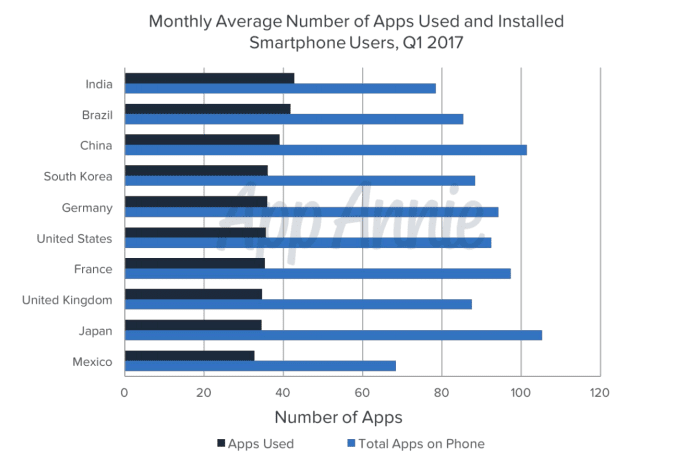
Globally, the majority of apps installed on user devices don’t get used.
You don’t want your app to fall victim to that category.
So your promotional strategy and distribution avenues will have to focus on the user experience and retention in addition to the initial acquisition.
Conclusion
Take app building seriously.
If you really want to get involved with creating, developing, and launching a mobile application, it’s going to take a lot of time and money to be successful.
Don’t sign up for something that you’re not ready to finish.
Otherwise, you may end up dumping money into something that you’ll never be able to get a return on.
If this isn’t something that you think you can accomplish, then perhaps it’s time to look into using a third party to develop your app.
Benefits of going this route include:
- Easier to develop
- Faster to launch
- Affordability
Take advice from people who have been through this before.
If you follow these general rules that I’ve outlined above, you’ll have a greater chance of launching a successful app that actually makes money.
In addition to a technical advisor and developer, what other positions are you planning to hire for your team?