

Are you reading this post from a mobile device? I’m certain, considering that 80% of internet users own a smartphone.
Both marketers and consumers begin their web services on mobile. Digital marketers in particular are excited to run mobile campaigns, because they know that mobile users are motivated buyers.
According to Salesforce, “68% of companies have integrated mobile marketing into their overall marketing strategy.”
The earlier you start reaching out to them, and solving their problems, the more results you will get in your business.
Key Takeaways
- Mobile Dominance: 80% of internet users own a smartphone, making mobile marketing essential.
- Strategic Integration: 68% of companies have already integrated mobile marketing into their strategies.
- Consumer Engagement: Mobile users are highly engaged and motivated buyers.
- Platform Versatility: Effective mobile marketing requires understanding different platforms and devices.
- Business Impact: Early adoption of mobile marketing can significantly boost business results.
It’s no secret that building a successful online business has its challenges. One of such is knowing how to interact with potential customers on different platforms and devices.
Not only will you get the best results out of mobile, but a good understanding of how mobile marketing works will put you in total control of your marketing.
Let me get you started with a quick definition.
What is Mobile Marketing?
Andreas Kaplan defines mobile marketing as:
“Any marketing activity conducted through a ubiquitous network to which consumers are constantly connected using a personal mobile device.”
Wikipedia defines it as “marketing on or with a mobile device”.
Margaret Rouse defines it as:
“As a promotional activity designed for delivery to cell phones, smartphones, and other handheld devices, usually as a component of a multi-channel campaign.”
I define it as marketing for mobile users.
Mobile phones are changing the way your target audience and customers engage with your brand. People visit your website on their phones, open your emails on smartphones, and buy from your store through their phones.
Putting your business right where your customers are – on the go – is what mobile marketing is all about. Any marketing plan today that ignores mobile marketing is a failed plan.
A Brief History of Mobile Marketing
The history of mobile marketing links back to the time when the first commercial mobile SMS and shortcodes were launched in 2003.
Pontiac and Nike were the first two brands that launched SMS campaigns in 2005. This was the time when both brands realized that mobile marketing is the future because people were crazy about mobile phones.

By 2007, there were 2.4 billion SMS users throughout the globe. Apple launched its first iPhone in the US and QR codes were incorporated into mobile marketing in 2010, which led to the beginning of a new era in marketing.
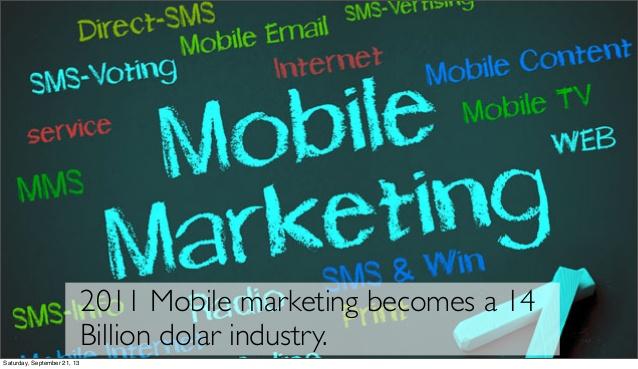
By 2011, mobile marketing was a $14 billion dollar global industry.
By 2013, Android and iOS had dominated the market and it’s the time when apps were becoming popular and smartphones were replacing traditional mobile phones.
By 2014, the number of mobile phone users exceeded the number of computer users and people were accessing the internet from their phones.
Today, 89% of mobile time is spent on apps while the remaining 11% is spent on websites. This is the number one reason why 71% marketers say that mobile marketing is core to their business, while 68% brands have integrated mobile marketing into their overall marketing strategy.
Brands that lack a mobile marketing strategy must rethink their marketing strategy, because all such brands are losing customers every second.
Why Mobile Marketing?
Why is mobile marketing so important today? You may not fully be aware, but let’s explore some of the reasons to pay undivided attention to it:
| Aspect | Mobile Marketing | Traditional Marketing |
|---|---|---|
| Reach | Instant and global reach through mobile devices. | Limited to specific regions and slower dissemination. |
| Personalization | Highly personalized through apps and direct messaging. | Less personalized, often generic messaging. |
| Engagement | High engagement with interactive content. | Lower engagement, often passive consumption. |
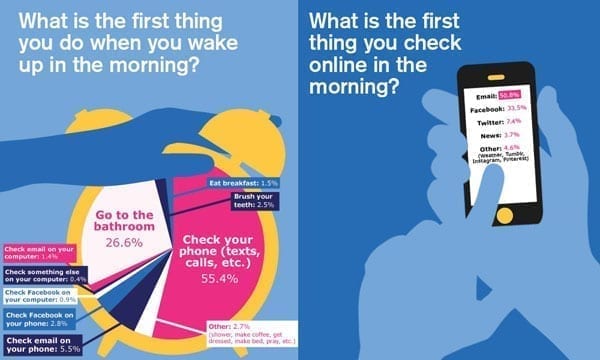
1) Reach: When reach is a concern, there’s nothing easier than a mobile phone to reach your target audience. 79% smartphone users reported that their phone is the first thing they check in the morning, and they keep their phone near them throughout the day.
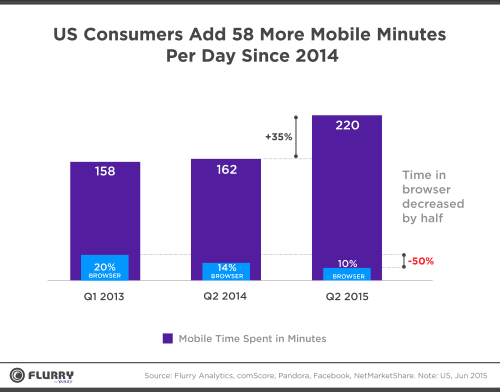
But that’s not all. An average mobile phone user spends 90 minutes a day on their phone, while the US consumers spend as much as 220 minutes a day on their phones. This average time is increasing every day.
There couldn’t be any other easier way to reach your consumers. You can reach them anywhere, anytime, as long as you have a solid mobile marketing strategy in place.
Mobile marketing reaches where other marketing channels simply don’t. So you can come up with a new app idea.
2) Personal: A mobile phone is a personal device. According to a research study, 91% mobile phone users keep their phone within one arm’s reach throughout the day.
When you connect with your consumers through mobile, your brand is put in the same category as the friends and family of the user.
People connect better with brands that establish a one-on-one connection with them, and there’s nothing better than a mobile phone to build this personal connection.
3) Instant: If you have to send a message instantly to your customers, what medium would you choose?
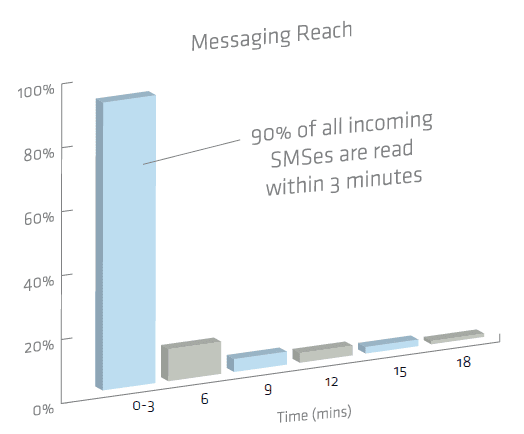
Research shows that 90% of the text messages are read in less than three minutes, while in another study it was shown that text messages have 98% open rate.
Mobile marketing doesn’t just have tremendous reach but it delivers the message instantly. Unlike email marketing where response ratecost-effective as compared to other marketing techniques.
| Marketing Technique | Cost |
|---|---|
| TV Ad | Expensive |
| SMS Campaign | Less Expensive |
| Mobile Optimized Website | Less Expensive |
So you’ll make more money in the long run.
6) Customer engagement: Your customers will trust you better if they have a good experience with your brand on their mobile phones. Research shows that 61% of people develop a nice opinion of brands when they do not face any issue visiting the website from their mobile phones.
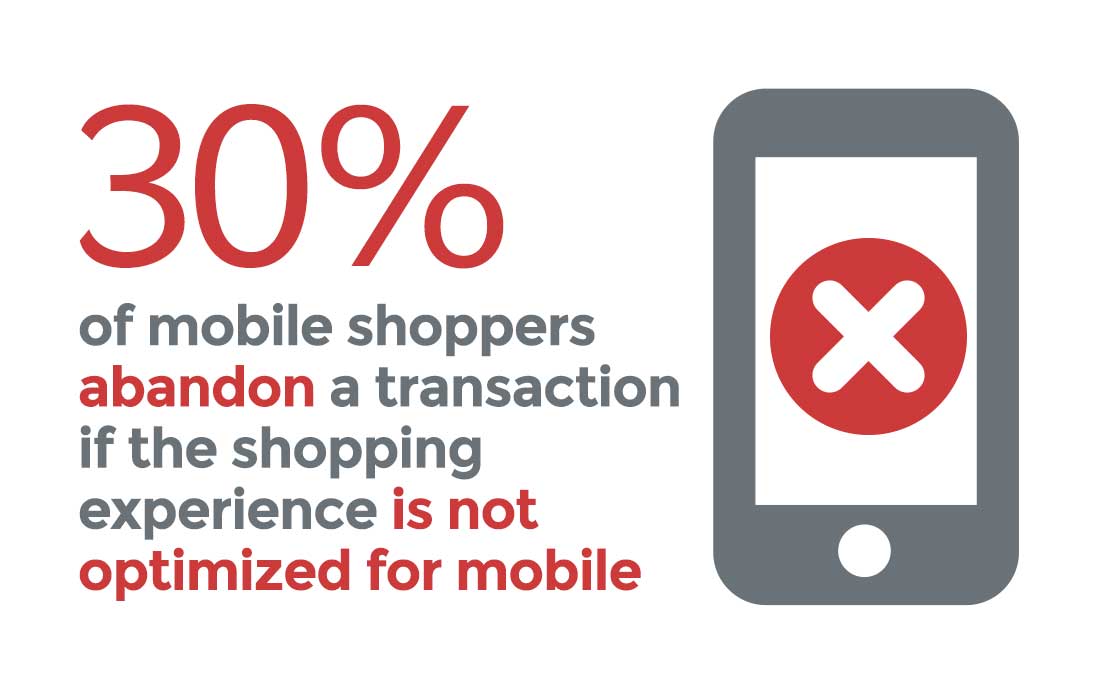
While 30% of customers will leave your website if it isn’t optimized for mobile.
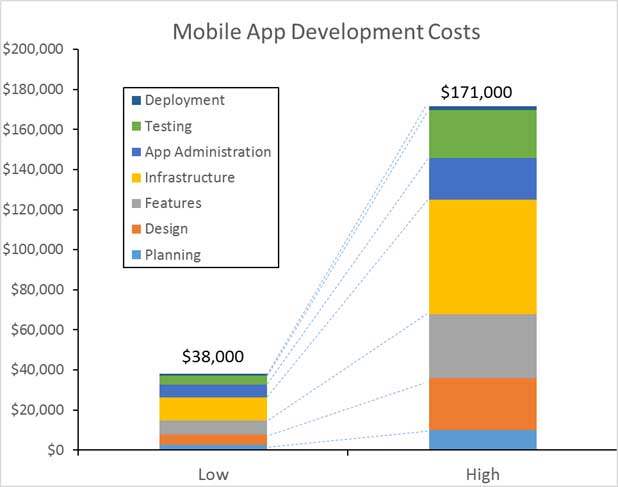
Mobile optimized website and better mobile marketing strategy will not just increase sales, but you will have a pool of happy satisfied customers who will stick to your brand for years to come.The possible downside that restricts businesses from having their own app is its cost. A reliable and professional app will cost you no less than $38K. Though you can have one for $5k to $10K, such an app will do more harm than good. You’re best off either going with a higher end custom developed app, or an app built using a platform like BuildFire for $19/month – $89/month. The middle ground apps, unlike the high end apps and a do it yourself platform like BuildFire, tend not to have a robust backend to support a great customer experience.
| App Development Option | Cost | Pros | Cons |
|---|---|---|---|
| High-end Custom Developed App | $38K+ | Robust backend, great customer experience | High cost |
| BuildFire Platform | $19/month – $89/month | Cost-effective, do-it-yourself | May lack some custom features |
| Middle Ground Apps | $5K – $10K | Lower initial cost | May do more harm than good, lacks robust backend |
What else can small businesses do then?
App mobile ads is basically for running your ads. Google AdMob and Facebook’s promoted post ads are the two leading app ad platforms.
| Feature | Details |
|---|---|
| QR Stuff | Free |
| Custom QR Codes | Premium |
Google Mobile Ad Extensions
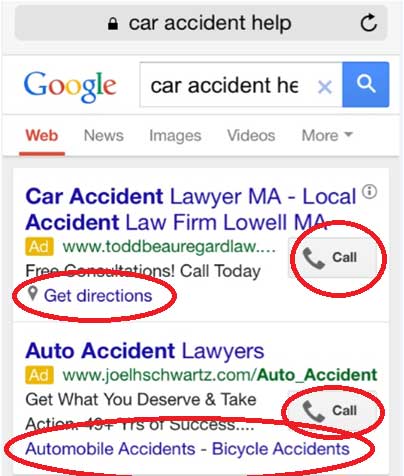
A Google ad extension is an ad format type that shows additional information about your business with the ads. It offers extended information beyond the text ad. These extensions make your ad prominent in the search results on mobile.
| Type of Google Mobile Ad Extensions | Description |
|---|---|
| Automated | Added automatically, no action required from the user. |
| Manual | Must be added by the user. |
Here are the different types of mobile ad extensions that should be added manually:
- Click to call extension
- Mobile app extension
- Offer extension
- Site links extension
- Location extension
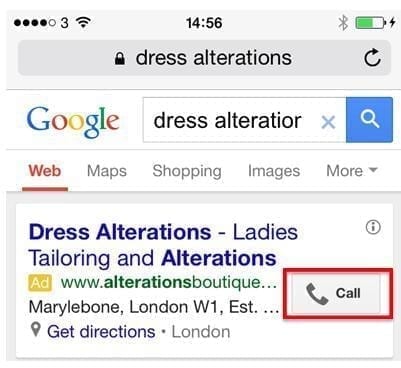
a) Click to call extension: This mobile ad extension makes your phone number clickable. Users can click the number to call you instantly. This extension is helpful for generating leads and sales immediately.
Surojit Chatterjee, Group Product Manager of Global Mobile Search Ads at Google, says:
“When an advertiser uses click-to-call ads with call extensions and location extensions, we see an average CTR increase of 6 – 8%.”
The numbers say it all.
b) Mobile app extension: This mobile extension is similar to the click to call extension. With <a href="https://www.marketingpilgrim.com/2012/04/google-looks-to-make-search-ads-move-mobile-apps-for-a
| Tool | Features |
|---|---|
| 1. Mobile app tracking by Tune | Monitor, analyze, and track marketing campaigns with multiple mobile ad networks. Offers solutions like in-app marketing, app store analytics, marketing intelligence, and attribution analytics. |
| 2. AdMob | Google’s mobile ad network used to monetize apps. Ideal for mobile marketers who wish to monetize their apps or advertise within other apps. |
| 3. Localytics | Premium mobile app analytics tool with features like real-time analytics, CRM, smart targeting, campaign management, and multichannel engagement. |
| 4. Flurry | Analyze, grow, and manage apps with features like monetization, app comparison, user segmentation, and funnel analysis. |
| 5. Mixpanel | Used for both mobile and web analytics. Allows linking of mobile and web users for analysis like retention rate comparison and engagement differences. |
| 6. Yelp | Receives 72 million monthly mobile unique visitors and 25 million monthly app unique users. Over 74% of searches on Yelp are done on a mobile device. |
| 7. Countly | Open source mobile app analytics tool for all devices and apps including android, iOS, Windows, and blackberry. Offers web, game, and IoT analytics. |